

Abrasive Company: How Precision Abrasives Elevate Your Manufacturing Results
2026-09-28
Every manufacturer knows the quiet cost of a rough edge—downtime, rework, parts that just miss the mark. But what if the difference between ‘good enough’ and flawless came down to the abrasives you choose? At SHENZHEN SUN ABRASIVES, precision isn’t a promise; it’s a measurable process. This post examines how engineered abrasive solutions cut waste, tighten tolerances, and keep your production line moving. Keep reading to see where your current setup might be leaving results on the table.
Why Your Current Abrasive Is Quietly Sabotaging Tolerances
Most shops assume a worn abrasive simply cuts slower. That misses the real problem. Every dull grain becomes a tiny plow, pushing material sideways instead of shearing it away. On a surface grinder trying to hold ±0.0002 in, that displaced metal doesn't vanish—it springs back after the pass, leaving a dimensional ghost that metrology catches hours later. Your tolerance isn't lost at the gauge; it's lost in the micron-scale plastic flow at the grain edge.
Then there's the heat issue. A fresh, sharp grit slices and clears the swarf, but a glazed or loaded wheel rubs. Friction spikes local temperature at the contact arc, and thermal expansion does the rest. The part grows during the cut, you compensate by taking a few tenths more, and when it cools, you've undersized the feature. That's not operator error—it's the abrasive lying to you about where the surface actually is.
The Hidden Cost of Cheap Abrasives in High-Volume Production
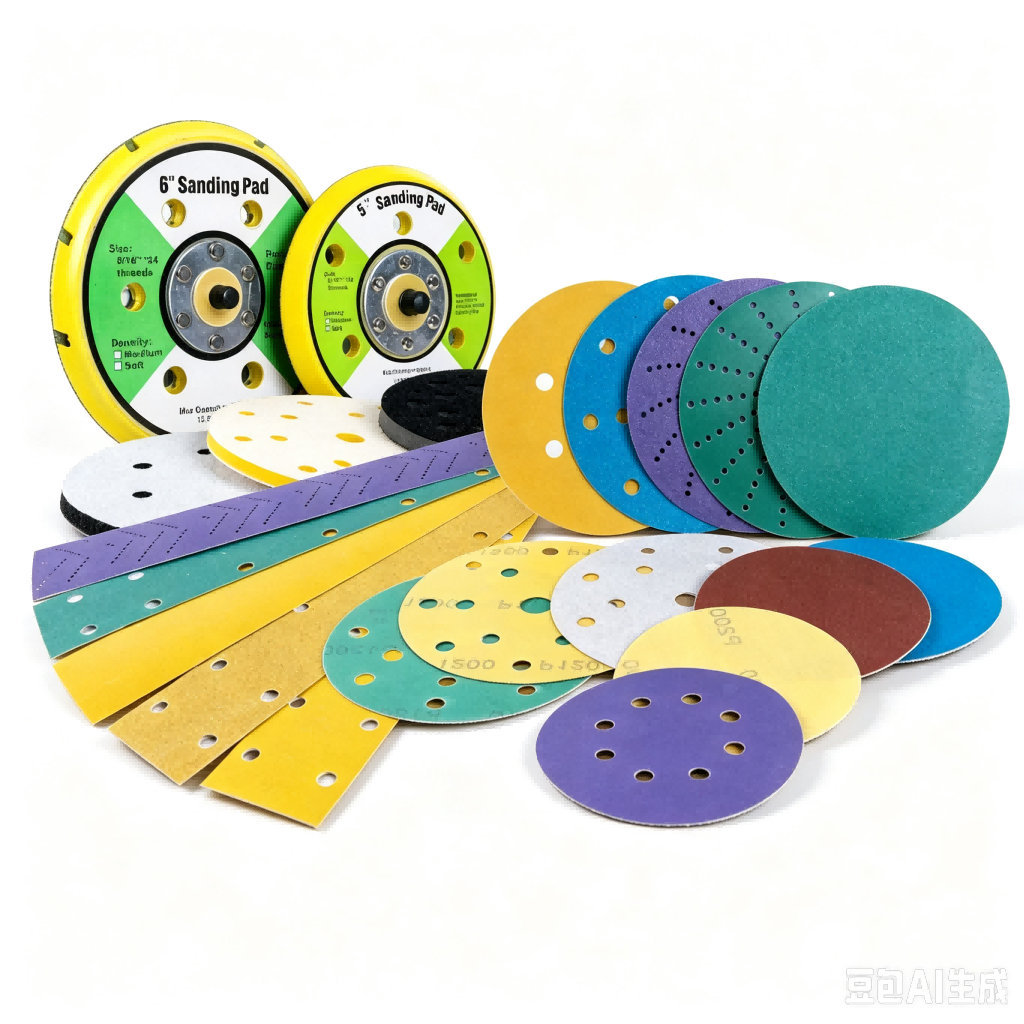
In high-volume metalworking, abrasives behave more like a process variable than a consumable. What looks like a bargain on the purchase order often carries a long tail of rework, machine downtime, and distorted cycle times. A cheap wheel that sheds grit unevenly or loads up too fast forces operators into constant compensation—more dressing, more pressure, more passes. Those adjustments are rarely free. They eat into the margins that the initial price difference promised to protect.
The less visible cost shows up in consistency. When abrasive performance drifts between batches, surface finish and dimensional tolerance follow. Sorting, inspection, and scrapped parts quietly absorb labour hours. In automated lines, a belt that fails early can stop an entire cell, turning a few dollars of saved abrasive into thousands in lost throughput. High-volume production rewards predictability, not just low unit cost.
There is also a fatigue factor. Cheap abrasives tend to generate more heat, more dust, and more vibration. That translates into shorter tool life on adjacent components, additional filtration load, and operator complaints that reduce focus over a shift. Procurement teams that track total cost per finished part—not cost per abrasive item—usually find that premium abrasives pay for themselves several times over before the quarter ends.
Matching Grain Structure to Your Alloy: A Practical Guide
Grain structure isn't just a microscope curiosity—it dictates how your alloy behaves under load, heat, and corrosion. Fine grains generally boost yield strength and fatigue resistance, while coarse grains can improve creep performance at high temperatures. The trick is matching the grain size and shape to the service conditions, not chasing a one-size-fits-all “ideal.”
Start by mapping your alloy's intended stress state and temperature range. If you need toughness at cryogenic temperatures, a fine, equiaxed grain structure is usually your best bet because it shortens slip distances and spreads deformation. For turbine blades or furnace components that see sustained heat, elongated or columnar grains aligned with the principal stress axis can reduce grain boundary sliding and delay failure.
Thermomechanical processing gives you the levers: cold work followed by recrystallization anneals can refine grains, while controlled cooling from solution treatment can coarsen or orient them. Don't overlook grain boundary character—serrated boundaries or a high fraction of special coincident site lattice boundaries can resist intergranular attack even when the average grain size looks ordinary. Run a few etch-and-examine trials on scrap pieces before committing your full batch.
How Precision Abrasives Cut Finishing Time Without Sacrificing Finish
Precision abrasives earn their keep by removing material at a controlled, predictable rate. Instead of relying on a single aggressive grit that risks deep scratches, these products use tightly graded particles with consistent geometry. That uniformity lets operators push feed rates and pressure higher than they could with conventional abrasives, because the cutting action stays even across the entire contact patch. The result is fewer passes to reach the same dimensional target, which trims hours off a job without introducing random surface defects.
Another factor is the bond system. Modern precision abrasive formulations use bonds that break down just enough under heat and load to expose fresh cutting edges, but not so fast that the abrasive sheds prematurely. This self-sharpening behavior keeps the wheel or belt working at peak efficiency for longer stretches. It also prevents loading and glazing, two common problems that force operators to stop and dress or replace abrasives mid-run. Less downtime for maintenance means finishing time drops, while the consistent exposure of sharp grains preserves the required surface finish.
On the floor, the difference shows up in measurable ways. Shops that switch to precision abrasives often find they can consolidate a multi-step finishing sequence into one or two operations. Because the abrasive maintains its cut and finish characteristics throughout its life, there is no need for a separate fine-finishing step to remove scratches left by a coarse initial pass. That combination of speed and repeatability is what makes precision abrasives a practical choice for tight production schedules, not just a lab curiosity.
From Chatter Marks to Mirror Finish: One Abrasive Switch That Works
Chatter marks on a freshly ground surface usually mean more passes, finer grits, and a slow climb toward an acceptable finish. But in a recent run of 304 stainless parts, the operator bypassed that whole routine by swapping a rigid alumina wheel for a non-woven, conformable abrasive. The vibration that caused the ripples was no longer transmitted into the metal, and the surface came out with an even, reflective sheen.
The key wasn’t a finer grit or a lighter touch; it was the bond and backing. The softer, open structure let the abrasive ride over slight irregularities instead of digging in, erasing the high-frequency marks that usually take multiple steps to remove. After the switch, the same operator went straight from a 120-grit prep to a mirror-ready finish, cutting out two intermediate stages.
This single change works because it addresses the root cause of chatter—rigid contact—not the symptom. Once the abrasive can flex and follow the workpiece, those stubborn ripple patterns lose their grip, and the finish turns glossy without extra compounds or hand polishing.
What Machine Shops Get Wrong About Abrasive Selection
Many shops default to a single abrasive for nearly every job, assuming that if it cuts, it's good enough. But abrasive selection hinges on the workpiece material, not just the grit size. Aluminum, stainless, and hardened tool steel all respond differently to aluminum oxide, zirconia, and ceramic grains. Using the wrong grain type causes excessive heat, glazing, or premature dulling, which translates into rework and lost time.
Another common error is ignoring bond hardness and structure. A hard wheel on a soft material can pack and burn the surface, while a soft bond on tough alloys breaks down too quickly. Match the bond to the material removal rate and the coolant conditions. Shops that skip this step end up chasing surface finish problems or burning through wheels at an alarming rate.
Finally, many machinists push abrasives well past their useful life to save a few dollars. A clogged or dull abrasive creates friction, not cutting action, raising part temperature and degrading tolerances. Regular dressing and replacement are cheaper than scrapped parts or hours of hand finishing. Smart shops treat abrasives as a process variable, not an afterthought.
FAQ
Precision abrasives cover engineered grinding wheels, belts, discs, and honing stones made with tightly controlled grain sizes and bonding. They are designed for applications where dimensional accuracy and surface finish matter more than bulk material removal.
Because they cut consistently from the first part to the last, precision abrasives prevent issues like random deep scratches, taper, and burn. Operators spend less time compensating for wheel wear, which keeps more parts within specification and out of the reject bin.
Yes. A supplier that tests your specific alloy, coolant, and machine rigidity can recommend a grain type and bond hardness that lets you run higher feed rates without overheating. That often shortens grind cycles by 15 to 30 percent, though exact gains depend on the application.
The bond holds abrasive grains in place and controls how they break down. A softer bond releases dull grains faster for cooler cutting on hard materials, while a harder bond keeps grains longer for soft metals. Matching the bond to the workpiece prevents loading and glazing.
Track data points like surface finish readings, dimensional spread across a batch, dressing intervals, and scrap rate before and after the switch. If the new abrasive reduces dressing frequency or tightens the finish range without adding cycle time, it is improving the process.
No. They help any manufacturer that needs repeatable finishes or tight fits, from automotive transmission components to tool and die shops. Even basic cylindrical grinding of shafts benefits from a more consistent grain distribution because it lowers polishing time afterward.
Look for one that asks about your current grinding parameters, part material, coolant type, and rejection reasons before suggesting a product. A good partner will run trials, measure results with you, and adjust the abrasive specification rather than pushing a one-size-fits-all catalog item.
Coolant removes heat and flushes swarf, but its effectiveness depends on nozzle placement, pressure, and fluid type. Precision abrasives often carry a more open structure or engineered porosity, so the coolant can reach the cutting zone. If coolant delivery is poor, even the best abrasive will load up and burn the part.
Conclusion
A lot of shops assume their abrasive is fine because the parts pass inspection, but that inspection rarely catches the slow drift in tolerance stack-up caused by inconsistent grit breakdown. When a cheap belt or disc sheds grain unevenly, the pressure on the workpiece changes from pass to pass, and you end up chasing dimensional variation that has nothing to do with your machine setup. In high-volume runs, that variability multiplies into rework, scrap, and extra labor hours that never show up on the abrasive invoice. Pair that with a grain structure chosen for general-purpose steel instead of your specific aluminum or titanium alloy, and you're fighting the abrasive on every single part. The result isn't just slower throughput; it's a quiet erosion of your process capability that your current supplier will never mention.
Switching to a precision abrasive does more than swap one product number for another. The right grain geometry and bond hardness let you push the feed rate higher without burning the surface or leaving deep scratches, so finishing time drops even as the Ra value improves. Shops that were stuck with chatter marks from a stiff, glazed wheel often find the same machine, same coolant, and same operator suddenly produces a mirror finish after the abrasive change—because the abrasive is actually cutting instead of rubbing. The mistake most machine shops make is treating abrasives as a commodity and ordering whatever is on the shelf. When you match the abrasive to the alloy, the operation, and the finish requirement, you stop compensating for a bad consumable and start seeing what your equipment can really do.
Contact Us
Contact Person: Amanda Wang
Email: [email protected]
Tel/WhatsApp: +86-13602569854
Website: https://www.sunabrasives.com.cn