

Angle Steel Towers: Inside a Top Factory’s Manufacturing Excellence
2026-07-07
Behind every resilient power line and telecom link stands an angle steel tower, silently bearing the weight of connectivity. But not all towers are created equal. Step inside Anbang's facility, where cutting-edge machinery merges with decades of hands-on expertise to redefine manufacturing excellence. From raw steel to gleaming lattice structures, witness the meticulous processes that turn design blueprints into reliable giants—and discover why engineers worldwide trust Anbang for projects that demand nothing less than perfection.
Steel Sourcing: Starting with Uncompromising Quality
In the steel industry, the journey from raw material to finished product begins long before the first beam is forged. It starts with a commitment to quality that never wavers—where every shipment of ore, every recycled scrap, and every alloy addition is scrutinized against exacting standards. This isn't about meeting minimum requirements; it's about building a foundation that engineers and fabricators can trust without hesitation. When sourcing steel, we look beyond the mill certificate, digging into the provenance of materials and the rigor of the supplier's processes. The result is a supply chain where integrity is non-negotiable, and each link reinforces the next.
Quality in steel procurement means more than just chemical composition and tensile strength. It encompasses consistency across batches, traceability from melt to delivery, and the confidence that what arrives on site matches what was promised. We work directly with mills that share our obsession for detail—those who invest in advanced metallurgy and real-time testing, not just for compliance but because they understand the stakes. A compromised batch doesn't just waste time; it can jeopardize entire projects. That's why we treat every order as a promise, vetting suppliers through repeat audits and long-term partnerships rather than transactional bids.
Ultimately, uncompromising quality is about foresight. It's anticipating the stresses a structure will endure, the welds that must hold under pressure, and the environments that will test corrosion resistance over decades. By selecting steel with a margin of excellence baked in, we help builders sleep better at night. This philosophy turns sourcing into a strategic advantage—one where the upfront investment in superior material pays dividends in reduced rework, safer job sites, and a reputation that stands as solid as the steel itself.
Design Intelligence: Engineering Towers for Nature’s Fury
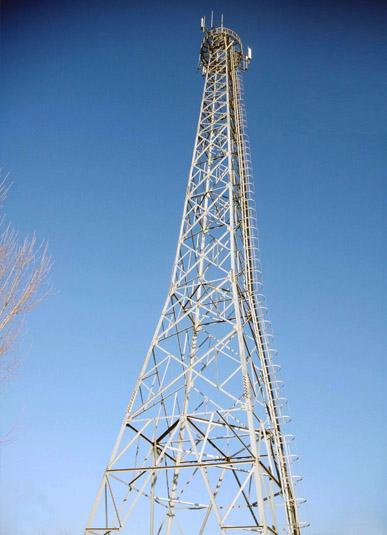
In the relentless tug-of-war between human ambition and the planet’s volatile moods, structural engineers have become the unsung choreographers of resilience. Crafting a tower that can withstand typhoons or earthquakes is less about brute strength and more about a deep, almost philosophical dialogue with the forces that seek to topple it. We’ve moved beyond simply piling on concrete and rebar; today’s high-rises flex like dancers, their tuned mass dampers swaying in counterpoint to the wind’s rhythm, while base isolators let the earth shudder beneath without translating chaos upward. It’s architecture that breathes, and in that breath lies survival.
The real genius unfolds in the digital realm long before a single bolt is driven into the ground. Advanced simulation models allow engineers to wage virtual storms against their creations, tweaking aerodynamic profiles to confound vortex shedding or reconfiguring core layouts to dissipate seismic energy like ripples on a pond. These tools reveal a counterintuitive truth: rigidity is often the enemy. By allowing controlled deformation—letting the tower “give” just enough—the structure preserves its essential integrity. Japan’s skyline, dotted with pagoda-inspired skyscrapers that channel centuries of earthquake-resistant wisdom, exemplifies this. Their shock-absorbing cores and flexible skeletons are not mere feats of computation but a respectful continuation of a cultural memory that understands the earth’s restlessness.
Yet the most profound shift in design intelligence is ecological, not just mechanical. We’re learning to read the landscape’s subtle warnings, siting towers where the ground is less prone to liquefaction, shaping them to redirect wind rather than battle it, and embedding redundant safety nets that avoid cascading failures. The tower becomes a citizen of its environment, not an invader. When hurricane-force winds scream through Miami or a tremor rattles Istanbul, these structures stand not as defiance but as a quiet testament to humility—proof that the smartest engineering doesn’t conquer nature’s fury but negotiates a graceful truce with it.
Precision Cutting and Shaping: Millimeter-Level Accuracy
Achieving millimeter-level precision in cutting and shaping isn't just about having advanced equipment—it's about calibrating every step of the process to eliminate even the slightest deviation. From the initial scoring to the final edge refinement, our approach relies on real-time measurements and micro-adjustments that ensure each cut aligns within a tolerance of less than one millimeter. This level of control prevents material waste and ensures that complex geometries come together seamlessly during assembly.
The difference becomes palpable when components are shaped with such exactness. Joints fit with an almost frictionless intimacy, edges meet without gaps, and the overall structural integrity is noticeably improved. It's the kind of precision that feels invisible in the final product because everything simply works as intended—no shimming, no filler, no last-minute corrections. Whether working with hardwoods, engineered boards, or composite materials, the process adapts through closed-loop feedback, delivering consistency across hundreds of identical pieces without drifting from the target measurements.
Welding Techniques That Strengthen Every Joint
Welders who chase absolute reliability often find that joint preparation is the silent foundation of strength. It’s tempting to focus solely on filler metal and heat, but the way edges are cleaned, beveled, and aligned before the arc strikes can make or break the final bond. Stepping away from hurried routines, a disciplined approach to surface condition and root gap ensures that penetration reaches exactly where it’s needed without hidden voids or brittle interfaces.
Mastering the puddle is where technical skill transforms into art. Watching how the molten pool wets the base material, adjusting travel speed to avoid cold lap, and reading the ripple pattern as it solidifies—these are habits that separate sound welds from those that merely look acceptable. When working with alloys that behave unpredictably, subtle tweaks in torch angle or a split-second pause at the toes can rescue a pass from lack-of-fusion defects that inspection tools might miss.
Post-weld care also plays a far larger role than many acknowledge. Controlled cooling, especially in higher-carbon steels, prevents the kind of crystalline restructuring that invites cracking under load. A simple step like wrapping the joint in an insulating blanket or sequencing passes to maintain interpass temperature can drastically raise the fatigue life, proving that strength isn’t just welded in—it’s nurtured through every phase of the process.
Protective Coatings: The Hidden Shield Against Corrosion
Imagine a world where bridges crumble, pipelines leak, and vehicles rust away within years. That's the reality we'd face without protective coatings—the unsung defenders that stand guard against corrosion's relentless assault. These surface treatments work like an invisible armor, forming a barrier that keeps moisture, chemicals, and oxygen from reaching vulnerable metal substrates. But their role goes beyond simple blockage; modern formulations actively interfere with electrochemical reactions, buying critical time for infrastructure and equipment that would otherwise fall victim to rust.
Not all shields are created equal, though. From zinc-rich primers that sacrifice themselves to protect steel, to epoxy layers that stubbornly resist acids, the choice of coating is a calculated gamble based on environment and stress. Marine settings demand flexibility to handle constant salt spray, while industrial plants need films that can shrug off corrosive fumes. The real art lies in layering—a well-designed system might combine a gripping primer, a thick barrier coat, and a UV-resistant topcoat, each playing its part like instruments in an orchestra. Get the composition wrong, and you're merely applying expensive paint.
What often gets overlooked is the meticulous surface preparation that precedes any coating job. Even the most advanced formula will fail if applied over rust, grease, or mill scale. Abrasive blasting to near-white metal isn't glamorous, but it's the foundation upon which decades of protection rests. Application technique matters just as much—factors like humidity, film thickness, and curing time turn coating into a precision craft. When done right, these hidden shields quietly extend asset life by generations, saving far more in avoided repairs than they ever cost to apply.
Rigorous Load Testing: Simulating Decades of Stress
When you pull a chair out from under a desk for the ten-thousandth time, the creak in the joint might seem like nothing—but over years of daily use, that tiny flex adds up. Rigorous load testing doesn’t just bang on a product until it breaks; it warps time, compressing a lifetime of shoves, leans, and bumps into a few punishing weeks. We map out every way a human body interacts with a piece of furniture, then design automated rigs that replay those motions endlessly, measuring deflection, fatigue, and the slow creep of failure that hides in the margins of normal wear.
The real trick isn’t just applying weight—it’s applying the right kind of wrong. Someone will eventually sit on the armrest, a kid will use the seat as a trampoline, and a mover will drag the frame sideways across a rough floor. Our test cycles layer these abuses in a carefully choreographed sequence, heating and cooling materials between rounds to mimic the expansion and contraction of seasons, even pouring measured grit into moving parts to accelerate the grinding effect of neglected maintenance. Data pours in from strain gauges and high-speed cameras, painting a picture not of if something will sag or crack, but when—and under what improbable combination of stresses.
The results often send us back to the drawing board with a newfound respect for physics. We’ve watched casters tear through epoxy after simulated years of rolling under load, discovered that a subtle shift in grain direction could triple a wooden arm’s resistance to splitting, and learned that the faint hum of a tuning fork can reveal internal flaws long before they become visible. It’s a process that balances obsession with pragmatism: every product that passes earns its claim to decades, not because we hope it will last, but because we’ve already watched a robot put it through those hellish years in a matter of days.
FAQ
It's a blend of precision engineering and rigorous quality control. Every stage, from raw material inspection to final assembly, is monitored to ensure structural integrity and longevity.
By using high-grade steel, advanced welding techniques, and thorough anti-corrosion treatments. Towers are tested under simulated environmental conditions to verify they can withstand harsh weather.
Automation streamlines cutting, punching, and welding, drastically reducing human error. It allows for consistent, high-speed production without compromising on accuracy.
Each tower undergoes dimensional checks, weld inspections, and load testing. Coating thickness is measured, and galvanization is examined to guarantee protection against rust.
Engineering teams collaborate with clients to customize tower height, load capacity, and configuration. They use 3D modeling to optimize designs for site-specific conditions.
Traceability ensures every steel batch can be traced back to its source and test certificates. This accountability is crucial for safety and compliance with international standards.
Factories implement waste recycling programs, use eco-friendly coatings, and adopt energy-efficient machinery. Scrap metal is collected and reprocessed, reducing the overall carbon footprint.
Experienced welders and technicians bring years of specialized knowledge. Continuous training keeps them updated on the latest techniques, ensuring each tower meets exact specifications.
Conclusion
At the core of every durable angle steel tower lies an uncompromising commitment to raw material quality. The factory sources only high-grade steel, verified through rigorous chemical and mechanical testing, ensuring each beam can withstand decades of environmental assault. Before a single piece is cut, engineers deploy advanced simulation software to model tower behavior under extreme wind loads, ice accumulation, and seismic events—designing structures that flex with nature’s fury rather than resist it. This intelligence translates directly to the production floor, where CNC-controlled plasma and laser cutters shape steel with millimeter-level precision, eliminating weak points from the very first incision.
Once components are cut, skilled welders apply specialized techniques—such as submerged arc and flux-cored welding—to fuse joints into monolithic bonds far stronger than the base metal. But the real unsung hero is the protective coating system: a multi-layer process including hot-dip galvanizing or advanced epoxy primers, which creates a barrier that actively sacrifices itself to corrosion before rust ever touches the steel. Finally, every tower design undergoes load testing that replicates a lifetime of stress—cyclic tension, compression, and torsion—until the structure proves it can stand tall for generations. This interplay of craftsmanship and relentless testing is what elevates manufacturing from mere production to a mastery of durability.
Contact Us
Contact Person: antor khan
Email: [email protected]
Tel/WhatsApp: 8613863903569
Website: https://www.qdabtower.com/