

Best CNC Parts for Precision Machining and Reliable Performance
2026-10-20
Precision machining isn't just about cutting metal—it's about trust. When a single out-of-spec part can halt production, you need the best CNC parts for precision machining and reliable performance. That’s where BOYIKUN comes in. In this guide, we’ll break down what separates dependable CNC components from the rest and how to choose parts that deliver every time.
Raw Material Choices That Keep Tolerances From Drifting
The foundation of stable tolerances often lies in materials that resist dimensional change under stress, temperature swings, or moisture absorption. Alloys like Invar or certain stainless steels are chosen not for their strength alone, but for a thermal expansion coefficient low enough to make a few microns of drift nearly impossible. Even in plastics, glass-filled nylons or PEEK outperform commodity resins because their fiber reinforcement reduces creep, keeping a machined pocket or bore true over thousands of cycles.
Sometimes the smart choice is a composite or a hybrid: a tool steel insert molded into an aluminum housing, or a ceramic spindle riding in a graphite-loaded bearing. These pairings exploit each material's best trait—hardness where wear matters, damping where vibration starts—so the tolerance stack doesn't accumulate drift at the interfaces. Raw stock that arrives with residual stress from rolling or casting can also be your enemy; stress-relieved or normalized grades mean the part won't quietly warp the first time it sees a temperature change on the shop floor.
Beyond the obvious specs, look at how the raw material behaves before it ever becomes a part. A bar of free-cutting steel with inconsistent grain structure might machine beautifully in the morning and fight you after lunch, simply because the microstructure varies along the length. Selecting material from a mill that controls chemistry and cooling rates tightly pays off in predictable tool wear and, ultimately, tolerances that don't wander. The trick is to treat raw material choice as a design parameter, not an afterthought—because once drift starts, it's rarely a single variable you can tune back.
Surface Treatments That Outlast the Machine Itself
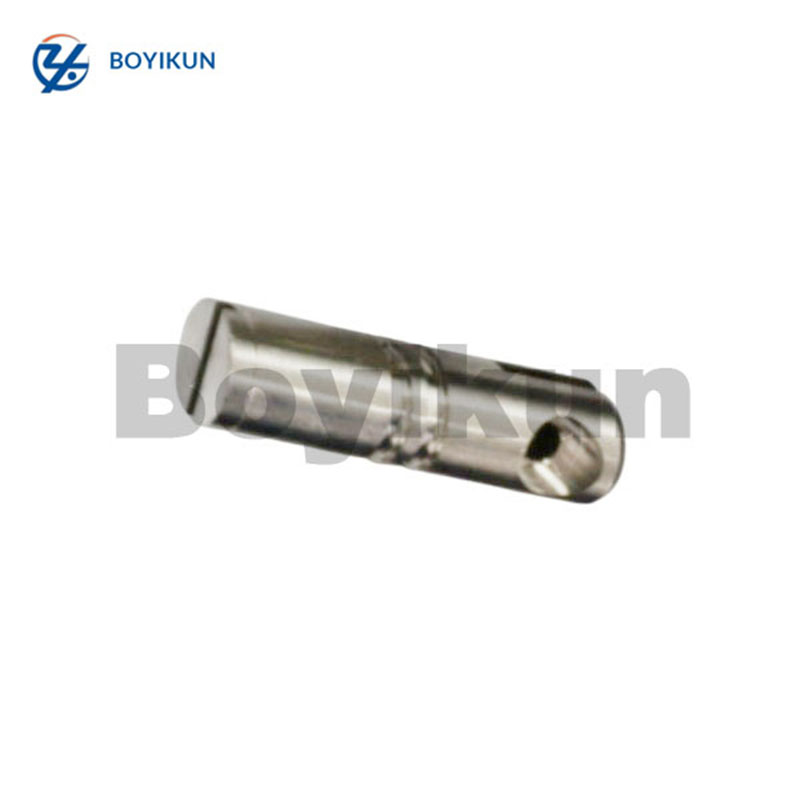
Most equipment failures don't start with a snapped shaft or a seized bearing. They begin quietly, at the outermost layer, where moisture, abrasion, and chemical exposure slowly eat away at untreated metal. A surface treatment that truly outlasts the machine flips that timeline—by hardening the shell, sealing pores, or adding a sacrificial barrier, it forces the base material to remain intact long after the moving parts would have worn out on their own.
Consider a hydraulic cylinder rod on a backhoe. The chrome plating isn't there just for shine. It provides a hardness of around 68–72 HRC and a friction coefficient low enough to keep seals alive for thousands of hours. When that layer is applied with proper thickness and edge coverage, the rod can outlive the pump, the hoses, and even the engine. That's the real benchmark: not how long the coating lasts in a lab, but whether it's still doing its job when the rest of the machine is being scrapped.
The trick is matching the treatment to the threat. Thermal spray coatings, nitriding, and electroless nickel each solve different problems—cavitation, galling, acid attack. A well-chosen process adds a decade or more to a component's life, and sometimes that means the surface becomes the most reliable part of the entire assembly. In those cases, the machine doesn't fail; it's simply retired while its skin still looks new.
Cutting Corners on Radii to Save Tool Life
Many machinists default to generous corner radii because they fear sharp edges will chip or break under load. But an oversized radius isn't always your friend. It lengthens the cutting edge engagement, increases radial pressure, and often triggers chatter—especially in slender or lightly clamped workpieces. Trimming that corner radius even by 10 to 20 percent can drop cutting forces enough to stop vibration and let you push feed rates higher without losing an insert.
The real payoff shows up in tool life, though it looks counterintuitive at first. A smaller radius concentrates heat near the tip, but it also reduces the total friction surface and lets chips curl away tighter. That means less built-up edge, fewer thermal cracks, and a more predictable wear pattern. Instead of a sudden fracture at the corner, you get gradual flank wear you can monitor and plan around.
In practice, start with the smallest radius your surface finish spec allows. If you're roughing, drop from a 1.2 mm radius down to 0.8 or 0.4 mm and watch the chips change color. They should come off cool and tight, not blue and stringy. Pair the sharper corner with a slight lead angle adjustment, and you'll often find you can run an entire shift on one edge instead of indexing halfway through.
Heat Treating Without the Dimensional Hangover
Most shops treat heat treating like a necessary evil—parts go in, dimensions come out wrong, and everyone shrugs. The so-called hangover shows up as warped shafts, ovalized bores, and surfaces that need extra grinding just to get back to print. But dimensional drift isn't some unavoidable tax. It's a direct result of uneven heating, rushed quenching, and ignoring the internal stresses already locked in from machining.
The real fix starts before the furnace even warms up. Fixture design matters more than most people admit: holding a thin-walled part in a way that lets it expand and contract without fighting the tooling prevents a huge share of distortion. Quench severity is the next lever. Slower oils or interrupted quenching reduce thermal shock, while cryogenic treatment after hardening can stabilize retained austenite so dimensions don't creep weeks later.
Some shops are moving toward predictive simulation—mapping stress relief and phase changes digitally before cutting a single test coupon. Combined with careful stress relieving between rough and finish machining, it's possible to get a part through heat treat with almost no post-process correction. That's not magic; it's just respecting the physics instead of blaming the steel.
Spotting a Supplier That Actually Keeps Batch Records
Most suppliers will nod and say they keep batch records. The real test comes when you ask to see one for a recent production run, not a polished sample from two years ago. Ask for the record tied to the exact lot number you are buying. If they hesitate or send a generic certificate instead, that tells you more than any audit checklist.
Look at how the records are stored. A supplier with real traceability can pull up raw material receipts, in-process checks, and packaging logs without shuffling through a binder for ten minutes. Handwritten corrections, signed initials, and dated entries are normal. A spotless digital file with no deviations should make you curious, not impressed.
Finally, ask a simple question: "What happens if a batch fails?" A supplier that keeps meaningful records will walk you through their nonconformance process and show you the paperwork from the last failure. If the answer is "that never happens here," keep looking.
Thread and Fit Details That Prevent Assembly Headaches
Matching thread pitch and diameter only gets you partway. The real difference shows up in how the first turn engages. A slight lead-in chamfer on both the male and female threads lets parts self-center instead of biting at an angle, which is where most cross-threading starts. If the thread root has a small radius rather than a sharp V, stress concentrates less and the fastener can be run in and out repeatedly without galling or seizing.
Beyond the threads themselves, fit details like a short pilot diameter or a stepped shoulder give the assembler physical feedback before torque is ever applied. When the pilot slides into place, the threads are already aligned, so the fastener doesn't need to be wiggled or backed off. Clearances around the head and wrench flats matter just as much; leaving enough room for a socket or a finger grip avoids the frustration of starting a screw in a recessed pocket where the tool scrapes the surrounding surface.
FAQ
The difference usually comes down to material quality, how the shop handles thermal stress, and whether they verify dimensions with a CMM instead of just trusting the machine. A decent part might look fine on the outside, but a great one will hold tolerance across the whole batch and have clean edges without chatter marks.
For most demanding jobs, 17-4 PH stainless gives you corrosion resistance plus decent strength. 4140 steel that's been hardened and stress-relieved works well for shafts and load-bearing parts. If you need lighter weight, 7075-T6 aluminum is hard to beat, but it's not ideal in saltwater or high-heat environments.
Ask for a first article inspection report, not just a sample. A shop that's serious about reliability will share their inspection data, material certifications, and maybe even let you visit. Running a small pilot batch of 10-20 parts is also a smart way to see how consistent they are over multiple setups.
Custom makes sense when stock parts force you to compromise on fit, weight, or assembly time. If you're modifying an off-the-shelf bracket every time, the labor adds up fast. But for simple, non-critical spacers or covers, buying standard parts usually costs less and arrives sooner.
Thin coatings like electroless nickel or TiN work well because they add only a few microns and boost wear resistance. For aluminum, hard anodizing is common, but you need to account for its thickness in your tolerances. Avoid heavy powder coats on mating surfaces—they can throw off fits.
Try to keep tolerances only as tight as the function actually requires. Use standard drill sizes and avoid deep pockets with small radii. Designing parts that can be machined in fewer setups reduces the chance of alignment errors and lowers cost. Also, put critical features on the same side when possible.
It's huge for parts that see friction or repeated stress. Hardening 4140 steel after rough machining, then finish grinding, gives you a part that stays straight and resists wear. Without proper stress relief, even a precisely machined part can warp over time or fail early.
Ask about their inspection equipment—do they use a CMM or just hand tools? Ask how they handle material sourcing and whether they can provide certs. Also ask about their typical tolerance capability and how many setups your part will need. The answers will tell you a lot about their attention to detail.
Conclusion
Raw material choices are the quiet foundation of any precision CNC job. If the stock moves with temperature or internal stress, even the tightest program will fight you all shift. Selecting stabilized alloys and stress-relieved bar stock keeps tolerance drift at bay before the first tool touches metal. From there, surface treatments matter more than most shops admit. A hard anodize or electroless nickel coating doesn't just resist corrosion—it often outlasts the machine's own fixturing. Pair that with thoughtful corner radii, and you extend tool life without sacrificing dimensional accuracy. A tiny radius change can drop chatter and let the cutter glide instead of grind.
Heat treating is where many parts go wrong. Quenching without proper stress relief leaves a dimensional hangover: bores shrink, faces bow, and nobody notices until assembly day. The fix is working with a supplier who understands distortion control and has batch records to prove it. You want traceability from raw bar to final passivation. Then the last mile is thread and fit details. Sloppy thread classes or mismatched clearance holes become assembly headaches that cost more than the part itself. A shop that controls pitch diameter and lead-in chamfers will save you from cross-threading and rework. All these pieces—material stability, durable finishes, clean heat treat, real records, and precise fits—are what make CNC parts genuinely reliable in the field.
Contact Us
Contact Person: Xianchen Hu
Email: [email protected]
Tel/WhatsApp: 86-13248645200
Website: https://www.hexnb.com/