
Best Compostable Bags for Sustainable Living
2026-08-20
Every time you toss a plastic bag, it lingers for centuries. But what if your trash bag could vanish in months? That's the promise of compostable bags—and not all of them deliver. At CHALLENGE WOLVES, we've tested the market to bring you the best options that actually break down, not just greenwash. Here's how to pick bags that match your sustainable living goals without sacrificing strength or convenience.
The Truth About 'Compostable' Bags in Landfills
Most bags stamped 'compostable' never actually break down once they end up buried in a landfill. The conditions just aren't right. Composting needs oxygen, steady moisture, and a healthy population of microbes. A landfill seals waste away from air, so even the best plant-based bag can sit there for decades looking much the same as the day it was thrown out.
What's worse, when those materials do start to degrade without oxygen, they often release methane, a greenhouse gas that traps far more heat than carbon dioxide. Landfills with gas capture systems can recover some of that, but plenty still escapes. So the label that sounds like a solution can quietly add to the very problem people were trying to avoid.
For a compostable bag to actually do its job, it usually needs to go to a commercial composting facility, not the trash bin next to the checkout counter. That distinction rarely makes it onto the packaging. Until collection systems catch up with the marketing, many of these bags are just another way to feel better about sending waste to the dump.
How to Spot a Fake Compostable Bag Before You Buy
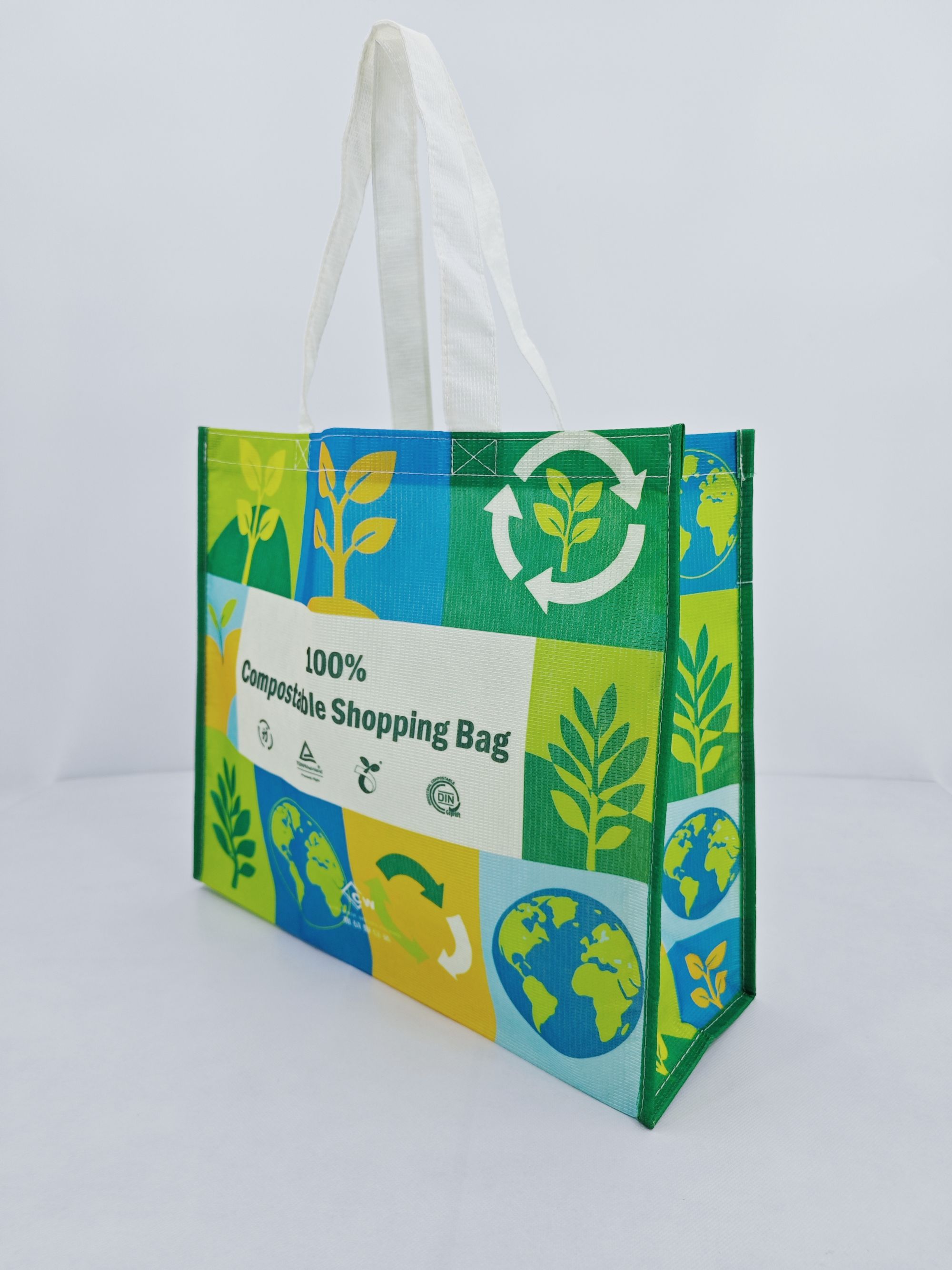
Flip the box over and ignore the front-facing green claims. A real compostable bag should carry a numbered certification mark like BPI, TUV Austria, or the Seedling logo. If all you see is a vague “eco-friendly” or “biodegradable” stamp without a standard reference (like ASTM D6400 or EN 13432), put it back. Those words alone mean nothing in a landfill or a home compost pile.
Run your thumb across the material. Most certified compostable bags have a slightly tacky, softer feel and make a low rustling sound rather than the sharp crinkle of conventional plastic. They also tend to stretch less before tearing. If a bag feels exactly like a standard grocery produce bag, that sameness is a red flag.
Look for the words “home compostable” only if you actually plan to compost at home. Many industrial compostable bags need the high heat of a commercial facility and will sit intact in a backyard bin. A trustworthy product states the specific conditions and timeframe, such as 90 days in an active compost system, instead of hiding behind a leaf icon.
My Compost Bin Smells Better Since Switching Bags
I used to dread lifting the lid on my kitchen compost bin. Even with frequent emptying, that sour, overripe smell clung to the plastic and followed me around the kitchen. The old bags were thin and tore easily, so scraps leaked into the container and started to break down before I ever made it to the outdoor pile. Switching to thicker, plant-based liners changed things almost overnight. The new bags actually hold their shape, and they let the contents breathe a little instead of trapping moisture against the sides. That alone cut the worst of the odor.
What surprised me most was how much difference the bag material made. The previous ones had a waxy coating that seemed to lock in anaerobic nastiness. These new ones are unlined and break down slowly, so the scraps stay drier and the airflow keeps things from turning into sludge. I also started layering a bit of shredded cardboard at the bottom of each bag, and the smell dropped even more. Now when I open the bin, I get a faint earthy scent instead of a wave of rot.
It’s not just about the bags themselves, though. Having a liner I trust means I actually empty the bin more regularly, because I’m not avoiding the chore. The whole rhythm got easier: fill, tie, carry out, repeat. My outdoor compost pile seems happier too, since the bags break down without leaving plastic shreds behind. If your kitchen bin has a smell that won’t quit, try switching to a breathable compostable bag before blaming the scraps.
The Hidden Costs of Cheap Compostable Bags
The sticker price on those bargain compostable bags rarely tells the whole story. Many are manufactured with additives or coatings that slow degradation outside industrial facilities, meaning they linger in backyard piles for months. Worse, some cheap options contain fluorinated compounds—often called PFAS—that can leach into soil as the bag fragments.
There's also a quiet burden placed on waste systems. Municipal composting sites frequently pull out intact or partially degraded bags because they jam machinery or fail to meet processing timelines. This manual sorting isn't free; it raises operating costs that eventually circle back to residents through higher service fees or reduced compost quality.
And let's not ignore the inconvenience factor. Flimsy seams and weak bottoms lead to splits mid-use, so you end up using two or three bags where one sturdy option would do. Over a year, that “cheap” purchase can become more expensive—and more wasteful—than a higher-quality alternative.
What Your Local Compost Facility Wishes You Knew
Your local compost facility is not a magical black box that turns anything labeled “compostable” into rich soil. It is a living biological process tuned to specific feedstocks, moisture levels, and temperatures. That means the products you assume will break down—like compostable cutlery, bioplastic bags, and even some paper plates with glossy coatings—often end up being screened out and sent to landfill. The facility wishes you knew that “compostable” on a package does not mean it belongs in your curbside bin. Most industrial sites need those items to degrade within a strict time window, and if they don’t, they contaminate an entire batch.
Contamination is the single biggest reason organic waste gets rejected. A greasy pizza box is usually welcome, but the plastic liner inside it is not. Those tiny produce stickers, twist ties, and rubber bands are a constant headache—they jam grinders and show up as colorful flecks in finished compost. Even a few stray pieces of plastic wrap can force a facility to landfill tens of thousands of pounds of otherwise good material. What your local site wishes you knew is that being conservative with what you toss is more helpful than trying to recycle every last scrap. When in doubt, check their latest accepted items list, because it changes with the seasons and the specific equipment they run.
One thing that surprises most residents is how many household paper products are actually welcome. Used paper towels, napkins, and uncoated paper plates can be a valuable source of carbon. But only if they aren’t soaked with cleaning chemicals or mixed with plastic. And while meat, dairy, and bones are often accepted at commercial facilities—unlike backyard piles—the smell and pest issues are real, which is why careful storage and frequent pickup matter. The facility wishes you knew that you are not just throwing things “away.” You are feeding a living system that turns yesterday’s scraps into tomorrow’s soil, and small choices at your kitchen counter ripple outward in ways you cannot see.
Why Thicker Bags Aren't Always Better for Composting
The assumption that a heavier, thicker bag will compost just as well as a thin one doesn't hold up in real compost piles. Extra thickness usually means more material, but it can also mean added binders, coatings, or synthetic fibers that slow microbial action. In a home compost bin, where temperatures rarely get high enough, those thick walls may stay intact for months while thinner certified bags have already disappeared.
Thickness also works against the airflow and moisture penetration that composting depends on. A dense bag can create a barrier, starving the microorganisms inside the pile of oxygen and keeping water from reaching the material that needs to break down. Even in industrial facilities, operators sometimes find that overly thick bags come out the other end as stringy clumps rather than fully decomposed organic matter.
FAQ
Look for certification labels like BPI, TUV, or OK Compost Home rather than vague terms like "eco-friendly." Check if the bag specifies the conditions it needs—home compost versus industrial facility. Also see if it lists the actual plant-based materials, such as cornstarch or PLA, and whether it's free of polyethylene. If the label doesn't tell you where or how to compost it, walk away.
Only if they're certified for home composting. Many bags are designed for industrial facilities that maintain higher, steadier heat and moisture. In a backyard pile that rarely gets turned or stays warm, a "compostable" bag may linger for months or years. Check the fine print; if it says "compostable in industrial facilities," keep it out of your garden heap.
Because some are blended with synthetic polymers to improve strength and shelf life. That mix can prevent proper breakdown and leave microplastics behind. High-quality compostable bags made from PLA or PBAT might feel slightly different—often a bit softer or more textured—but the only reliable clue is a certification mark and a full ingredient list.
Reuse makes sense if the bag is still clean and sturdy. But frequent wetting, stretching, and UV exposure can weaken the material and start degradation early, which may cause it to tear and spill. If you reuse, keep it dry and limit heavy loads. Once it shows signs of thinning or small cracks, it's time for the compost bin.
Landfills are designed to be airless, so even organic waste rots very slowly and releases methane. A compostable bag buried in that environment won't break down the way it would in a compost pile; it can persist for a long time. That's why these bags only make a difference when paired with real composting infrastructure, not as a free pass to landfill them.
They can, but not all are equal. Thicker bags with a PBAT blend tend to hold moisture longer, while thin cornstarch-only bags may start to soften within a day or two. Line a small countertop bin, empty it every couple of days, and keep the bag away from direct heat. For very wet scraps, you might want to drain liquids first.
If the bag is certified for home or industrial composting and has fully broken down into humus, it should be safe. However, inks, adhesives, or unknown additives on printed bags can leave residues. To be cautious, choose plain, unprinted bags for food-scrap collection and avoid colored or heavily labeled versions in vegetable beds.
Keep them in a cool, dry, dark place—ideally in their original box or a cloth bag. Heat, humidity, and sunlight accelerate degradation. Don't store them in a hot garage or near a window. Also, buy only what you can use within six to twelve months, because even under good conditions, the material slowly loses strength over time.
Conclusion
Most bags stamped "compostable" won't break down the way you think. In a landfill, they sit just like plastic because the conditions—no oxygen, no active microbes—aren't there. That's the first uncomfortable truth. Before you buy, look for certification marks like BPI or TUV, but even those can be faked, so check the batch number and material list. I've also learned that thicker isn't necessarily better. A bag made from 100% PLA at 20 microns can compost faster than a 40-micron blend loaded with fillers, because the fillers slow microbial action. And those cheap multi-packs? They often use starch blends that fragment into microplastics rather than fully degrading, which local compost facilities hate because they have to screen out the residue.
Switching to a certified bag changed my kitchen bin. The sour, anaerobic smell disappeared because the plant-based film breathes just enough without leaking. But there's a hidden cost beyond the price tag: if you don't compost at home, you need a facility that actually accepts these bags. Many municipal programs won't take them, so I called my local site and found out they want only unlined food waste—no bags at all. That forced me to rethink. Now I use a reusable bin liner and only reach for a compostable bag when I'm carrying scraps to a drop-off that specifically allows them. The best bag for sustainable living isn't the one with the biggest marketing claims; it's the one that matches how your waste actually gets processed.
Contact Us
Contact Person: Tony
Email: [email protected]
Tel/WhatsApp: +8615859766913
Website: https://www.cw-pak.com