

Best Load Break Switch Options for Reliable Power Isolation
2026-09-15
When a circuit must be isolated under load, even a small mistake can cascade into costly downtime or unsafe conditions. The best load break switches don't just interrupt current—they provide visible confirmation, repeatable performance, and confidence in harsh environments. This post compares practical options for reliable power isolation, from traditional air-break designs to modern gas-insulated units. For teams evaluating fail-safe switching, Deepwill offers a range of load break switches engineered to hold up when it matters most.
Choosing a Load Break Switch That Matches Your Actual Operating Voltage
Voltage ratings on load break switches are often treated as a simple checklist item, but real-world systems rarely behave like spec sheets. A switch labeled for 15 kV might seem adequate on paper, yet if your distribution network regularly sees transient spikes or operates near the upper end of its nominal range, you're inviting premature contact wear and potential insulation failure. The key is to stop thinking in terms of “just high enough” and start considering the voltage profile your equipment actually experiences hour by hour.
Many engineers overlook the difference between system voltage and the switch's rated maximum voltage, assuming a comfortable margin exists. But factors like cable charging currents, harmonic distortion, and switching surges can push momentary voltages well beyond the steady-state value. A load break switch that only satisfies the nominal rating may struggle to interrupt capacitive or inductive loads cleanly if the recovery voltage after interruption is higher than expected. Matching the switch to your actual operating voltage means accounting for these dynamic conditions, not just the number on the nameplate.
A better approach is to map out the worst-case voltage scenarios your switch will face, including phase-to-phase and phase-to-ground values, before making a purchase. Then compare those against the switch's dielectric withstand and interrupting capabilities under load. This isn't about buying the highest-rated switch available—that's wasteful—but about finding one that sits comfortably within the voltage envelope your system actually produces. A switch that matches your real operating voltage will last longer, require less maintenance, and give you predictable performance day after day.
The Case for Enclosed Designs in Dusty and Wet Industrial Settings
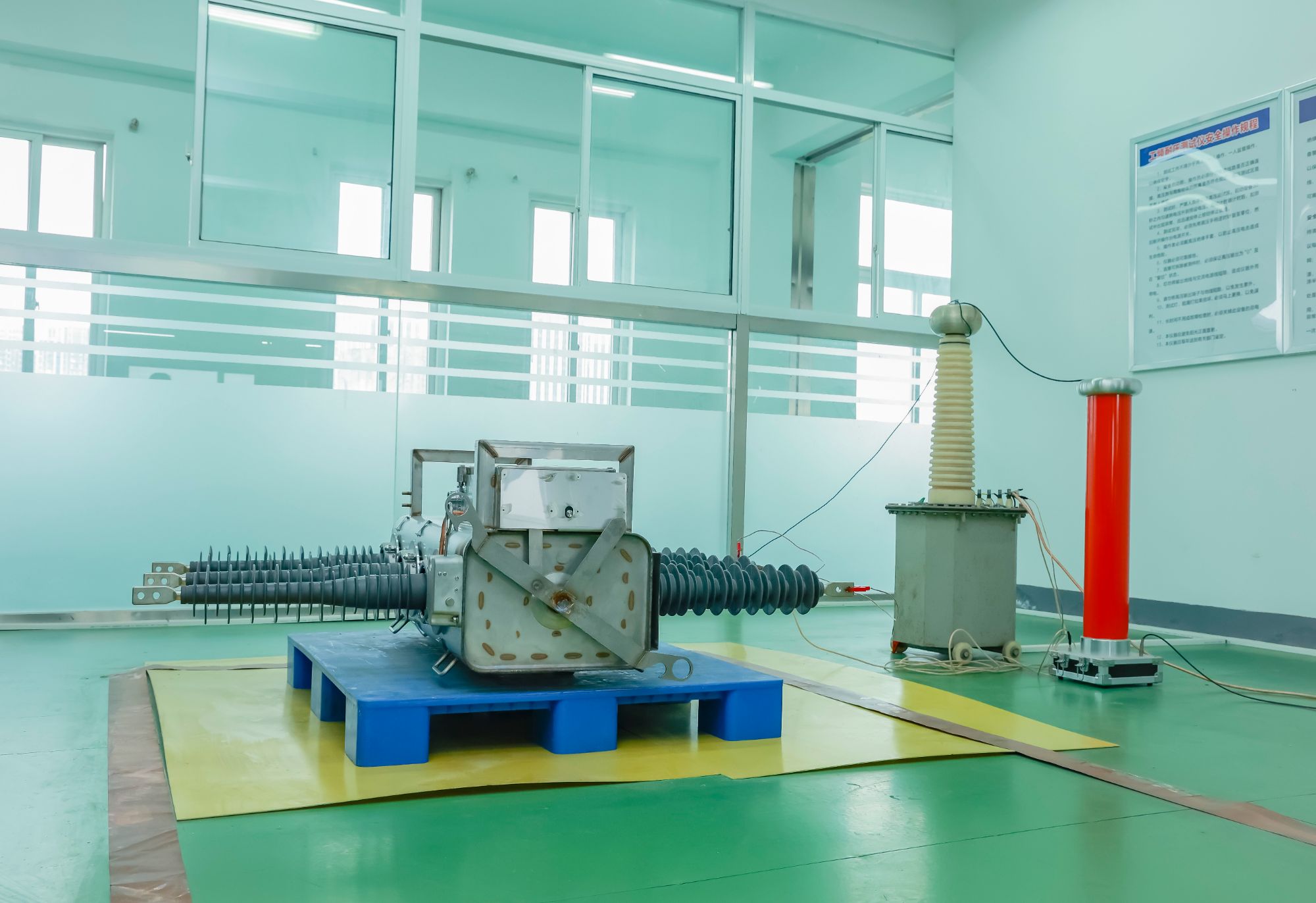
Open-frame machinery might look convenient on a showroom floor, but once it's stationed near a grinding line or a washdown zone, every exposed bearing and connector becomes a liability. Dust doesn't just settle; it migrates into cooling fins, clogs ventilation slots, and turns lubrication into abrasive paste. Wetness compounds the problem, carrying conductive particles into terminal blocks and accelerating corrosion on fasteners that were never meant to see moisture. Enclosing the system changes the physics of failure—instead of constantly fighting contamination, the design simply keeps it out of reach.
The real advantage isn't just protection; it's predictability. When electronics and moving parts live behind a sealed barrier, maintenance stops being a guessing game tied to the last rainstorm or a particularly dusty production run. Thermal management becomes deliberate through filtered intakes or heat exchangers rather than incidental airflow that also invites debris. Drainage channels and gasketed seams mean a daily hose-down doesn't turn into a slow-motion short circuit. For plants running multiple shifts in harsh conditions, that predictability translates directly into fewer unplanned stops and less time spent chasing intermittent faults caused by a film of grime on a sensor.
There's also a quieter economic argument. An enclosed unit may cost more upfront, but the alternative—retrofitting shields, replacing corroded boards, or rewiring after a flood—rarely shows up as a single line item. It accumulates through overtime labor, expedited parts, and the slow erosion of equipment lifespan. Choosing an enclosed design from the start means accepting that the environment will win any fair fight against exposed components, and deciding not to give it the chance.
Break Capacity Demystified for Everyday Maintenance Planning
Most maintenance teams treat break capacity as a spec sheet detail that only matters during equipment selection. In practice, it is the maximum fault current a breaker can interrupt without damaging itself or adjacent gear. If your facility has added loads, upgraded transformers, or changed feed configurations, the available fault current can creep past the breaker's rating. That turns a routine fault into a potential arc flash or welded contacts.
A common mistake is assuming a breaker that trips frequently is still safe. Repeated interruptions near the upper limit cause contact erosion and reduced dielectric strength. Planning around break capacity means checking the fault current calculations after any major electrical change, not just when a breaker fails. It also helps to compare the breaker's interrupting rating against the actual available fault current at its location. If the margin is thin, move replacement higher on the work order list.
For everyday planning, keep a simple matrix: breaker ID, calculated fault current, rated break capacity, and last verification date. Review it during scheduled shutdowns. If the available fault current is within 80% of the breaker's rating, flag it for re-evaluation. This small step prevents surprise failures and keeps your maintenance backlog focused on real risks rather than calendar-based swaps.
How Visible Blade Isolation and Mechanical Interlocks Prevent Accidents
A visible blade isolator gives a worker something no status lamp can offer: a direct line of sight to an open air gap. When the switch handle moves to the off position, the copper blades physically separate, and you can see the distance between them before you ever touch a cable or busbar. That visual confirmation removes the guesswork from lockout-tagout and catches cases where a contact has welded or a mechanism has jammed but the indicator still shows open.
Interlocks prevent the next mistake by making dangerous access mechanically impossible. A well-designed panel cannot be unlatched until the isolator blades are open, because a steel cam or sliding bar blocks the door handle. Some enclosures take it further: the blades cannot be reclosed while the door is ajar, and a grounding switch can only engage after the blades are visibly open. These are not prompts on a screen—they are physical constraints that hold up even when a worker is tired, rushed, or misreads a label.
Field Notes from Electricians on Switches That Last
Ask any electrician who's spent a decade pulling wire through old homes, and they'll tell you the same thing: the switches that last aren't the flashy ones. They're the ones with solid screw terminals, not backstab connections. A good switch should feel almost boring to install—no wiggle in the toggle, no hollow click when you flip it. The pros I've worked with keep a short mental list of brands that never get callbacks, and they rarely deviate from it.
One pattern that shows up in field notes is that heat is the enemy. Cheap switches can run warm under load, especially with LED dimmers that weren't designed for the actual bulb count. A veteran electrician once pointed out to me that the screws on a failing switch often show signs of arcing—little pits or discoloration. If you open a box and see that, it's not a switch problem anymore; it's a fire waiting. The durable ones use heavier gauge internals and don't flex when you torque the terminal screws to spec.
Another note worth passing along: the mounting ears matter. A switch that lasts is one that sits flush and stays put, even after years of kids slapping it on and off. Some newer models use a nylon body that won't crack if the wall settles, while older bakelite ones would snap under the same stress. Electricians will also tell you to skip the cheapest bulk-pack switches at the big-box store. Pay a little more for a commercial-grade model and you'll likely never touch that box again.
Calculating the Real Cost Difference Between Economy and Premium Options
A side-by-side ticket price rarely tells the whole story. The real difference starts to show when you factor in what each fare actually includes. Economy might look cheaper on the surface, but add in bag fees, seat selection charges, and the cost of an onboard meal or two, and the gap closes faster than most people expect. Premium options often bundle those extras, which means the higher upfront number can end up being the more honest price.
Then there's the value of your time and comfort. A cramped seat with no recline might be tolerable for ninety minutes, but on a six-hour route it can leave you exhausted before you even land. Premium cabins usually offer more legroom, earlier boarding, and sometimes lounge access or priority security. If those perks save you an hour at the airport or let you arrive rested enough to work or enjoy your first day, that's a concrete cost offset, not just a luxury.
The smartest approach is to build a quick personal checklist. List the add-ons you know you'll use, estimate their cash value, and then compare the true totals rather than the headline fares. Also consider how often you fly. Infrequent travelers might pay for premium only on long-haul or overnight segments, while regular flyers often find that a mid-tier bundle pays for itself through avoided fees and less post-trip fatigue.
FAQ
A load break switch is a disconnect device designed to make or break load currents under normal operating conditions. Its main job is to provide a visible, safe point of isolation so maintenance crews can work on downstream equipment without exposure to live voltage. Unlike a simple isolator, it can interrupt the circuit while current is flowing, which makes it a practical choice for switching feeders, transformers, or capacitor banks.
The key difference comes down to fault interruption. A circuit breaker is built to clear short-circuit currents and protect the system from major faults, while a load break switch only handles normal load currents up to its rated capacity. If a fault occurs downstream, the load break switch won't trip on its own; it relies on an upstream breaker or fuse to clear the fault. That's why you often see them paired together in medium-voltage switchgear.
There are three common types: air-break, gas-insulated (SF6 or clean air), and vacuum-interrupter switches. Air-break units are simple and affordable but require more space and are sensitive to environmental conditions. Gas-insulated switches are compact, sealed, and well-suited for harsh or outdoor installations. Vacuum interrupters offer excellent arc quenching and a long electrical life, making them a strong choice for frequent switching duties. The right pick depends on space constraints, operating environment, and switching frequency.
You need to match the switch to your system's nominal voltage and maximum continuous load current, not just the transformer kVA. For medium-voltage distribution, common ratings span 5 kV to 38 kV, with continuous current ratings from 400 A to 1200 A. Also check the short-time withstand current and making capacity so the switch can survive a close-into-fault event without disintegrating. Oversizing the current rating slightly can add margin without much extra cost.
Look for a visible break indication, padlockable handles in both open and closed positions, and an integrated grounding switch that automatically interlocks with the main contacts. A viewing window lets operators confirm the blade position at a glance, which is a huge safety plus. Some units also offer arc chutes or de-ionizing chambers to safely extinguish the arc during load interruption, reducing flash hazards.
No. A standard load break switch is not designed to open under short-circuit conditions. Attempting to do so can cause severe arcing, contact damage, or even an explosion. Fault clearing must be handled by an upstream circuit breaker or fuse. However, many load break switches have a high making capacity, meaning they can safely close onto a fault if the upstream protection clears it shortly afterward.
For air-break switches, inspect contact surfaces for pitting or burning, clean insulating surfaces, and re-lubricate pivot points every few years. For sealed gas or vacuum units, maintenance is minimal, but you should still check gas pressure indicators or vacuum integrity periodically and exercise the switch a few times a year to prevent mechanical binding. Always follow the manufacturer's torque settings and alignment checks after any major fault event.
Conclusion
Choosing a load break switch that actually holds up starts with matching its voltage rating to your real operating conditions, not just the nameplate on the panel. A switch rated for 600 V won't do you any favors in a 1000 V mining setup, and oversizing often just wastes money. In dusty or wet industrial areas, enclosed designs earn their keep by keeping contacts clean and corrosion out, which matters more than most people expect. Break capacity is another thing that gets overlooked until a fault happens; for routine maintenance planning, a switch needs to interrupt the load current without drama, and that means understanding the difference between normal load breaking and fault clearing. Visible blade isolation combined with mechanical interlocks adds a layer of safety that lockout tags alone can't match, because you can see the actual disconnect point.
Field experience from electricians shows that switches with beefy hinge mechanisms and silver-plated contacts tend to outlast the cheaper alternatives, especially in facilities with frequent switching. The real cost gap between economy and premium options isn't just the purchase price; downtime from a failed switch, replacement labor, and the risk of an arc flash incident often push the total cost far beyond the initial savings. For reliable power isolation, the best choices are the ones that combine correct ratings, enclosure protection, honest break capacity, visible isolation, and a build quality that survives daily use. It's less about brand names and more about matching the switch to the conditions it will actually face.
Contact Us
Contact Person: Julion
Email: [email protected]
Tel/WhatsApp: 8617351370631
Website: https://www.deyunelectric.com