

Best Solar Farm Factory Insights: Top Manufacturing Strategies for Maximum Efficiency
2026-05-10
The race to dominate the solar farm industry isn't just about panel efficiency—it's about rethinking every link in the manufacturing chain. In our deep dive into the best solar farm factory insights, we uncover the top strategies that separate high-output plants from the rest. From precision automation to supply chain agility, these methods are reshaping how gigawatt-scale projects come to life. As a driving force in this evolution, Topfencesolar exemplifies the innovation needed to slash costs and accelerate deployment. Ready to see what it takes to build the factories powering tomorrow's grids?
Trimming the Fat from Panel Assembly Lines
Every extra motion on the assembly floor chips away at both time and profit—yet many panel production setups still carry hidden inefficiencies that go unnoticed. The real trick is to view the line not as fixed stations, but as a continuous stream of material and labor, where even minor delays compound into serious output gaps. Instead of chasing perfect cycle times on paper, smart managers watch where workers actually walk, when they wait, and which tools end up buried under clutter. Often, the simplest adjustments—repositioning a feeder rack, standardizing a tricky bolt pattern, or eliminating duplicate inspection steps—remove more waste than any expensive automation retrofit.
One often-overlooked culprit is the habit of overprocessing: adding protective films, redundant labels, or cosmetic touch-ups that downstream customers never asked for. Questioning each action with a blunt “does this add value?” leads to uncomfortable but useful cuts. Another source of bloat surfaces when material handling follows outdated logic—kits delivered to the wrong side of the line force operators to twist, walk, or wait, silently bleeding seconds from every panel. Rethinking layout so that parts arrive within arm’s reach, in the exact order of assembly, can shave minutes per unit without spending a dime on new machinery.
None of this sticks unless the team on the floor owns the improvements. Suggestions from above get polite nods; ideas born from the workers who live the process tend to last. Inviting assemblers to map their own wasted motions, then testing small changes during a lunch break, builds momentum that no consultant’s report can replicate. The goal isn’t a sterile, breakneck line—it’s a rhythm where people aren’t fighting the setup, and every panel moves forward with less effort and more predictability.
Smart Automation That Actually Lowers Costs
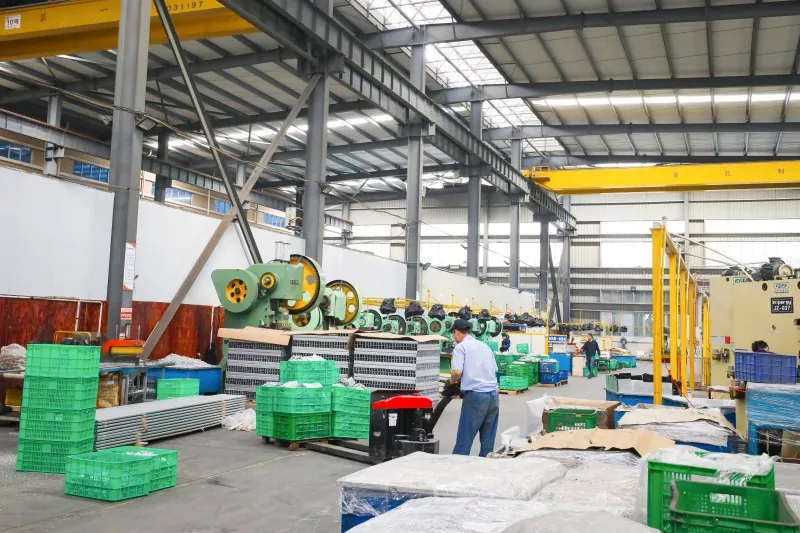
For years, companies chased automation with big promises and bigger budgets—only to watch complexity bleed into their bottom line. The smarter approach flips that script: it zeroes in on the dull, repetitive tasks that quietly drain productivity, not the headline-grabbing moonshots. When you eliminate the manual back-and-forth of invoice processing or inventory checks, you stop paying people to play ping-pong with data. The savings aren't theoretical; they show up in reduced overtime, fewer errors, and a team that finally has time to fix what really matters.
What often gets overlooked is how poorly tuned automation becomes its own cost center. A well-designed system learns and adapts—trimming waste by recognizing patterns that human managers miss. Think of a logistics chain where tiny adjustments in routing, based on real-time traffic and weather, prune fuel costs by 12-15% without anyone touching a dashboard. That kind of quiet intelligence doesn't just cut expenses; it makes cost-saving a continuous, self-correcting habit rather than a one-off project.
The true win comes when you tie automation directly to outcomes that the CFO cares about. Instead of measuring how many bots you've deployed, start tracking how much shadow IT budget you've reclaimed, or how many customer churn triggers you've disarmed through proactive alerts. One midsize manufacturer turned off thirty “monitoring” subscriptions after their automation revealed they were watching data nobody used. That's the difference between automation that impresses in a demo and automation that actually leaves more cash in the bank.
Building a Bulletproof Supply Chain for Solar Components
Securing a reliable flow of materials starts with mapping every tier of your supplier network, not just the obvious ones. Many solar manufacturers overlook the hidden risks in second- and third-tier providers, where single points of failure often hide. A practical step is to trace the origin of polysilicon, wafers, and specialized glass back to their raw sources, assessing geopolitical stability, logistics bottlenecks, and even weather patterns that could disrupt delivery. This granular visibility lets you preempt disruptions rather than react to them, turning supply chain resilience from a buzzword into a everyday operational habit.
Resilience also demands a procurement strategy that balances cost with redundancy. Instead of chasing the lowest per-unit price, top-performing companies qualify multiple suppliers across different regions and keep limited buffer stock of critical components like junction boxes and encapsulants. They also negotiate flexible contracts with transparent force majeure clauses, ensuring sudden policy changes or natural disasters don't halt production for weeks. Embedding quality audits directly into the supplier relationship—not just at the factory gate—prevents substandard materials from slipping through and degrading module performance downstream.
Finally, the human layer of the supply chain often makes or breaks resilience. Building long-term partnerships with suppliers encourages them to prioritize your orders during shortages and collaborate on continuous improvement. Regularly rotating cross-functional teams to visit supplier sites builds trust and uncovers inefficiencies before they become crises. Pair this with a digital monitoring layer that tracks container movements, customs clearances, and even ocean freight capacity in real time, and you move from fragile just-in-time models to a robust, just-in-case posture that keeps solar projects on schedule regardless of external shocks.
Quality Control That Prevents Defects Before They Happen
Catching a flaw at the end of the line is expensive, disruptive, and frankly, a sign that the process has already failed. Real quality isn’t about inspection; it’s about designing the work so defects never have a chance to appear. This means shifting focus upstream—analyzing potential failure modes before production begins, tightening process parameters, and using mistake-proofing techniques that make incorrect assembly or input physically impossible. When you treat every deviation as a learning opportunity and adjust the system in real time, you stop fighting fires and start preventing them.
A proactive approach often looks subtle: tooling that only fits together one way, sensors that halt a machine the moment a reading drifts beyond a control limit, or clear visual indicators that make an abnormal condition instantly obvious. Yet the real engine is data—not just collecting it, but interpreting it quickly enough to act before a trend becomes a nonconformance. Statistical process control, when coupled with a workforce trained to react to early signals, turns a reactive shop floor into a self-correcting system. The goal is to make the current condition visible to everyone, so the team can keep the process in a stable, capable state without waiting for an inspector’s verdict.
None of this works without the right mindset. Technology and tools only support a culture where every operator feels ownership for the output and is empowered to pause a line if something feels off. In such environments, quality becomes not a department but a shared reflex. The most resilient systems are those where prevention is woven into daily routines: brief stand-up meetings to discuss near misses, cross-functional reviews of process changes, and consistent reinforcement that catching a potential issue early is always celebrated. Over time, this builds a deep organizational instinct for anticipating problems, rather than just reacting to them.
Integrating On-Site Clean Energy into Manufacturing
Bringing solar panels, wind turbines, or even small-scale hydro directly to a factory floor isn't just a nod to sustainability—it's a hard-nosed business move. When energy bills swing wildly with market prices, having your own power source can lock in predictable costs and insulate production from grid disruptions. More manufacturers are realizing that rooftop solar or on-site battery storage can slash operational expenses while quietly building resilience against external shocks that used to seem like distant worries.
The actual integration, though, demands more than just slapping panels onto a warehouse. It means rethinking load profiles, aligning production schedules with energy generation peaks, and often adding smart controls that juggle between on-site power and the grid in real time. Some plants are experimenting with microgrids that island critical machinery during outages, while others pair renewable generation with process redesign—like using solar thermal to preheat materials, turning a simple technology into a direct replacement for fossil fuel heat.
The ripple effects go deeper than the balance sheet. Factories that run partly on their own clean power often find it reshapes their positioning with clients who are scrutinizing supply chain emissions. And as carbon pricing expands, the ability to quantify every avoided ton of CO2 from on-site generation becomes a tangible asset. It’s a shift that’s quietly turning energy from a background utility into a competitive lever, one that makes the building itself part of the production line.
Using Real-Time Data to Eliminate Production Bottlenecks
Manufacturing floors are dynamic environments where a single delayed machine can ripple through the entire schedule. By streaming data directly from PLCs, sensors, and MES platforms, engineers get a live feed of cycle times, throughput, and work-in-progress counts. This immediate visibility replaces end-of-shift reports and gut-feel troubleshooting, letting teams detect a forming bottleneck before it forces downstream stations to idle.
Alerts tied to real-time thresholds do more than just flag trouble—they recommend where to redeploy resources. For instance, when a pick-and-place unit starts lagging by three seconds per cycle, the system can suggest rerouting a floater operator or adjusting the upstream buffer. These micro-corrections, applied within minutes instead of hours, keep lines balanced without overproducing or piling up costly inventory at the constraint station.
Patterns hidden in the stream become clear over time, revealing chronic bottlenecks that shift scheduling and capex decisions. Instead of guessing which work center needs an upgrade, operations managers can overlay real-time performance data with planned maintenance and demand forecasts. The result is a tighter synchronization between production capacity and actual orders—less firefighting, fewer missed deadlines, and a continuous cycle of improvement grounded in what the machines are actually doing right now.
FAQ
Many focus on equipment selection, but material flow and workstation proximity often get ignored. A layout that minimizes internal transport and buffer stock can cut cycle times by over 15%, while poor zoning leads to bottlenecks that high-tech machinery can't fix.
Leading factories use a 'hybrid automation' approach: repetitive, precision-heavy tasks are automated, but final assembly and quality checks still involve skilled workers for flexibility. The key is designing workstations where human-machine collaboration reduces errors without sacrificing speed.
Instead of just chasing low prices, top producers build dual-source supplier networks and implement real-time inventory buffers for critical items like junction boxes and glass. They also use predictive analytics to adjust procurement based on production line harmonics, avoiding stockouts without bloated storage.
Beyond basic OEE monitoring, advanced factories feed vibration, temperature, and vision system data into AI models that predict failures minutes before they happen. This predictive maintenance, combined with instant alerts to operators' wearables, has reduced unplanned downtime by up to 40% in some plants.
Process reengineering often beats big machinery purchases. Simple changes like rearranging soldering stations, implementing shadow boards for tools, and using lean six sigma for waste reduction have delivered 20%+ productivity jumps. Employee-driven Kaizen programs also tap into frontline insights that expensive consultants miss.
Many factories overlook compressed air systems, which can account for 30% of total energy use. Fixing leaks, optimizing piping, and recovering heat from compressors lowers cost per panel. Additionally, scheduling high-energy processes during off-peak tariffs and using natural lighting in packaging areas cut operational expenses significantly.
Instead of end-of-line testing, top manufacturers embed 100% inline inspection using electroluminescence and AI-powered defect classification after each critical step. This catches microcracks and soldering flaws early, when rework is cheap, and creates data feedback loops that adjust upstream processes in a matter of hours.
Progressive factories use cross-functional skill matrices and 'cell' accountability structures where teams own entire process segments. Gamified training simulators for new hires and daily stand-up meetings focused on problem-solving rather than blame have dramatically reduced defects and boosted morale, directly translating to higher output per shift.
Conclusion
Solar panel manufacturing has entered a new era where efficiency is paramount. Streamlining assembly lines by cutting wasteful steps and adopting lean principles yields immediate gains. When paired with smart automation—robots and AI that handle repetitive tasks precisely—costs actually drop while output climbs. But efficiency doesn't stop at the factory floor; a resilient supply chain is crucial. Diversifying suppliers and using predictive analytics to anticipate shortages ensures that production never halts for want of a single component.
Equally vital is proactive quality control. Instead of catching flaws after assembly, embedding inspection systems at every stage prevents defects from ever taking root. On the energy front, factories are turning their own rooftops into power sources, integrating on-site solar to cut operational costs and carbon footprints. Finally, real-time data from sensors across the production line pinpoints bottlenecks instantly, allowing managers to tweak processes on the fly. Together, these strategies form a holistic blueprint for solar factories that don't just keep up with demand—they define it.
Contact Us
Contact Person: Nancy
Email: [email protected]
Tel/WhatsApp: +86-13365923720
Website: https://www.topfencesolar.com/