

Capsule Slip Ring Manufacturer: What Engineers Should Ask Before Choosing a Supplier
2026-08-31
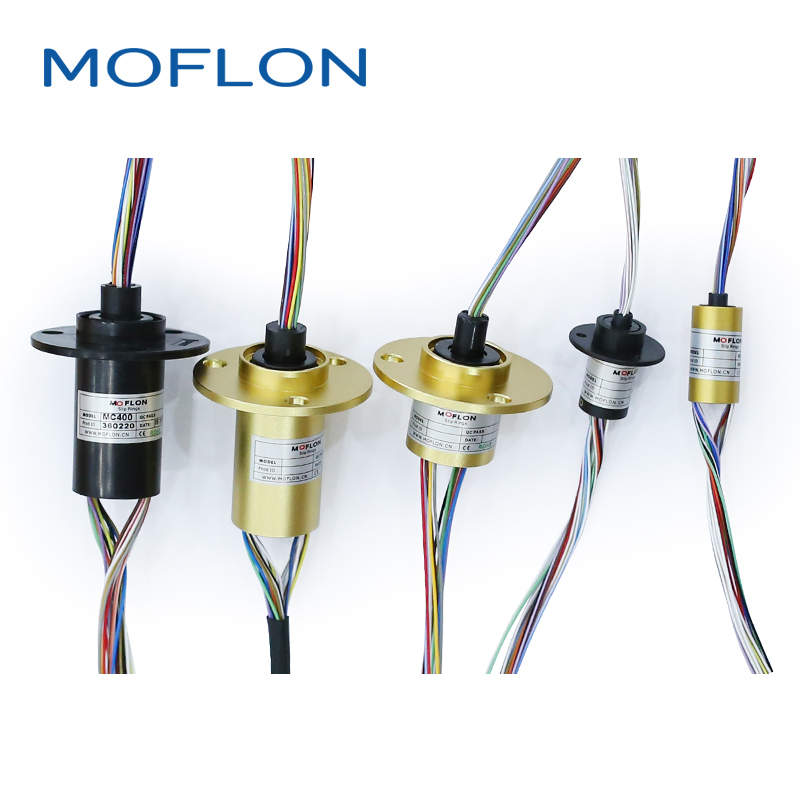
Before you sign off on a capsule slip ring manufacturer, pause and ask the uncomfortable questions—because the wrong choice shows up later as noise, drift, or early field failures. From contact materials to signal integrity under real loads, the details matter more than the datasheet. In this guide, we break down what engineers should probe before committing, and why teams increasingly benchmark against MOFLON for demanding motion systems.
Contact Materials and Resistance Stability You Can't Overlook
When a switch or connector is expected to perform for millions of cycles, the metal chosen for its contacts quietly decides whether that promise holds. Gold flash over nickel may look identical on a datasheet, yet under low current and high humidity the thin plating can develop micro-pores that invite corrosion. Engineers who have chased intermittent failures understand: the real specification isn't just initial contact resistance, but how that number drifts after exposure to temperature swings, vibration, and atmospheric pollutants. Silver alloys, for instance, offer superb conductivity but tarnish readily unless protected — a trade-off that becomes visible only after months of field data rather than a bench test.
Stability hinges on more than the outer layer. The substrate beneath the plating acts as a diffusion barrier or a source of trouble depending on its porosity and hardness. A copper-rich base can migrate through a thin gold layer over time, raising resistance in ways that no amount of contact force can reverse. Similarly, arcing during make-and-break erodes softer materials unevenly, creating pits that concentrate current and accelerate heating. Designers who ignore this often find their product passing initial resistance checks only to drift out of tolerance by the first service interval. A robust pairing — such as palladium-nickel under hard gold — may cost more up front but avoids the hidden expense of unexplained field returns.
The overlooked factor is mechanical wear as a variable in electrical stability. Each insertion scrapes away a few nanometers of plating, and the rate of removal depends on normal force, surface roughness, and the presence of lubricants. Too little force invites fretting corrosion; too much accelerates plating wear. In connector applications with frequent mating, a thicker gold layer isn't always the answer — instead, a harder alloy or a selective plating on the exact wear path can keep resistance flat while reducing material waste. Testing should replicate real duty cycles, including hot-unplug events and low-level signal interruption, because the failure mode that matters is rarely the one captured by a single resistance reading at room temperature.
Lifecycle Ratings: Separating Marketing Numbers from Real-World Wear
When a product page promises “20,000 hours of durability,” that figure rarely survives contact with actual use. Bench tests often run under ideal conditions: steady loads, clean surfaces, controlled temperatures. Your daily reality involves coffee spills, uneven floors, and that one drawer you always slam. The gap between spec-sheet heroics and lived-in performance is where lifecycle ratings earn their keep—or quietly fall apart.
A more useful approach tracks degradation in stages. Break the lifespan into thirds: early failure from manufacturing flaws, mid-life wear from friction and load cycles, and end-of-life drift where tolerances loosen and materials fatigue. Real-world data from returns, repair logs, and long-term user reviews shows which failure modes actually matter. A zipper that tests fine for 10,000 pulls in a lab might fail at 2,000 after repeated exposure to sand or cold. Ratings that ignore these context shifts are just marketing numbers wearing a lab coat.
The difference becomes visible when you compare two products with identical specs. One chair’s gas lift lasts five years of daily height adjustments; another starts sinking after eight months. Both claimed the same cycle count. The honest measure isn’t the headline number—it’s the shape of the degradation curve. Companies that publish field failure rates, not just accelerated test results, give you something closer to a prophecy than a guess.
Environmental Sealing Claims Worth Probing
When a connector datasheet boasts IP67 or IP69K ratings, it's easy to assume the part will shrug off anything a factory floor throws at it. But real-world failures often trace back to subtle mismatches: mated versus unmated ratings, test durations, or whether the seal was actually verified after repeated thermal cycling. Digging into the fine print can reveal that a “sealed” connector may only maintain its rating under static, room-temperature conditions — not the hot, vibrating, chemical-splashed environments it will actually face.
Another area worth probing is the grommet and cable interface. A connector might pass a lab dunk test with a perfectly round, smooth-jacketed cable, yet leak when paired with a slightly oval or irregularly textured wire. Some manufacturers hedge by specifying only certain cable diameters or jacket materials, quietly shifting the burden of sealing onto the installer. Without questioning those claims, you could end up with a connector that passes incoming inspection but fails three months later in the field.
Finally, watch for how sealing performance degrades over time. Accelerated aging tests may use heat alone, ignoring the combined effects of ozone, pressure washing, or repeated mating cycles. A connector that earns its IP rating fresh out of the bag can lose it after a few dozen connect-disconnect cycles, as the seal takes a set or gets nicked by housing edges. Probing those claims up front — requesting test reports, cycle-life data, and chemical compatibility charts — can save you from a costly, hidden weak point in your design.
Customization Timelines and Engineering Support That Actually Help
Many vendors quote a timeline that sounds impressive in a proposal but crumbles the moment custom work begins. We measure customization schedules against real engineering capacity, not sales enthusiasm. That means asking hard questions up front about data structures, legacy systems, and edge cases before promising a delivery date. The result is a timeline you can actually plan around, not one that forces your team into constant firefighting.
When a requirement shifts or an integration misbehaves, you shouldn't have to wait through three layers of account managers. Our engineering support is direct and ongoing: the same people who built the base platform review your custom requests, test the changes, and walk you through the deployment. This shortens the loop between "we need a tweak" and "it's live in our environment."
Timelines also need room for honest iteration. Customization rarely survives first contact with real workflows, so we build in short review cycles and treat mid-project adjustments as normal, not as exceptions that trigger renegotiation. You get a schedule that flexes without breaking, plus engineering advice on what to change now and what can wait until later.
Certifications and Test Data: Demanding More Than a Trademark
A recognizable logo might buy a few seconds of trust, but it rarely survives contact with a load chart, a chemical compatibility table, or a thermal cycling report. In industrial procurement, the difference between a brand name and a defensible claim is often a third-party test record that specifies exactly which standard was applied, under what conditions, and with what margin of failure.
That is why certifications such as UL 94 V-0 for flammability, IP67 for ingress protection, or ISO 10993 for biocompatibility are treated as starting points rather than final assurances. The useful detail lives in the test data: the number of cycles to failure, the temperature at which elongation dropped below a threshold, the specific lot numbers tied to a certificate. Without that granularity, a trademark is just a promise wearing a nicer font.
Demanding more than a trademark means asking for the raw data behind the badge—and walking away when a supplier offers a certificate without a test report, a test report without a date, or a date without a controlled revision history.
Lead Times and Production Capacity: Avoiding the Silent Schedule Killer
Most production schedules fall apart long before the first machine starts. The culprit is rarely a single missed delivery; it is the quiet gap between quoted lead times and what the shop floor can actually push through when demand shifts. A supplier might promise six weeks, but that number assumes ideal conditions, no queue at the bottleneck, and no rework. Once you stack multiple components with similar optimistic assumptions, the timeline becomes fiction before anyone notices.
Capacity is the other half of the problem, and it is often mistaken for a fixed number. In reality, it erodes through maintenance downtimes, unplanned absences, and the simple fact that complex jobs eat more hours than their standard routing allows. When planners ignore these losses, the schedule starts borrowing time from future orders. Each small overrun looks harmless on its own, but after three or four weeks the buffer is gone and the team is firefighting instead of producing.
A practical way to avoid this silent killer is to treat lead times and capacity as ranges, not single values. Build a rolling review of actual versus quoted lead times for critical parts, and adjust the master schedule every week based on real throughput rather than the ERP's historical averages. Add a visible queue buffer at bottleneck work centers, and make it someone's job to flag when that buffer shrinks below a defined threshold. That won't make the uncertainty disappear, but it keeps the schedule honest enough to see the problem coming.
FAQ
Ask for the exact contact plating and dielectric grade. Gold-on-gold works for low-current signal lines, while silver graphite suits power channels. The housing should be glass-filled PEEK or anodized aluminum if the assembly sits near motors or hot zones.
A credible supplier will run dynamic tests with a network analyzer at multiple speeds, not just a static continuity check. Request plots showing insertion loss and return loss up to your maximum operating RPM.
Push beyond the standard color-coded leads. Some manufacturers can route the capsule output directly into a flex PCB or integrate a shielded twisted pair for Ethernet, which saves assembly time and reduces failure points.
Expect eight to twelve weeks for a new capsule design, but a factory with in-house CNC and parylene coating can shorten that. If they quote less than four weeks, verify whether they are actually customizing or just relabeling a stock unit.
The brush bundle should be designed so debris collects away from the bearing race. Ask about sealed versus serviceable designs, and whether they provide a realistic brush life estimate based on your duty cycle rather than a generic hour rating.
Request a vibration test report from a shaker table, not just a bench test. Contact resistance variation should stay under 10 milliohms for signal circuits across your specified frequency and amplitude profile.
Insist on actual field return numbers, not just MTBF calculations. A transparent manufacturer will share a Pareto chart of failure causes: bearing noise, insulation breakdown, or connector fatigue. That tells you more than any warranty promise.
The capsule geometry and dielectric spacing must be controlled within tight tolerances. Ask if they can guarantee a characteristic impedance of 50 or 75 ohms through the rotary joint, and request a time-domain reflectometry trace as proof.
Conclusion
Selecting a capsule slip ring manufacturer involves more than comparing datasheets. Engineers should press suppliers on contact material pairings, not just accept vague terms like "gold plated." Ask how resistance shifts over the full operating speed range and under vibration, because a stable milliohm-level reading on a bench test says little about real-world slip ring behavior. Lifecycle ratings deserve equal scrutiny: request the specific failure criteria used to declare end of life, whether that means a 10% resistance spike, excessive noise, or complete signal dropout. A supplier quoting 100 million revolutions may be using ideal lab conditions with minimal current and no side load. Environmental sealing claims also need probing beyond an IP code. Find out if the seal design has been validated through thermal shock, high humidity, dust ingress, and repeated pressure differentials, not just a static submersion test.
Beyond technical specs, the supplier's engineering process often determines project success. Ask how customization timelines are built: do they assign an applications engineer from day one, or does every design question pass through a sales layer? Real engineering support means receiving DFM feedback on mounting tolerances, lead wire routing, and connector selection before tooling begins. Certifications should be backed by sharable test data, including material certs, torque measurements, and insulation resistance reports, rather than a logo on a brochure. Finally, lead time commitments deserve a hard look at production capacity and raw material buffers. A slip ring that arrives late can stall an entire instrument launch. Require the manufacturer to explain their scheduling assumptions and contingency plans, because hidden capacity bottlenecks have derailed more programs than any technical shortfall.
Contact Us
Contact Person: Xiangpin Li
Email: [email protected]
Tel/WhatsApp: 86 186 1706 8578
Website: https://www.moflon.com