

China Calcium Chloride 94% Prills: Essential Guide to Properties and Applications
2026-11-01
From dust control on construction sites to ice melting on winter roads, calcium chloride 94% prills quietly power countless operations. But not all prills are created equal—purity, sizing, and sourcing matter more than most buyers realize. As a leading Chinese supplier, Shouguang Golden Chemical has spent years refining these high-performance granules for demanding applications. In this guide, we cut through the technical noise to show you exactly what makes 94% prills tick and where they deliver the most value.
A Closer Look at 94% Calcium Chloride Prills and What They Offer
A closer look at 94% calcium chloride prills reveals a granular form that trades the messy dust of flakes for clean, uniform spheres. Each prill is sized to flow smoothly through spreaders and augers, whether you are loading a hopper or calibrating a de-icing route. The 94% concentration means fewer inert particles riding along, so you get more active material per bag and less residue left behind after the job is done.
What these prills offer goes beyond the numbers on a label. In cold weather operations, they latch onto moisture quickly and generate heat as they dissolve, breaking the bond between ice and pavement faster than lower-grade alternatives. Dust control on gravel roads benefits from the same hygroscopic pull, pulling water from the air to keep fines locked down without turning the surface into a sloppy mess. Even in industrial drying, the round shape prevents clumping in hoppers that would stall a flake-based system.
Storage is another quiet advantage. Prills resist caking in humid conditions better than flake or pellet forms, so a half-used tote stays workable weeks later. That reliability means fewer emergency runs for fresh material and more predictable dosing when every pound counts. For anyone managing winter road safety or bulk solids handling, the prill form of 94% calcium chloride is a practical upgrade rather than just a spec sheet checkbox.
How Pellet Geometry Shapes Dissolving Speed and Mixing Behavior
The rate at which a pellet dissolves hinges on more than just its chemical makeup. Surface area acts as the primary lever—pellets with irregular, porous, or lobed shapes expose far more reactive interface to the surrounding fluid than smooth spheres of identical mass. A jagged granule, for instance, invites solvent into microscopic crevices, accelerating breakdown from the outside in. Conversely, a compact, near-spherical pellet slows dissolution by minimizing that exposed boundary, forcing the liquid to work through a smaller front. This geometric trade-off means even minor adjustments to pellet form can shift dissolution time from minutes to hours without altering the active ingredient.
Mixing behavior follows a parallel logic. Pellet shape dictates how particles tumble, collide, and settle within a blender or reactor. Elongated or asymmetric shapes generate chaotic motion, folding ingredients together more aggressively and preventing dead zones where material stagnates. Flat or disk-like pellets, by contrast, tend to stack or slide, creating stratified layers that resist uniform blending. The interplay between geometry and fluid drag further matters: a pellet with high sphericity rolls easily and disperses quickly, while a rough, angular one may cling to vessel walls or form clumps. Engineers often exploit these quirks—choosing a star-shaped pellet to boost turbulence or a rounded pellet for gentle, low-shear mixing.
Ultimately, pellet geometry serves as a silent process variable. Fine-tuning shape allows manufacturers to decouple dissolution kinetics from mixing intensity, achieving faster wetting without over-agitating fragile blends. In practice, a pellet designed with deep surface channels might hydrate rapidly yet still mix uniformly because its geometry promotes both high surface contact and self-stirring motion. The lesson is straightforward: when formulation chemistry reaches its limits, geometry offers an untapped dial for controlling how solids disappear into solution and how uniformly they distribute beforehand.
From Icy Roads to Concrete Slabs: Practical Application Areas
On residential driveways and walkways, the system eliminates the need for manual shoveling or harsh chemical deicers. Embedded heating elements warm the surface just enough to melt snow and ice on contact, keeping paths clear without damaging surrounding vegetation or corroding concrete over time.
For large concrete slabs in commercial or industrial settings, the technology provides uniform heat distribution that prevents thermal cracking and reduces maintenance. Warehouses with high traffic areas, loading docks, and even outdoor plazas benefit from a surface that remains dry and safe during freezing weather, minimizing slip hazards and operational downtime.
Bridges, ramps, and stairways present unique challenges due to their exposure and incline. By integrating the heating system directly into these structures, engineers can address ice accumulation at critical points where accidents are most likely to occur. The result is a more reliable infrastructure that functions through winter conditions without constant intervention.
Moisture Uptake and Storage: What You Need to Keep in Mind
Moisture uptake isn’t always obvious until it starts causing real problems. A material that feels dry to the touch can still be pulling water from the air, especially in humid environments. That invisible absorption gradually changes weight, dimensions, and even performance. If you’re working with anything fibrous, porous, or packaged for long-term storage, it’s worth checking how much moisture the material tends to collect rather than assuming a sealed-looking container is doing its job.
Storage conditions matter just as much as the material itself. Keeping things in a cool, dry spot helps, but temperature swings can push moisture into places you wouldn't expect—condensation inside bags, clumping in powders, or warping in sheets. Adding desiccants or humidity indicators gives you a clearer picture of what’s happening over time. The best approach is to monitor the environment, not just the product, and to rotate stock so older items don’t sit in borderline conditions longer than necessary.
Chinese Production Methods and Their Impact on Consistency
Across many Chinese factories, the blend of handwork and automation creates a rhythm that outsiders often miss. Workers on a single line may repeat one task for hours, then rotate to a different station after lunch. This constant switching, paired with tight supervision, produces parts that look identical from morning to night but can drift subtly if a single fixture wears down or a new batch of raw material behaves differently. The consistency isn't accidental; it comes from enforcing narrow tolerances at every step rather than relying on final inspection to catch problems.
A less obvious factor is the way production knowledge stays inside a small team. Master technicians who have spent decades refining a process will adjust machine settings by feel, listening for changes in vibration or watching how a cutting tool leaves a faint pattern. These tweaks never get written down, so when that technician retires, the next person might follow the same written standard yet produce parts with a slightly wider spread. Some factories counter this by recording every adjustment in a digital log, but many smaller workshops still depend on memory and habit, which makes consistency strong in the short term and fragile over years.
Seasonal labor also plays a role. After the Lunar New Year, a percentage of workers do not return, so production lines fill with new hires who learn quickly but lack the fine motor memory of their predecessors. During these weeks, defect rates often climb, and managers respond by slowing the line or adding extra checks. By contrast, factories that train workers in small batches and pair them with experienced mentors manage to keep output steady. The real story of Chinese production methods isn't just about cheap labor or advanced machinery; it's about how tightly a factory can hold a process together when people, materials, and machines are all changing at once.
Tips for Comparing Vendors and Testing Incoming Shipments
When you're sizing up a new supplier, the numbers on a quote only tell part of the story. Request samples from three or four vendors and run them through the same gauntlet of checks—weight, dimensions, material hardness, coating thickness, whatever matters for your product. Keep a simple spreadsheet with columns for each test and note not just pass/fail, but how much margin you have before something breaks. That margin is often more revealing than the spec sheet.
For incoming shipments, don't rely on the vendor's own inspection report. Pull a random sample from each pallet, not just the top box, and measure against your agreed tolerance bands. If you find one defect, double the sample size before making a call. A few bad units early in a batch usually means more are hiding deeper. And always photograph any issues—date-stamped, with the lot number visible—so the supplier can't argue about what was shipped.
Build a short scorecard for each vendor after every shipment: on-time percentage, defect rate, how quickly they respond to questions, and whether their packaging held up. Review it quarterly, and share the trends with them. Vendors that see the same data you do tend to improve faster, and the ones that don't are easier to cut loose when the numbers stay red.
FAQ
The prill form gives you a uniform sphere that spreads evenly and resists dusting during handling. With a 94% assay, you also get predictably high active content, so dosing calculations stay reliable from batch to batch.
In cold-weather concrete work, the extra purity means fewer side reactions and more consistent set acceleration. They also shine in oilfield completion fluids where insoluble matter can plug the formation if the grade is too low.
Calcium chloride works at much lower temperatures and releases heat as it dissolves. The prill shape also gives a slower, more controlled release than fine powder, so road crews get longer-lasting action from a single application.
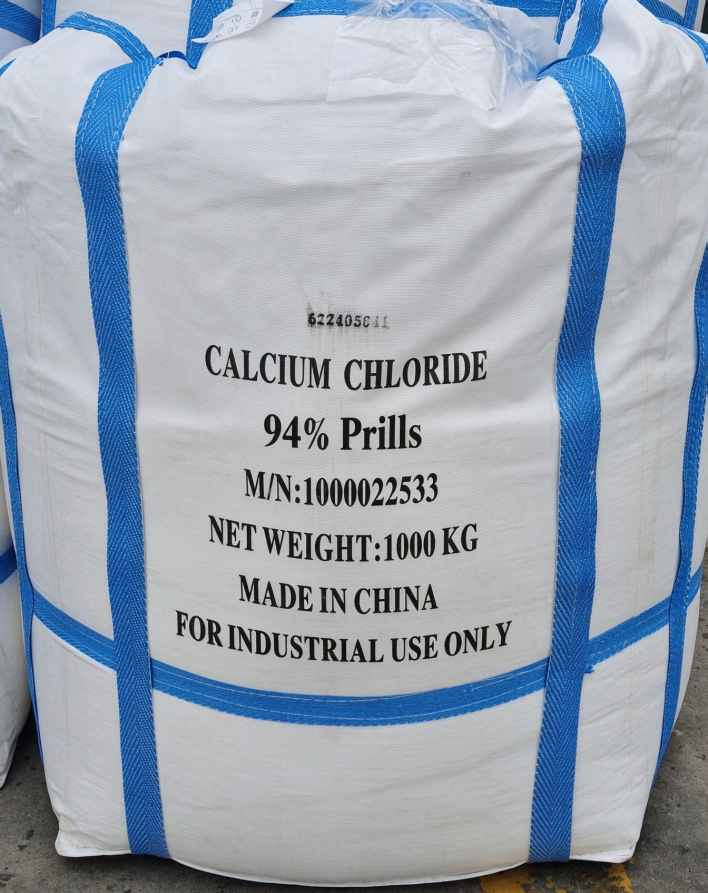
Most common is 25 kg woven bags with an inner PE liner, or 500–1000 kg supersacks for bulk users. The key is that the inner liner must remain intact during transit, because any pinhole lets humidity in and you end up with a solid block instead of free-flowing prills.
Food-grade calcium chloride exists, but the 94% industrial prills are not automatically food grade. You need a supplier with the right certifications and documentation if the material will contact food or beverages. Otherwise, stick to industrial uses like brining for refrigeration or road treatment.
They will absorb moisture, dissolve partially, and then re-solidify into a hard cake as the surface dries. The chemical still works after breaking up the lumps, but it becomes much harder to spread or meter accurately, and caked material can bridge in hoppers.
The product itself is usually cost-competitive, but freight and moisture damage during long sea transit can erode the savings. Buyers who skip proper packaging inspection often find they paid for water weight or lost usable material to caking before it reaches the job site.
Conclusion
Calcium chloride 94% prills from China offer a dense, spherical form that outperforms flake and powder grades in several practical ways. At 94% purity, these small beads contain enough active CaCl2 to create strong brines for deicing and dust suppression, while still leaving room for the controlled moisture that helps prills hold their shape. Pellet geometry matters more than many buyers expect: round, uniform prills dissolve at a predictable rate, avoid bridging in hoppers, and blend evenly into liquid systems without creating hot spots or residue. Because the material is aggressively hygroscopic, storage conditions directly influence performance. Unlined bags left open will quickly draw humidity, soften, and clump, so sealed packaging and dry warehouses are non-negotiable.
In use, these prills serve far more than winter road maintenance. Concrete producers dose them into mixing water to accelerate setting in cold weather, oilfield engineers rely on them for clear brine fluids, and wastewater treatment plants use them for dewatering and pH adjustment. Chinese manufacturing has matured: top suppliers use continuous granulation towers and closed-loop drying to keep particle size distribution tight and iron or magnesium impurities low. For buyers, comparing vendors should go beyond price per ton. Request a certificate of analysis for every batch, test incoming shipments for moisture content and particle size range, and ask for references that use the product in a similar application. A two-dollar saving is quickly erased if poor packaging leads to a caked, unusable pallet.
Contact Us
Contact Person: Tom Cui
Email: [email protected]
Tel/WhatsApp: +8618663670626
Website: https://www.jinjigoldenchem.com