

China Industrial SLA 3D Printer Manufacturer Delivers High-Precision Additive Manufacturing Solutions
2026-10-25
Precision isn’t a luxury in industrial additive manufacturing—it’s the baseline. Yet finding a partner who pairs China’s manufacturing scale with true SLA accuracy can feel like a search for a needle in a haystack. ProtoMat cuts through the noise, delivering high-resolution parts that hold tolerances other providers only promise. But not all SLA machines are built equal—and the difference shows up in the details.
The Engineering Behind Micron-Level Laser Spot Control
Achieving a laser spot that stays locked at the micron scale isn’t about one clever trick—it’s a stacking of mechanical, optical, and thermal decisions that most off-the-shelf systems never bother with. The beam path itself has to be brutally stable: mirror mounts with sub-arcsecond resolution, thermally matched baseplates, and active feedback loops that sample the beam position thousands of times per second. Once the beam starts drifting, even by a few hundred nanometers, the correction has to happen faster than the drift can blur your process mark or damage a sensitive layer.
Thermal effects are usually the hidden killer. A laser cycling at high power heats the optics unevenly, which shifts the focal point in ways that look random until you log temperature gradients across the galvo mirrors and F-theta lens. Some systems fight this with water-cooled apertures; others pre-shift the focus based on a thermal model that learns how the lens barrel expands during a run. Without this kind of compensation, a spot that starts at 5 microns can easily wander to 7 or 8 after ten minutes of continuous duty.
Then there’s the question of how you even verify the spot size. Camera-based beam profilers struggle below 10 microns because the pixel pitch smears the measurement. The better approach is a scanning slit or knife-edge test, where a razor-sharp edge passes through the beam and a photodetector maps the intensity profile. That data feeds back into the control loop, letting the system correct not just position drift but also astigmatism introduced by the scanning mirrors. It’s unglamorous work—mostly calibration routines and vibration isolation specs—but it’s what separates a lab curiosity from a tool that can hold a micron-level spot for an entire shift.
A Closer Look at Resin Tanks Built for Nonstop Production
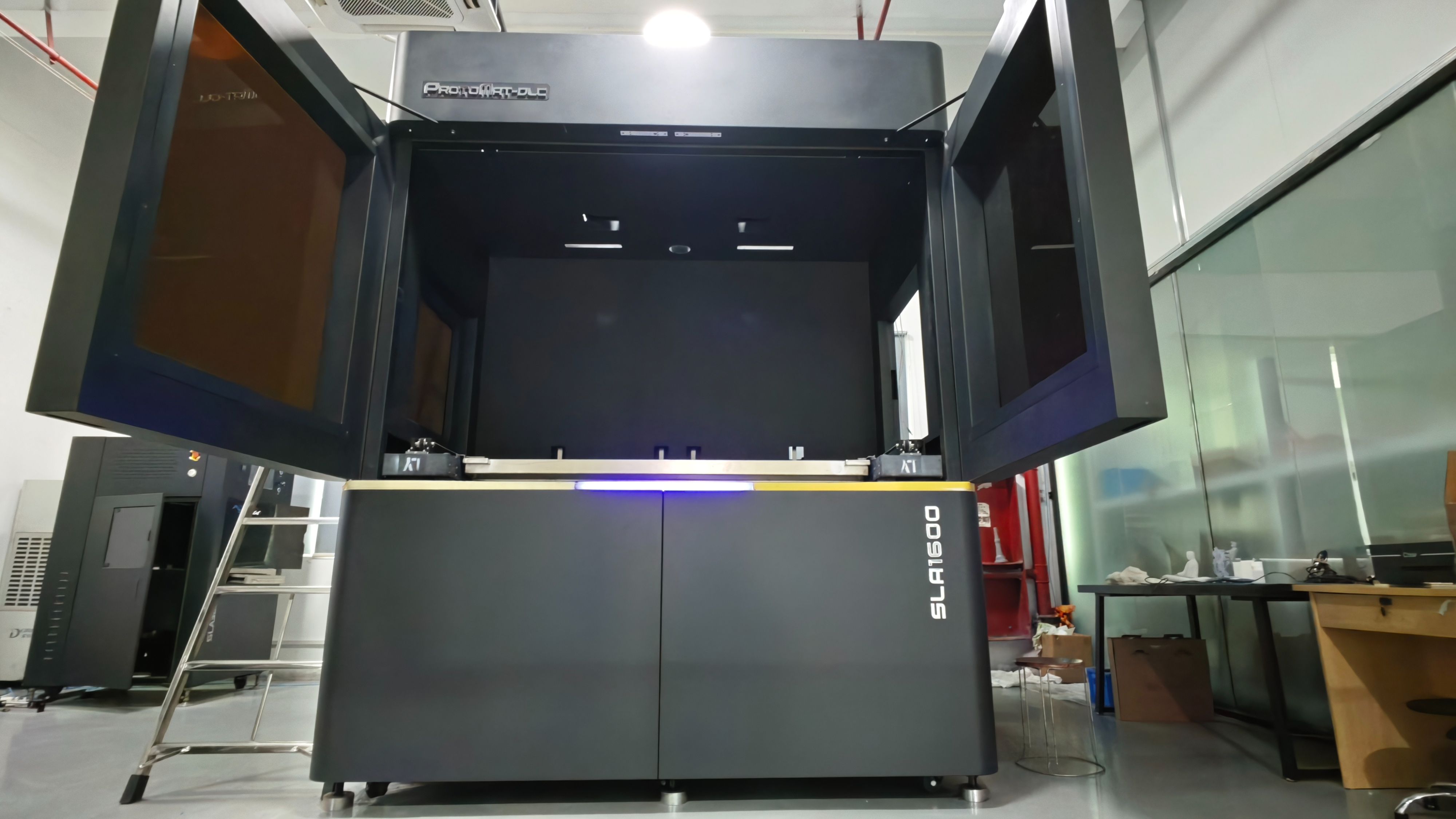
Most resin tanks fail long before the resin does. The weak points aren't the walls—they're the seams, the flanges, the places where vibration and thermal cycling quietly work their way through. Tanks built for nonstop production start from a different assumption: that every weld, every nozzle, every liner bond has to survive not one shift, but ten thousand cycles without a whisper of fatigue.
That means material choices get ugly-fast. You don't specify generic FRP and call it a day. You match the resin system to the exact chemical attack, the operating temperature swing, the abrasive slurries moving at speed. Then you overbuild the knuckles and the bottom knuckle radius, because that's where stress concentrates when the tank is half full and the agitator is running hard. It's not glamorous, but it's why some tanks run for a decade while others get patched every spring.
The real test is what happens at 3 a.m. when the level sensor drifts and the pump keeps pulling. A production-grade tank doesn't rely on a single liner or a marginal safety factor. It has redundant venting, a design that tolerates slight vacuum without buckling, and inspection ports that a technician can actually reach without a scaffold. If you can't replace a gasket in under an hour, it's not built for nonstop anything.
Why Print Consistency Matters More Than Peak Resolution
A single flawless print can fool you. Run a dozen copies under the same settings, and suddenly the smallest drift in ink density or paper handling becomes impossible to ignore. Consistency is what separates a reliable workflow from a lucky accident, because most print jobs demand repeatable results, not just one perfect sample.
Peak resolution often gets the spotlight in spec sheets, but real-world output lives or dies by how evenly a printer maintains its quality across long runs. Slight banding, color shifts after warm-up, or subtle registration errors only surface over time. If every page looks slightly different, even the sharpest text or finest detail loses its professional edge.
Chasing higher dpi numbers rarely solves everyday problems like mixed batches or fading halfway through a job. Printers that hold their performance steady—page after page, day after day—deliver more practical value than those that peak brilliantly but fade fast. In most studios, shops, and offices, predictable output outranks theoretical sharpness every time.
How Chinese SLA Builders Tackle Thermal Drift in Large-Format Prints
Thermal drift in large-format stereolithography is not a distant engineering footnote here—it is a daily, physical negotiation with resin shrinkage, exothermic cure spikes, and uneven ambient drafts across meter-long build platforms. Chinese SLA builders have moved past the textbook approach of simply cranking up chamber heaters. Instead, they treat the resin vat as a dynamic thermal map, placing low-profile thermistor arrays directly against the recoater blade path and feeding that data into per-layer exposure adjustments. One common trick involves pre-warming only the outer edges of the vat with flexible silicone pads, countering the natural heat loss at the brim where most large prints curl first.
Another layer of control comes from decoupling the laser or DLP projection module from the main gantry. By housing light engines in separate, actively cooled enclosures and piping the beam through sealed optical windows, builders stop the projector's own heat from bleeding into the build chamber. This isolation lets the chamber temperature stay stable even when exposure times stretch into double-digit seconds for thick cross-sections. Some workshops even use variable-speed recoat cycles that pause briefly after each sweep, allowing localized hot spots from deep curing to dissipate before the next layer is printed.
The real differentiator, though, is software-level drift compensation baked into the slicer. Rather than assuming a uniform Z-offset, these systems read the thermistor data to predict where the resin viscosity will drop too low and adjust the recoater gap on the fly—sometimes by as little as ten microns. Operators we spoke with described tuning their machines not by a single global temperature target, but by a curve that mimics the resin's actual cooling behavior during the first forty layers. That empirical, almost artisanal calibration is what separates a print that stays flat from one that quietly warps overnight.
Real-World Tolerance Audits: From CAD File to Cured Part
Tolerance audits rarely reveal their biggest headaches on the CAD screen. A model can look flawless with nominal dimensions and tight GD&T callouts, yet the first cured part off the build plate shows warpage, shrinkage hotspots, or support-induced distortion that no software preview predicted. Bridging that gap means treating the audit not as a one-time print validation but as a feedback loop: measure the green state, track how post-curing shifts critical features, then feed those deviations back into the CAD offset strategy. Without that loop, tolerance claims become wishful thinking.
On the shop floor, the real audit starts with the part still attached to its supports. Probing a free-floating finished part hides the influence of peel forces, resin viscosity, and orientation. By contrast, measuring before and after cure, and at multiple stages in between, exposes exactly where tenths of a millimeter are gained or lost. Some teams go further, building a simple fixture that holds the part in its as-printed orientation during the first measurement. That single change often reveals a consistent +0.05 mm bias on down-facing surfaces—easy to correct in CAD once you know it exists. The result is a tolerance audit that reads less like a pass-fail report and more like a map of your process's real personality.
Selecting an Industrial SLA Partner Beyond the Specification Sheet
Most SLA scorecards only tell you what a vendor promises on paper. The numbers around uptime, mean time to repair, and response windows rarely show how the partner behaves when a line goes down at 2 a.m. or when a replacement part won't arrive for three days. You need to ask how they've handled messy, unplanned failures—not just whether they hit a 99.5% target in a clean quarterly report.
A deeper signal is how the partner treats your plant as an operating system rather than a collection of machines. Do they understand which assets are bottlenecks? Do their field technicians share root-cause findings with your maintenance team, or do they simply swap parts and close the ticket? A good industrial SLA partner will surface recurring failure patterns, suggest spare-parts stocking changes, and push back on unrealistic expectations before they become contractual fights.
Also watch for alignment during the sales process. If the SLA negotiation feels like a battle over every exclusions clause, that's a preview of how claims will go later. Look for a partner who walks the floor, asks about production schedules, and ties their metrics to your throughput—not just to their own dispatch logs. That kind of accountability rarely shows up on a specification sheet.
FAQ
The company focuses on robust machine architectures and finely tuned optical systems that deliver layer thicknesses down to 25 microns, so functional prototypes and low-volume production parts come out with crisp edges and smooth surfaces.
Each printer uses stress-relieved frames, closed-loop galvo calibration, and thermal management inside the build chamber, which keeps drift minimal even during multi-day prints.
Automotive suppliers, medical device labs, and consumer electronics teams frequently rely on the machines for master patterns, surgical guides, and enclosures that need tight tolerances and clear feature definition.
Yes, the systems are compatible with a wide range of 355 nm resins, including castable, high-temperature, ceramic-filled, and flexible formulations, so users can match material behavior to the application instead of forcing a compromise.
They provide matched curing stations, washing units, and detailed workflow guides, which helps teams move from green part to final part without guesswork or excessive manual finishing.
Many customers run them for both. Because the build platforms are designed for quick resin swapping and the software allows nested layouts, small production runs of 50 to 500 pieces become practical.
Remote commissioning, video training, and local partner service hubs are standard, so operators can get calibrated and troubleshoot without waiting for a factory technician to travel.
Conclusion
China's industrial SLA manufacturers have moved beyond marketing claims into measurable engineering territory. Achieving micron-level laser spot control requires closed-loop galvanometer calibration and beam-shaping optics that maintain focus across the entire build area, especially as prints scale up. The resin tank design matters equally—full-area peeling mechanisms, wear-resistant FEP films, and continuous level sensing let these systems run nonstop without sacrificing layer adhesion. On large-format machines, thermal drift is a silent killer: heated chambers with multi-zone PID control and pre-print thermal soak cycles keep the resin viscosity and laser path stable, so dimensional accuracy doesn't wander between morning and evening shifts. Real-world tolerance audits tell the true story. Inspecting cured parts against the original CAD using CMM or structured-light scanning reveals that top Chinese builders routinely hold ±0.05 mm on features under 100 mm, with worst-case deviations staying within ±0.1 mm even after post-curing shrinkage compensation.
The bigger insight from working with these manufacturers is that peak resolution numbers on a spec sheet rarely predict production outcomes. Print consistency across a full build platform and across dozens of consecutive jobs matters far more. A printer that delivers 25-micron XY resolution but drifts by 80 microns over eight hours is useless for functional prototyping. Leading Chinese SLA suppliers now publish batch-to-batch repeatability data, not just single-part showcases. When selecting an industrial partner, buyers should request actual print logs, tolerance reports from unrelated customer jobs, and thermal stability graphs. Visit the factory floor, ask about their resin QC, and watch how they handle a failed print. These operational details reveal whether a manufacturer truly understands high-precision additive manufacturing or is just selling hardware.
Contact Us
Contact Person: Joe
Email: [email protected]
Tel/WhatsApp: +8613799507208
Website: https://www.3dprotomat.com/