

China's Top 10 Solar Carport Mounting System Companies Leading the Green Energy Revolution
2026-11-16
As solar energy reshapes the global drive for sustainability, carports are quietly emerging as the next frontier—turning idle parking space into clean power plants. China is at the heart of this shift, home to a cluster of innovators redefining what solar carport mounting systems can deliver. Among them, Egret Solar stands out for engineering robust, cost‑effective structures that merge form with function, setting a new benchmark in a competitive field. In this blog, we spotlight the ten companies propelling the green energy revolution forward, revealing the steel and stories behind the world’s most advanced solar parking solutions.
Pioneers Driving the Solar Carport Boom in China
The surge in solar carport installations across China isn’t a spontaneous trend—it’s been carefully orchestrated by a handful of forward-thinking enterprises and municipal planners who saw the dual potential early on. Companies like Trina Solar and JinkoSolar, already dominant in the photovoltaic module space, began integrating their technology into parking infrastructure back when most of the industry was still fixated on rooftops and desert solar farms. They didn’t just supply panels; they partnered with urban developers to design load-bearing structures that double as shaded parking and power stations for electric vehicles, effectively turning ordinary lots into micro-grids. In cities like Hangzhou and Shenzhen, pilot projects led by these firms proved the concept could reduce grid strain during peak summer hours, giving local governments the data they needed to scale up.
Beyond the hardware giants, a wave of state-backed pilot zones and municipal utilities quietly laid the regulatory groundwork. Places such as Xiong’an New Area and parts of Shanghai introduced mandates requiring a percentage of new commercial parking spaces to integrate solar canopies, often linking approval to EV charging quotas. The real pioneers here are the provincial energy bureaus that streamlined permitting and created feed-in tariff bridges for carport-generated electricity, making the economics viable even without heavy subsidies. Meanwhile, electric vehicle manufacturers like BYD started co-locating their charging networks beneath solar shelters, giving drivers a tangible reason to seek out these spots—a subtle but effective demand signal that accelerated private investment into the segment.
What often gets overlooked is how local design institutes and materials researchers pushed the envelope on cost and form. Traditional solar structures were too heavy and expensive for retrofitting existing lots, so teams in Nanjing and Chengdu developed lightweight steel-aluminum hybrids and bifacial glass panels that could catch reflected light from car roofs below. These innovations brought installation costs down by nearly a third between 2019 and 2022. At the same time, community-level cooperatives in suburban Zhejiang started pooling funds to build shared solar carports that fed surplus power back to the village grid, turning a parking amenity into a collective revenue stream. It’s this layered ecosystem of policy architects, engineering tinkerers, and on-the-ground implementers that turned a niche concept into a nationwide buildout.
How Mounting Systems Are Reshaping Urban Energy Landscapes
The urban rooftop, long a dead zone of tar and neglect, is being reinvented as a productive layer of the city. Mounting systems have moved beyond the simple rack-and-panel arrangement, evolving into integrated architectural elements. Lightweight, low-profile frameworks now trace the contours of irregular geometries, turning awkward dormers and pitched surfaces into energy assets without compromising building aesthetics. The result is a hidden infrastructure that produces power while preserving the historic silhouettes of neighborhoods.
At street level, these systems are carving out a new kind of civic space. Solar canopies in parking lots and over transit hubs do more than capture sunlight—they create shaded gathering points, rain-protected walkways, and micro-environments that soften the urban heat island. The structure itself becomes a mediator, shaping how people move through and occupy the city, while quietly feeding electricity into the local grid. This dual-function thinking is pushing planners to treat energy generation as a layer of public amenity, not just a technical afterthought.
Flexibility in mounting design is also nudging whole districts toward energy self-sufficiency. Adaptive cladding systems on high-rises, tiltable arrays on brownfield sites, and cable-suspended panels above railways all point to a cityscape where generation capacity can be woven into underused corridors. The once-rigid logic of centralized power is giving way to a mosaic of localized, structural responses, each tuned to the microclimate and rhythm of its immediate setting. In this shift, the mount itself is no longer just a bracket—it’s a design tool that quietly rewires the relationship between buildings, streets, and energy.
Profiles of Innovation: The Companies Setting New Industry Standards
When a handful of companies truly redefine what it means to compete, they don’t just launch a better product. They dismantle the hidden assumptions that an entire industry has been leaning on for decades. Consider the restaurant chains that abandoned static menus in favor of dynamic, data-driven offerings that change hourly based on local weather patterns and nearby events. That shift did more than boost sales—it forced competitors to rethink whether a printed menu was even a fixed cost anymore. The hallmark of these organizations isn’t incremental progress; it’s a refusal to accept inherited limitations as permanent. They act less like cautious stewards and more like curious intruders who assume every rule was written in pencil.
What makes these profiles of innovation so disruptive is the way they anchor new standards in measurables that the market can’t ignore. A mid-sized logistics firm, for example, started publishing its real-time carbon footprint per delivery alongside tracking numbers, making environmental cost as transparent as shipping speed. Within eighteen months, their transparency dashboard became a client expectation across the sector. Elsewhere, a boutique manufacturer of laboratory equipment moved from selling hardware to offering guaranteed experimental reproducibility—effectively shifting the industry’s performance metric from machine specifications to scientific outcomes. In each case, the company didn’t ask permission to raise the bar; they simply built a new bar and invited customers to measure everyone else against it.
Look closely at the leaders behind these standards and you’ll notice a shared mental habit: they study problems more than competitors. Teams at such firms often have the freedom to prototype ideas pulled from unrelated fields—a clinic borrowing hotel check-in flows, a software provider adapting theatrical stage management techniques. Their obsession with solving the right problem, rather than winning the comparison game, leads to benchmarks that feel obvious only in hindsight. Perhaps the quiet legacy of these companies isn’t just a patent portfolio or a market lead, but the fact that entire professions had to upgrade their definitions of "good enough" simply to stay relevant.
Engineering Excellence Behind Durable Solar Carport Structures
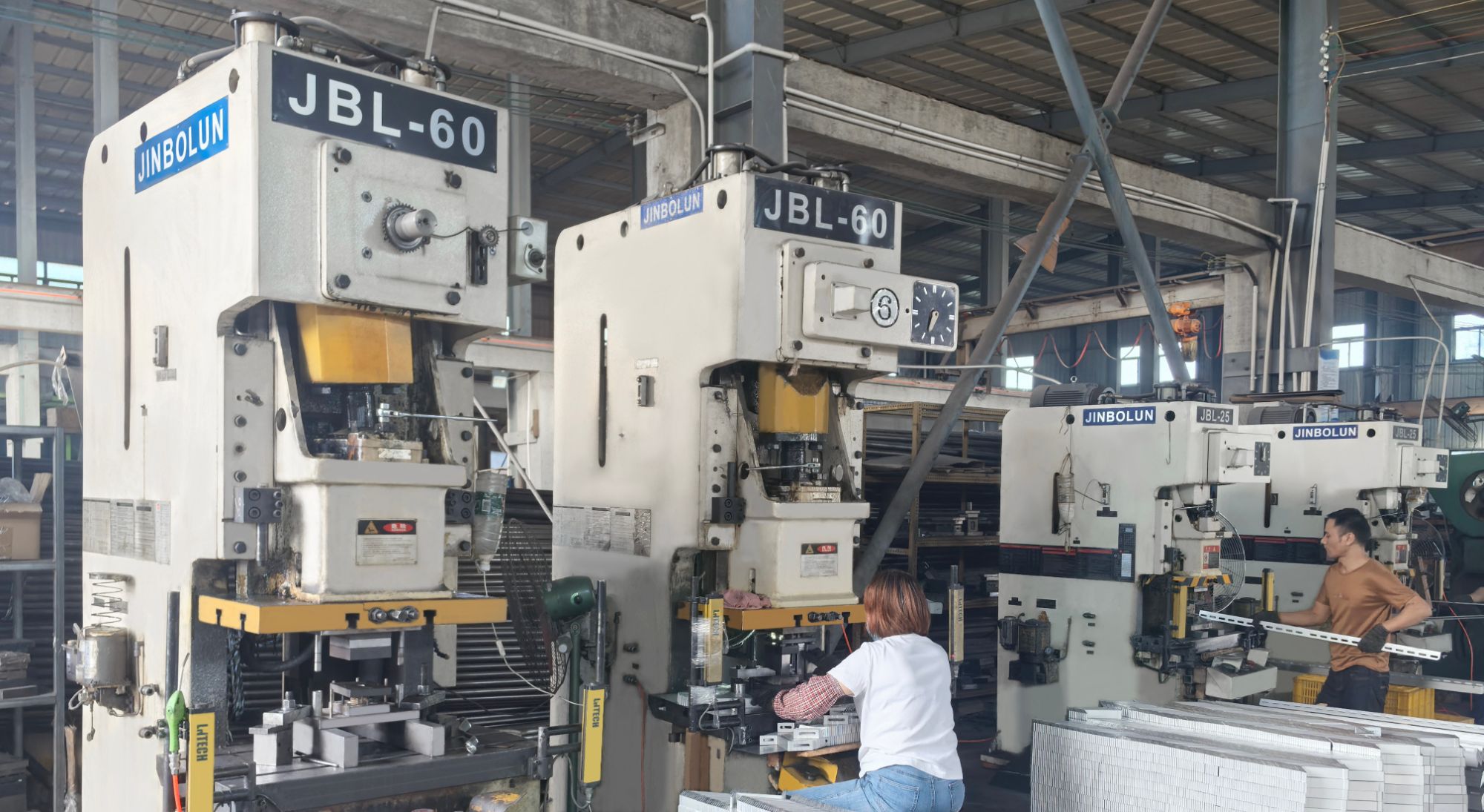
The durability of a solar carport begins with its skeletal framework, where high-grade galvanized steel is cold-formed into profiles that resist torsion and bending even under heavy panel loads. Instead of relying on generic beam-and-column designs, engineers apply finite element analysis to anticipate stress concentrations at the connection points, reinforcing them with gusset plates and high-strength bolts. This approach turns the structure into a unified, moment-resisting frame that can handle wind uplift, drifting snow, and the daily expansion-contraction cycles without fatigue cracking.
Weather resilience is built into every layer of the assembly. The steel components receive a multi-stage coating—hot-dip galvanizing fused with a durable powder topcoat—creating a barrier that withstands decades of rain, UV exposure, and airborne salt in coastal installations. Drainage is engineered into the very shape of the canopy, with concealed gutters and sloped purlins that channel water away from the parked vehicles and prevent ponding. This geometry, refined through computational fluid dynamics, also reduces the wind load by letting gusts spill smoothly over the edges, keeping the structure anchored without excessive foundation mass.
The concept of longevity extends to how the carport interacts with the solar array itself. Module clamping systems are designed for thermal compatibility, using sliding brackets and neoprene isolators to let the aluminum frames expand freely without transferring stress to the glass. Wiring routes are enclosed within the beam cavities, shielded from direct sunlight and physical damage, while retaining accessible junction boxes for maintenance. By treating the carport not as a static shelter but as a dynamic system of interdependent parts, the engineering ensures that both the energy generation and the structural protection last well beyond their nominal warranty periods.
From Rooftops to Parking Lots: Expanding Solar's Reach
Rooftops have long been the poster child for distributed solar, but the real untapped potential might be right under our feet—or rather, under our cars. Parking lots, often vast stretches of asphalt soaking up heat, are being reimagined as energy hubs. By installing solar canopies over these spaces, we not only generate clean power but also provide shade that keeps vehicles cool and reduces the urban heat island effect. It's a dual-purpose solution that transforms barren lots into productive, community-focused assets.
The shift from rooftops to parking lots isn't just about finding new square footage; it's about rethinking how we integrate energy into everyday landscapes. Rooftop solar remains essential, but its reach is limited by building orientation, structural capacity, and ownership issues, especially for renters. Solar carports, on the other hand, can be deployed in shopping centers, schools, and corporate campuses, bringing renewable energy to people who might never have had access before. This expansion weaves solar generation into the fabric of public and commercial life, turning routine parking into a quiet contribution to the grid.
Beyond the practical benefits, this movement signals a cultural change in how we view land and infrastructure. Every parking spot covered with a solar canopy becomes a small power plant, democratizing energy production without demanding dedicated land. As battery storage costs drop and electric vehicle adoption rises, these structures can also serve as charging stations, creating a seamless loop from sunlight to daily commute. The journey from rooftop to parking lot is more than an engineering feat—it's a step toward a landscape where energy and everyday life coexist effortlessly.
Why These Ten Firms Are Attracting Global Attention
A quiet shift is underway in how industries approach long-standing problems, and these ten companies sit right at the fault lines. They aren't simply chasing revenue; they're reshaping supply chains, rethinking material science, and in some cases, altering the daily habits of millions without most people realizing where the change originated. The reason they capture so many eyes is not a clever publicity push, but a series of tangible breakthroughs that make incumbents nervous.
What sets them apart is a stubborn refusal to accept industry defaults. One is turning agricultural waste into a leather substitute durable enough for luxury automotive interiors, while another has quietly built a distributed energy network that lets rural communities bypass failing grids. These are not trivial pivots. Each firm has identified a narrow, deep moat—often in an unglamorous corner of the economy—and begun digging faster than anyone thought possible. Observers aren't watching because of quarterly reports; they're watching because the floor underneath legacy players suddenly feels less solid.
There is also a shared pattern in how they build and hold onto talent. Rather than luring people with inflated paychecks, they attract engineers and researchers driven by the chance to solve a concrete, urgent problem without bureaucratic drag. This has created small, fixated teams where a chemist, a software architect, and a supply chain veteran genuinely collaborate, not just sit in adjacent meetings. When that kind of cross-pollination repeatedly yields working prototypes instead of whitepapers, the rest of the world starts leaning in. That’s the real draw: not potential, but proven momentum in places most people weren’t looking.
FAQ
It’s not just about lower production costs. Many have mastered the art of pre-assembled and adjustable designs that slash installation time on site. They also leverage local steel and aluminum supply chains, which means faster prototyping and customization for complex architectural or wind-load requirements that European competitors often struggle to match on short timelines.
They’re turning non-productive space into power plants without fuss. By integrating EV charging directly into carport structures, they help campuses and logistics hubs cut grid reliance. One interesting shift is their work on bifacial panel compatible mounts, which capture reflected light from parked cars’ roofs, boosting yield by up to 15%. That kind of practical thinking accelerates distributed energy adoption faster than large-scale solar farms alone.
The snap-in rail and water-guide integration is a quiet game-changer. Instead of separate waterproofing channels, the rail itself acts as a gutter, draining rain while holding the modules. This eliminates messy silicone sealant and makes the whole structure maintenance-friendly. A couple of companies also developed a torsion-bending aluminum profile that elegantly handles soil settlement, a common headache in car ports on filled ground.
Look past the catalog specs. Ask about their testing protocols for dynamic loads—not just static snow and wind but vibration from trucks and constant micro-movements. The best ones provide third-party fatigue test reports, not just certificate copies. Also check if their design team does in-house site-specific calculations using local meteorological data, or if they just resend a generic drawing and call it a day.
Large-scale parking logistics parks and the blistering growth of EV ownership created the perfect laboratory. Companies had to solve real problems fast: navigating government subsidies for building-integrated PV, designing for typhoon zones in the south, or optimizing structures so that cleaning robots can glide underneath. This relentless iteration at home gave them a portfolio of proven solutions before they even started exporting.
Hot-dip galvanizing with a magni coating layer is becoming a regional signature. It offers twice the corrosion resistance of standard galvanizing in coastal or humid environments without the cracking risk of powder coating. A few top tier firms also use glass-reinforced polyamide connectors instead of traditional stainless steel in certain joints, reducing metal fatigue and electrical grounding issues simultaneously.
Good installers now design the mounting structure as a backbone for the whole electrical infra. Some of these Chinese companies supply pre-welded cable tray channels and custom brackets for wallbox chargers and power optimizers, so everything bolts onto the same frame. There’s even a trend towards ‘power island’ carports where the column itself is hollow and pre-wired, housing a small battery inverter at the pedestal base to buffer peak loads without trenching extra conduits.
One project in a Southeast Asian flood-prone zone required a carport built on a slope with variable piling depth. The company developed a telescopic base post that could adjust height on the spot after pile driving, absorbing 30 cm of vertical tolerance. This avoided custom foundations and kept the entire 2 MW array perfectly level. The same system later proved vital for a coastal airport project where bedrock depth varied wildly across the parking apron.
Conclusion
The rise of solar carports across China marks a quiet but decisive shift in how the country approaches renewable energy integration. Instead of simply covering rooftops with panels, forward-thinking companies are turning everyday parking lots into power plants. These top ten mounting system manufacturers have not only engineered structures that withstand extreme weather and heavy loads but also designed them to blend seamlessly into urban environments. Their work is redefining what clean infrastructure looks like—transforming mundane asphalt spaces into sleek, energy-generating assets that serve electric vehicles while feeding surplus power back to the grid. This practical fusion of shelter and generation is accelerating the adoption of solar in ways that rooftop systems alone never could.
Behind this momentum are firms that pair deep engineering expertise with a willingness to rethink standard practices. From precision-crafted aluminum alloys to advanced corrosion-resistant coatings, every component reflects a focus on longevity and minimal maintenance. These companies are not just assembling frames; they are setting new benchmarks for safety, efficiency, and aesthetics. By making installation faster and more cost-effective, they have enabled solar carports to scale beyond pilot projects into commercial and public sectors. It is this combination of technical rigor and market adaptability that is drawing international interest, positioning these Chinese innovators at the forefront of a green revolution that is as much about smart land use as it is about clean energy.
Contact Us
Contact Person: Leite
Email: [email protected]
Tel/WhatsApp: (+86)13666072898
Website: https://www.egretsolars.com/