

China Soil Stabilization Methods for Stronger Roads and Foundations
2026-11-03
China’s road networks cross some of the most unpredictable soils on the planet—expansive clays, loose silts, and moisture-sensitive ground that quickly turns a promising foundation into a costly repair. Traditional compaction alone rarely holds up under heavy traffic and seasonal flooding. That’s why engineers are turning to smarter soil stabilization methods, and MST has been at the center of this shift, helping turn weak subgrades into long-lasting support for highways, rural roads, and industrial slabs. This post walks through the techniques actually working in China right now—and why they matter for any project that can’t afford to cut corners.
Lime Meets Clay to Tame Expansive Soils Under China's Roads
Expansive soils present a persistent headache for road engineers across southern and central China, where seasonal wetting and drying cycles cause the ground to heave and shrink dramatically. This repeated movement leads to longitudinal cracking, uneven settlement, and premature failure of asphalt and concrete pavements. Traditional fixes like removing the problematic soil and replacing it with granular fill are not always practical, especially in remote areas where hauling costs soar and suitable borrow material is scarce.
A more economical approach involves blending quicklime or hydrated lime directly into the clay subgrade. When lime meets clay, calcium ions displace the monovalent cations adsorbed on the clay platelet surfaces, triggering flocculation and reducing the soil's affinity for water. Over weeks and months, a slower pozzolanic reaction forms cementitious compounds that bind the soil particles together, sharply cutting the plasticity index and swelling potential. Field crews usually spread the lime at a rate of 3% to 8% by dry weight, mix it thoroughly with a rotary mixer, and then compact the treated layer at optimum moisture content before curing.
Across provinces such as Guangxi, Yunnan, and Hubei, this technique has been used on numerous highway and rural road projects. The stabilized subgrade not only resists volume change but also gains enough unconfined compressive strength to reduce the required thickness of upper pavement layers. The result is fewer maintenance interventions, longer service life, and lower whole-life costs. Success depends on careful control of lime dosage, mixing uniformity, and adequate curing time, particularly when rain interrupts construction or when the in-situ clay contains high organic content.
Steel Slag and Fly Ash Turn Industrial Waste into Stronger Subgrades
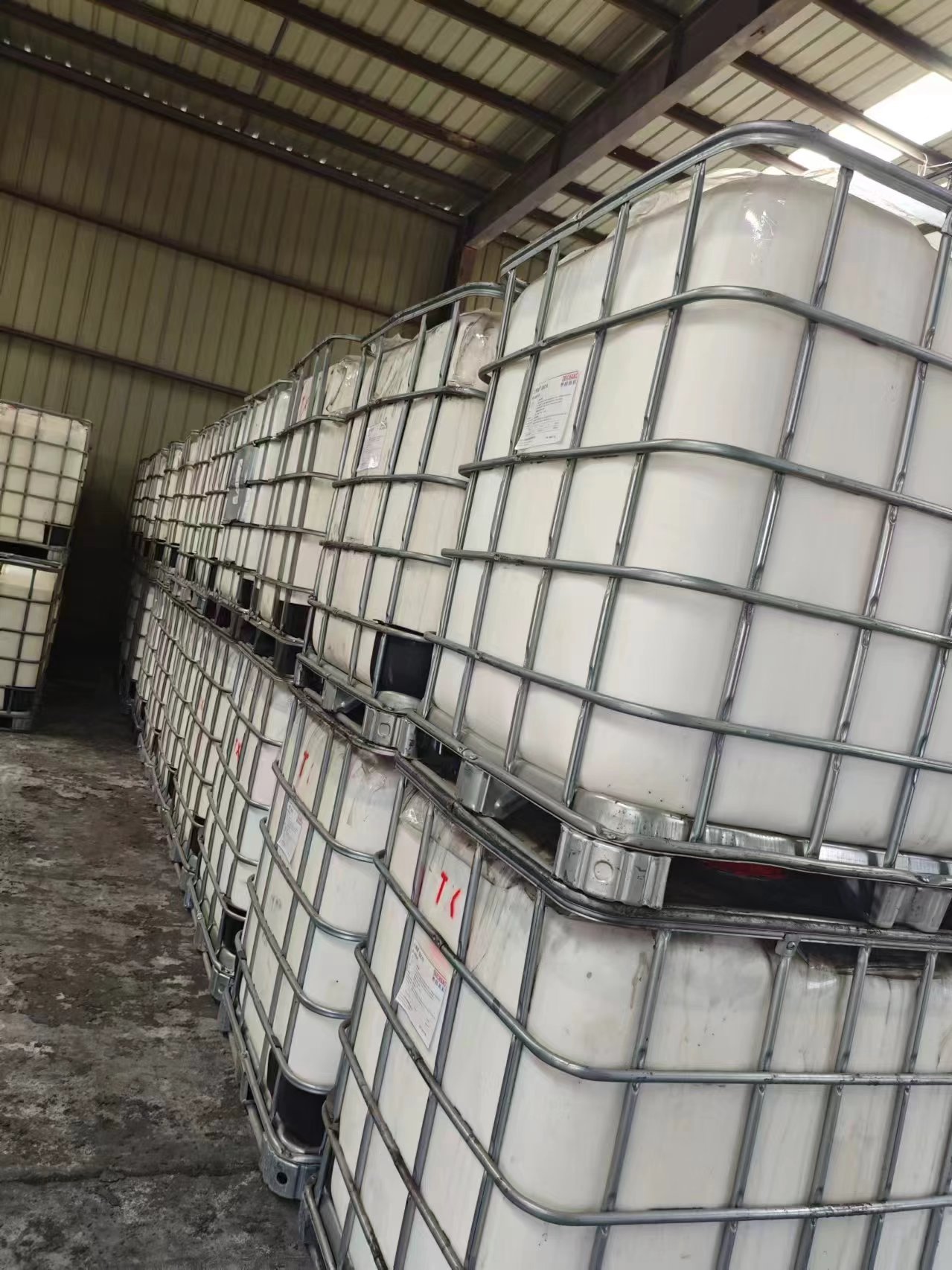
Stockpiling steel slag from electric arc furnaces and fly ash from coal-fired power plants has long posed a headache for plant operators. Neither material degrades quickly, and landfill space keeps shrinking. Yet these two byproducts, when blended with a small amount of lime or cement and then compacted, react in a way that locks particles together. The result is a layer that outperforms many traditional granular fills used beneath roads and railways.
The chemistry behind it is straightforward but often overlooked. Steel slag brings angular, high-friction aggregates rich in calcium silicates. Fly ash adds fine, spherical particles that fill voids and, with moisture, trigger pozzolanic reactions. Mixed at ratios near 30% slag to 20% fly ash by dry weight, the blend develops unconfined compressive strengths above 2 MPa after 28 days of curing. That is double what typical crushed stone subgrades achieve, and the stiffness keeps improving for months as hydration continues.
Contractors in regions with heavy clay soils are now testing this approach on secondary highways and industrial yard pavements. Instead of excavating poor ground and hauling in virgin aggregates, they stabilize the existing subgrade with the waste blend, cutting material costs by up to 40% while reducing truck traffic. Early field sections show less rutting after freeze-thaw cycles compared to conventional lime-stabilized soil, mainly because steel slag's interlocking texture resists particle rearrangement under repeated loading.
Enzyme Sprays Deliver Affordable Stability for Rural Pavements
For rural road networks, the cost of hauling aggregate or cement over long distances often kills any chance of proper stabilization. Enzyme sprays change that math by letting local crews treat in-place soils with a diluted liquid concentrate. A few liters mixed into a water truck can treat several hundred square meters, cutting material bills and truck trips dramatically.
The enzyme takes advantage of clay particles already present in the road base. Once sprayed and compacted, it promotes a tighter bond between soil fines, reducing water infiltration and the swelling that leads to potholes and washboarding. Roads become firmer without importing new gravel, and maintenance intervals stretch out noticeably during rainy seasons.
Because the application uses standard graders and rollers already owned by county maintenance teams, the switch doesn't require expensive training or special equipment. In many regions, the total cost per kilometer works out to a fraction of conventional base stabilization, which is why more rural districts are treating enzyme sprays as a practical first step before committing to full-depth reclamation.
Geogrids and Polymer Fibers Lock Soil Layers into a Hidden Mesh
Beneath the surface of reinforced slopes and retaining walls, geogrids and polymer fibers work together in a way that rarely gets seen. The geogrid, with its open aperture structure, allows soil particles to strike through and interlock, while the polymer fibers add tensile strength across potential slip planes. This creates a hidden mesh that holds separate soil layers in place, turning loose fill into a coherent mass.
What makes the system effective is the mechanical bond rather than adhesion. As each lift of soil is compacted over the geogrid, aggregate punches into the grid openings, forming a positive interlock. The polymer fibers, often mixed into the soil or placed as a separate layer, bridge micro-cracks and distribute localized stress. Over time, the soil and reinforcement behave as a single unit, resisting differential settlement and lateral movement.
Unlike rigid retaining structures, this hidden mesh adapts to ground movement without sudden failure. The polymer fibers can elongate slightly under load, absorbing energy while the geogrid maintains overall geometry. The result is a stable, flexible reinforcement zone that remains invisible after construction, yet quietly carries loads that would otherwise cause erosion or slope instability.
Moisture Timing and Compaction Keep Water from Wrecking the Base
Getting the base to hold together starts before the roller ever moves. Dry aggregate won't knit, and oversaturated material simply pumps under load. Crews that watch the moisture curve instead of soaking the surface know the window is narrow: bring the stone or soil to just below optimum, then compact while the water is still evenly distributed through the lift. If you wait for the top to crust or the wind to pull moisture from the edges, you'll chase density with extra passes and still leave soft spots.
After that first moisture adjustment, timing the next pass matters more than total water volume. A delay of even thirty minutes in hot sun can dry the top inch enough to prevent proper interlock, while a sudden rain can turn a nearly finished base into a sponge. Rolling should follow the water truck closely, with the lift thickness matched to the compactor's effort. When the base is sealed at the right density, surface water sheds instead of soaking down into the subgrade, which is what actually protects the pavement from pumping and frost heave.
Reading Regional Soil Maps Guides Custom Stabilizer Blends That Hold
A soil map isn't just a color-coded chart from a county office. For anyone mixing stabilizers—lime, cement, polymers, or bio-based binders—it's a cheat sheet for what's really underfoot. The map tells you where clay content spikes, where pH turns acidic, and where seasonal saturation changes the game. Without that layer of local detail, you're guessing at dosage rates and hoping the chemistry holds after the first hard rain.
The real advantage shows up when you stop treating a job site as uniform. One stretch of road might sit on expansive smectite clay, while a few hundred yards away sandy loam drains fast and reacts poorly to cement-only blends. Reading the map lets you shift the recipe block by block—more lime where plasticity is high, a lighter polymer touch where fines are low. It's less about finding a magic mix and more about matching the binder to the specific failure mode the soil map exposes.
That kind of targeted blending saves rework later. Crews that dial in stabilizer rates from mapped soil units see fewer shrinkage cracks, less dusting, and longer-lasting compaction. You're not just building over the ground; you're working with what it actually is, not what the bid sheet assumed.
FAQ
China's soil types vary dramatically from the collapsible loess of the northwest to the soft marine clays along the eastern coast and the permafrost-affected ground in the Tibetan Plateau. Each condition demands a tailored approach, so a method that works well in one province might fail completely in another.
In humid areas like Guangdong and Fujian, contractors often blend cement with ground granulated blast furnace slag or fly ash. The supplementary cementitious materials help control shrinkage cracking and improve resistance to moisture damage, which matters more than raw compressive strength in those climates.
Power plants and steel mills generate enormous quantities of fly ash, slag, and desulfurization gypsum. Instead of dumping them, engineers now activate these by-products with small amounts of lime or cement to stabilize weak subgrades, cutting both material costs and landfill pressure.
For thick layers of loose granular fill or collapsible loess, dynamic compaction can improve ground to depth without needing to excavate and replace the soil. It is relatively fast, requires no imported binder, and works well on large sites where the noise and vibration can be managed away from urban centers.
Yes, some projects experiment with ionic soil stabilizers, enzymes, and biopolymer treatments. These are still niche compared to cement and lime, but they are gaining attention in environmentally sensitive areas or for low-volume rural roads where reducing carbon footprint is a priority.
In Heilongjiang and Inner Mongolia, the freeze-thaw cycle can lift road surfaces and create uneven settlement. Stabilization usually combines drainage improvement with lime or cement modification of frost-susceptible silts, and sometimes includes a granular capillary break layer to stop water from rising into the pavement structure.
Field testing usually includes plate load tests, dynamic cone penetrometer readings, and moisture-density checks during compaction. Laboratory work before construction often involves unconfined compressive strength tests and wet-dry or freeze-thaw durability cycles that mimic the local climate, not just standard curing conditions.
The drains accelerate consolidation so the clay gains strength faster, then a stabilizer like cement or lime can be added to the upper layer to create a working platform. This combined approach allows embankment construction to proceed sooner without excessive settlement or bearing failure.
Conclusion
Across China, stabilizing weak ground has become a careful blend of local materials and field-tested techniques. Lime is folded into expansive clay layers under highways to curb swelling and create a firmer, less crack-prone base. Industrial byproducts such as steel slag and fly ash, once treated as waste, now get mixed into subgrades, boosting load-bearing capacity and reducing landfill pressure. For rural pavements with tight budgets, enzyme sprays offer a surprisingly effective answer—they bind loose particles at a fraction of the cost of cement or lime hauling. Each method tackles a different failure mode, but together they form a flexible toolkit for roads that must survive heavy trucks and seasonal rains.
Under the surface, geogrids and polymer fibers lock soil layers into a hidden mesh that spreads loads and keeps particles from shifting sideways. Moisture control is just as critical—compacting at the wrong water content can leave a base that looks solid but fails after a few wet-dry cycles. Engineers also read regional soil maps before choosing any mix, because a stabilizer that works in southern red clay may flop in northern loess. By matching lime, slag, enzymes, or synthetic reinforcements to the actual ground conditions, China keeps both high-traffic expressways and village access roads from sinking, cracking, or washing out. The result is a quieter kind of resilience: foundations that hold because the soil itself was taught to stay put.
Contact Us
Contact Person: Helen
Email: [email protected]
Tel/WhatsApp: 86 18630661160
Website: https://www.roadmilestone.com/