

Folding Carton Cutting Die Making Equipment Supplier: Critical Questions to Ask Before You Commit
2026-08-21
Choosing a folding carton cutting die making equipment supplier can feel like a gamble—especially when a wrong decision shows up as production delays, wasted materials, or dies that just don’t hold up. Before you sign anything, there are a few blunt questions worth asking. At ADEWO, we’ve seen how the right answers separate reliable partners from costly mistakes. This guide walks you through what to dig into first.
How Deep Is Their Die Making Experience in Folding Carton Niche?
It is one thing to cut a straight line through paperboard; it is another to know how that same board will react when scored, folded, and glued into a carton that has to hold up on a packaging line. The die making team here has spent more than fifteen years working almost exclusively on folding carton tooling, and that focus shows in the way they approach even a standard straight-tuck box. They do not treat a die as a generic cutting template. Instead, they map out crease depth, cutting rule height, and ejection rubber placement around the actual board caliper, flute direction if any, and the final folding sequence the carton will go through.
That depth becomes far more obvious when you move away from basic rectangles. Multi-point glued cartons, curved tuck flaps, crash-lock bottoms, and thin window patches all put different stress on the same sheet. A die maker without carton-specific experience might hit the right outside dimensions but miss the subtle difference between a score that folds cleanly by hand and one that folds cleanly at high speed after a week in dry storage. Here, past jobs include reverse-tuck sleeves with offset creases to avoid cracking on recycled board, and nested trays where two dies had to match within a fraction of a millimeter so the finished trays would not jam when stacked.
This is not a sideline service bolted onto a commercial print shop. The bench is set up for carton work, from the counterplates they keep in stock for common board grades to the way they log every job’s crease matrix settings for repeat orders. When a folding carton plant asks whether the die can handle a 350gsm CCNB with a soft-touch laminate, the answer comes from having already run similar combinations enough times to know where the weak points are. That kind of accumulated, niche-specific know-how is hard to copy and even harder to fake.
Can They Match Your Most Demanding Carton Designs?
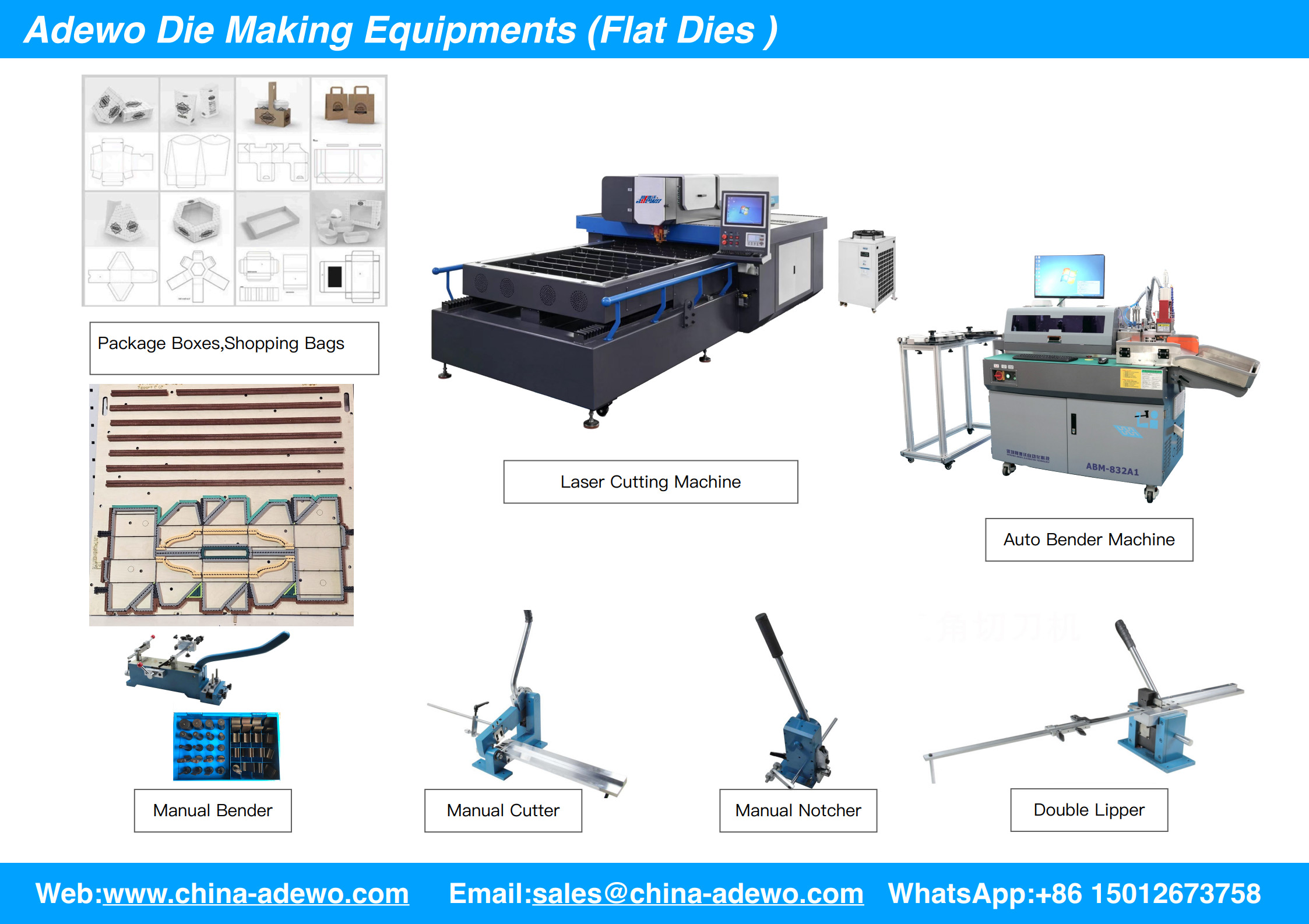
Most carton suppliers freeze when they see a structural drawing with interlocking tabs, offset creases, and a tight tolerance of half a millimeter. The team behind this service treats those details as the baseline, not the ceiling. From reverse-tuck ends to crash-lock bases and multi-point gluing, every fold is checked against the original CAD file before a single sheet moves to cutting.
Print registration on a shaped carton tends to drift when the dieline curves or the board grain shifts. Here, the prepress step maps artwork onto the actual 3D geometry, so keylines land where they should, not where a standard template guesses. That removes the usual trial-and-error loop and keeps short runs as sharp as mass production.
Material choice also stops being a compromise. Whether the design calls for a lightweight E-flute with a soft-touch laminate or a rigid board that needs to survive cold-chain humidity, the combination is tested on the same cutting and creasing setup used for the final order. The result is a carton that looks deliberate on the shelf and holds up in transit.
What Does Their Maintenance and Support Actually Look Like?
The maintenance side of things is where many agencies quietly fall apart. Here, the same engineers who built your project stay on it after launch, so a bug report doesn't get passed around between three different account managers. You send a note, they reproduce the issue, and the fix usually ships in the next release cycle, not three months later.
Support isn't buried behind a portal that auto-responds with links to a knowledge base. You get a direct contact, and if the issue is urgent, there's a phone number that actually rings. After the fix, you receive a short update telling you what went wrong and what was changed. No jargon, no blame-shifting, just a clear handoff back to your team.
Updates and maintenance windows are announced in advance, and most routine changes happen while you're asleep. The changelog reads like a human wrote it, so you can quickly see what's new, what's been improved, and whether any action is needed on your end. Clients tend to stay because the paperwork never gets in the way of the actual work.
Are Their Cutting Dies Built to Last Under High-Volume Runs?
High-volume runs expose weaknesses that short production bursts never touch. The dies that hold up over hundreds of thousands of cycles are rarely the ones with the most aggressive marketing claims—they’re the ones built around through-hardened tool steel, stress-relieved after rough machining, with cutting clearances dialed in for the exact material gauge. Poorly finished edges or misaligned stripper plates may survive a few thousand hits, but once heat and micro-fractures accumulate, the failure is sudden rather than gradual.
A more telling sign is how the die behaves after the first resharpening. A well-built die returns to near-original tolerance without excessive grinding, while cheaper alternatives often need frequent touch-ups that shorten overall lifespan. Shops that run these tools daily tend to track not just blade wear but also the consistency of slug ejection and the amount of burr formation—those small variations are the earliest indicators that a die won’t make it through a full production season.
How Transparent Are Their Lead Times and Pricing?
Many suppliers list standard production windows on their site, but the real test comes when you ask for a custom quote. Some respond with clear, itemized timelines and cost breakdowns within a day, while others leave you guessing about hidden fees or unexpected delays. The difference often shows up in how they handle questions about rush orders, material availability, or shipping variations.
Transparency here isn't about perfect predictability—it's about honest communication. A dependable partner will tell you upfront if a particular component is backordered or if a finish adds two weeks. They'll also flag pricing shifts before you place the order, not after. Vague answers like "it depends" without further detail usually mean you'll be managing surprises later.
Comparing quotes helps, but so does reading between the lines of their replies. If the numbers and dates stay consistent across multiple conversations, that's a good sign. If each response adds a new condition or adjustment, you're probably seeing a pattern of reactive rather than proactive planning.
What Happens When a Die Fails Mid-Production?
One second the press is cycling on rhythm, the next it sounds like a bag of bolts hitting concrete. A die failure mid-run rarely gives much warning—maybe a dull thud from the lower shoe, a flicker in the tonnage monitor, then the control system kills the stroke. The operator hits the e-stop, and the line goes quiet except for the air hissing out of the clutch. What’s left in the die area is usually a snapped punch, a mushroomed guide pin, or a chunk of carbide embedded where it shouldn’t be.
With the die locked out, the shift lead starts pulling suspect parts off the conveyor. Every piece since the last good check gets quarantined, not sent down the line. A quick visual sorts the obviously wrecked ones—torn edges, half-formed flanges, holes punched off-center—from the borderline cases that need a fixture check. If you’re lucky, only fifteen or twenty minutes of production is suspect. If the failure happened right after a die change, the whole run might have to be held until someone can prove the setup wasn’t the culprit.
Then the toolroom takes over. A broken spring or sheared dowel might be a two-hour repair with the die still in the press, but a cracked die section or a bent stripper plate could mean pulling the whole tool and tearing it down on a bench. If there’s a duplicate die on the shelf, production can swap it in and get back to speed while the damaged one waits for welding, regrinding, or a new component. Otherwise, the line stays down, and everyone from scheduling to the customer service desk starts juggling delivery dates.
FAQ
Ask for a dimensional check report on the actual board you'll run, not a generic sample. A good shop should be able to pull coordinates from your CAD file and confirm every crease and cut line is within 0.1 mm. If they hesitate to let you watch a test kiss-cut or provide a steel rule height map, that's a red flag.
Don't accept 'a few days' without details. Push for a date based on their current queue. A solid supplier can often turn a standard die in 2-4 working days, but rushed work needs to still include the same quality checks. Ask if rush means skipping inspection or working overtime—if they shorten the process by cutting corners, look elsewhere.
Past work matters more than a glossy brochure. Ask to see actual dies or at least photos with caliper measurements, not just finished cartons. If your job involves micro-flute or heavy double-wall board, their experience with similar stock will show in how they place nicks and choose rule hardness.
Outsourcing isn't automatically bad, but you need to know who owns the tolerance stack. If laser cutting is sent out and rule bending comes back separately, errors multiply. A supplier that controls the full process can usually fix mismatches faster and won't point fingers when a die doesn't fit.
The default rule hardness and height often decide whether your first run has clean cuts or ragged edges. If you regularly run recycled board or heavy ink coverage, ask for a specific rule brand like Sandvik or Tsukatani, and confirm they'll keep your preferred ejection rubber in stock. A shop that only uses one generic setup will cause you press headaches.
That proof isn't just for approval—it's your chance to catch crease-to-cut misalignment and panel orientation errors. Ask for a 1:1 PDF or DXF with all nicks and rubber placement marked. If the supplier says their software can't export those, you'll be debugging on press instead of on screen.
Deadlines don't pause for a bad die. Get a clear commitment: same-day re-cut or next-morning replacement, freight covered, no argument about who's at fault until the job ships. Ask if they keep digital records of every die so a re-cut is exact, not an approximation from a worn-out sample.
A die that works on one machine may crush board on another. Mention the exact press model and chase size. Ask if they can modify die layout for gripper margin, stripping pins, and blanking tools. The best suppliers will ask for your make-ready report and tweak things like nick size and rubber placement before the next order.
Conclusion
Before signing with a folding carton cutting die equipment supplier, dig past the glossy brochures and ask how long they've actually worked inside this niche. Experience here isn't just years on a resume; it's whether they've handled the tight tolerances, crease profiles, and board calipers specific to folding cartons. Then push them on design capability—can they tool up for intricate tuck flaps, crash-lock bottoms, or multi-up layouts without constant hand-holding? A supplier who hesitates on these points will slow you down later.
Equally important is the unglamorous stuff: what maintenance actually includes, how fast they respond when a die breaks mid-run, and whether their tooling survives long high-volume shifts without losing edge quality. Don't accept vague promises on lead times or pricing—get them written down, including rush surcharges and revision costs. Finally, pin down the failure protocol: who covers downtime, how quickly a replacement or re-sharpened die reaches your floor, and whether they stock critical spares. These questions separate a dependable partner from someone just selling steel.
Contact Us
Contact Person: KAELYN LEE
Email: [email protected]
Tel/WhatsApp: +86 15012673758
Website: https://www.china-adewo.com