

HVLS Fan Manufacturing Concerns: Overcoming Quality, Efficiency, and Durability Challenges
2026-06-17
In large industrial and commercial spaces, HVLS fans are the unsung heroes of air circulation and energy savings. But behind their quiet efficiency lies a tough manufacturing reality: how to consistently deliver quality, relentless efficiency, and rock-solid durability without compromise. It’s a balancing act that trips up many. VINDUSFAN takes a different path—one where every blade, motor, and balance test is a step toward redefining what these giants can do. Let’s pull back the curtain on the real challenges and the smart engineering that turns them into lasting advantages.
Material Matters: Selecting Alloys That Withstand Stress
Picking the right alloy isn’t just about chasing tensile strength numbers on a datasheet. It’s a deeper dive into how a material behaves when pushed beyond its comfort zone—think cyclic loading, thermal swings, or corrosive environments. A high-end stainless steel might laugh off a steady load but crumble under repeated stress if its fatigue threshold isn’t up to the task. The real art lies in matching the alloy’s microstructure to the specific flavor of punishment it’ll face.
Take duplex stainless steels, for instance. Their two-phase mix of austenite and ferrite gives them a unique edge: they resist stress corrosion cracking while still offering impressive strength. But if you’re dealing with extreme temperatures, a nickel-based superalloy might be the wiser pick—it holds its shape when lesser metals would soften or warp. Each choice is a trade-off, balancing cost, machinability, and longevity against the relentless forces of the application.
What often gets overlooked is the role of processing history. Heat treatment and cold working can tweak an alloy’s internal grain structure, dramatically altering its stress tolerance. A seemingly standard grade can transform into a workhorse if you dial in the right temper. The bottom line: go beyond the label and understand the hidden story behind the material. Your designs will thank you when the stress starts piling up.
Silent Power: Engineering Motors for Continuous Duty
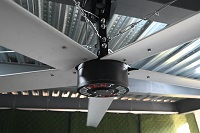
Continuous duty motors don’t just run—they endure. The real challenge lies in managing thermal buildup over hours, days, or even years of nonstop operation. Engineers tackle this by meticulously balancing electromagnetic design with advanced cooling strategies. Instead of relying on oversized frames, modern designs use precision-wound stators, high-grade laminations, and optimized air gaps to reduce internal losses. Every degree of heat shaved off translates directly into longer insulation life and quieter, more reliable performance.
Noise, often overlooked, becomes a critical factor when motors operate around the clock in hospitals, labs, or residential settings. Here, silencing a motor isn’t just about adding insulation—it starts with the rotor dynamics. Skewed rotors, precision bearing fits, and carefully tuned pulse-width modulation frequencies work together to eliminate tonal whines and electromagnetic hum. The result is a motor that fades into the background, letting the application take center stage.
What truly sets a continuous-duty motor apart is how it handles the unexpected. From brief overloads to voltage fluctuations, the engineering philosophy shifts from peak performance to graceful resilience. Components like Class H insulation, sealed bearings with lifetime lubrication, and copper rotors are not mere upgrades—they’re necessities. By designing for the long haul without shouting about it, these motors deliver a silent promise: power that simply won’t quit.
Aerodynamic Precision: Blades Designed for Optimal Flow
Every curve and edge on these blades is sculpted to guide air with near-zero turbulence, turning raw rotational force into a whisper-quiet, steady stream. The shape was modeled not just for thrust, but to manage the invisible currents that trip up lesser designs—keeping the airflow attached and coherent even under shifting loads.
Subtle twists along the span introduce a progressive pitch that adapts from hub to tip, balancing pressure gradients so no section works harder than it should. This fine-tuning means the blade cuts through air as a single, unified form rather than a collection of disjointed surfaces, lifting efficiency without the usual noise penalty.
By honing the trailing edge geometry, wake detachment is smoothed into a narrow band that dissipates energy gently downstream. The result is a marked drop in both vibration and parasitic drag, allowing the entire system to run at higher speeds with less strain—a quiet leap forward in motion that feels effortless.
From Weld to Wing: Ensuring Seamless Assembly
Every hole drilled, every weld bead laid, must align with a precision that borders on obsession. The journey from a raw weldment to a fully integrated wing demands more than just robust engineering on paper—it requires a synchronized dance of thermal management, fixture design, and real-time measurement. Even a fractional deviation during subassembly can cascade into hours of rework on the shop floor. That’s why teams obsess over the smallest details: how a weld cools and contracts, how shims are selected, how a stiffener seats against the skin. It’s not glamorous work, but it’s where integrity is born.
Bridging weld and wing means building a feedback loop that never sleeps. Laser trackers verify positional geometry as components move from jig to jig, while automated tap testing listens for inconsistencies in joint stiffness. When a fastener hole needs to be match-drilled through stacked materials, adaptive tooling adjusts its position based on actual weld contours, not theoretical models. The goal is to eliminate surprises at final mate: no gaps that exceed tolerance, no forced alignment that introduces residual stress. It’s about treating the assembly process as a continuous, self-correcting chain—where the learnings from each weld inform the next wing, and yesterday’s rework becomes today’s preventive adjustment.
In the end, seamless assembly isn’t just a technical milestone—it’s a cultural one. It’s reflected in the way cross-functional teams huddle around a digital twin, flagging potential clashes before metal is cut. It shows up when a mechanic trusts a torque curve because the data is clean and the tooling is proven. And it’s validated during that first test flight, when strain gauges report exactly what the model predicted. The path from weld to wing is rarely straight, but every controlled variable, every honest measurement, turns it into a repeatable, resilient process that scales.
Thermal Management: Keeping Cool Under Pressure
The relentless push for performance in modern electronics brings with it an unavoidable byproduct—heat. From smartphones that throttle under heavy gaming to electric vehicles charging at breakneck speeds, thermal management isn't just an engineering afterthought; it's the quiet backbone that keeps our devices from cooking themselves into early graves. Without effective cooling, even the most advanced chips and batteries become little more than expensive space heaters.
Cooling solutions have evolved far beyond simple fans and heatsinks. High-end systems now rely on vapor chambers that spread heat nearly instantly, liquid cooling loops that whisk it away to distant radiators, and thermal interface materials infused with graphene or diamond nanoparticles to bridge the microscopic gaps where heat gets trapped. In some extreme applications, even phase-change materials that absorb heat by melting are being pressed into service, offering brief but potent thermal buffers during spikes.
What's often overlooked is how profoundly thermal management shapes our experience. A phone that stays cool maintains its peak frame rate, a laptop that doesn't thermal-throttle crunches through renders without stuttering, and an EV battery kept in its thermal sweet spot charges faster and lasts longer. As devices continue to shrink and power demands climb, the next frontier isn't just about generating more frames or more torque—it's about smart, adaptive cooling that anticipates heat before it becomes a problem.
Tested Tough: Simulating Years of Service in Weeks
We don’t just trust our gear to hold up—we make it prove itself. Our accelerated lifecycle testing condenses years of real-world abuse into a brutal few weeks, exposing every component to extreme stress, wear, and environmental conditions far beyond what any user would dish out. From repeated impacts to corrosive salt sprays, we push until things break, then redesign until they don’t.
This isn’t about meeting industry standards; it’s about setting a new bar. Each prototype cycles through heat, cold, dust, water, and vibration in rapid succession, mimicking decades of daily use without the waiting. The result? Products that feel broken-in on day one but are built to outlast any adventure you can throw at them.
The scars on our test models tell the real story—scuffs, scratches, and worn edges that would take years to accumulate happen here in hours. By the time a design earns its badge, it’s survived more drama than a career’s worth of fieldwork. That’s how we know it’s ready for yours.
FAQ
The real challenge lies in material uniformity. Slight variations in blade composition or motor components can lead to wobble or noise. Manufacturers tackle this by implementing rigorous inline testing and sourcing from certified mills, ensuring each unit meets tight tolerances before leaving the floor.
It's a dance between aerodynamics and motor design. By using advanced airfoil profiles and electronically commutated (EC) motors, fans can move massive volumes of air at a fraction of the energy cost. Smart controls that adjust speed based on occupancy or temperature further trim consumption without sacrificing comfort.
Corrosion, bearing wear, and structural fatigue top the list. High-grade aluminum alloys or stainless steel for blades, sealed bearings with lifetime lubrication, and finite element analysis during design help fans withstand harsh environments and continuous operation for decades.
Absolutely. Mounting too close to ceilings or obstructions chokes airflow. Ignoring column placement can create dead zones. Skimping on structural support leads to vibration. Proper site assessment and following the manufacturer's spacing guidelines are crucial to realize the fan's full potential.
It's non-negotiable. Beyond basic function checks, reputable makers run every motor through dynamic balancing, simulate real-world loads for endurance, and verify airflow in test chambers. This catches defects early and guarantees that the fan will perform as rated, day in and day out.
Yes. The secret is in the blade tip design and motor commutation. Serrated or tapered tips reduce vortex shedding, and sinusoidal drives smooth out motor hum. Combined, these refinements can lower noise by several decibels, making the fan suitable even for libraries or offices.
Certifications like AMCA for aerodynamic performance and UL or ETL for electrical safety are more than stickers. They mean the fan has been independently validated to meet specific standards, giving facility managers confidence that the fan won't fail prematurely or pose a hazard.
Conclusion
Manufacturing a high-volume, low-speed fan that truly delivers on quality, efficiency, and durability demands a meticulous approach from material selection to final testing. It starts with the alloy choice—blades and hubs must cope with relentless cyclic stresses without fatigue, so advanced aluminum or composite materials are carefully analyzed for strength-to-weight ratios and corrosion resistance. At the heart of every unit, the motor is engineered not just for power but for continuous, silent operation. This means oversized bearings, precision-wound stators, and innovative cooling pathways that prevent heat buildup even during 24/7 runs. Paired with aerodynamically profiled blades, each design iteration is validated through computational fluid dynamics to maximize airflow while minimizing energy draw, turning complex air movement into a whisper-quiet, efficient performance.
Yet durability hinges on the unseen: how parts come together. The shift from individual weldments to integrated assemblies requires robotic welding cells and non-destructive testing to ensure consistent joint strength without distortion. Thermal management extends beyond the motor—control electronics must survive in factory heat, so heat sinks and thermal interface materials are selected with real-world operating temperatures in mind. Finally, accelerated life testing compresses years of heavy usage into weeks, cycling fans through extreme temperatures, voltage fluctuations, and unbalanced loads. This exposes the subtle weaknesses that field returns often reveal too late, allowing engineers to tweak designs proactively. The result is a fan that doesn’t just meet specifications on paper but delivers sustained performance in demanding industrial environments.
Contact Us
Contact Person: Michael Danielsson
Email: [email protected]
Tel/WhatsApp: +1 951 565 7769
Website: https://www.vindusfans.com