

Multi-Core Fiber Fusion Splicer Supplier: Key Factors for Reliable Fiber Optic Connections
2026-08-18
Multi-core fiber splicing leaves no room for guesswork. A fraction of a micron in core alignment error, and your link budget collapses before the first traffic packet ever crosses the glass. Yet too many network teams still choose a fusion splicer supplier based on brochure specs alone—only to discover arc drift, poor electrode life, and inconsistent loss readings after the first hundred splices. That’s where DVP changes the equation. With a focus on the unglamorous engineering details that determine long-term reliability, DVP's multi-core splicers are built for technicians who can't afford rework. This post breaks down the key factors you should actually evaluate in a supplier—before your next deployment puts those connections to the test.
Evaluating Core Alignment Accuracy Beyond the Spec Sheet
A spec sheet gives you static numbers under controlled conditions, but real alignment rarely behaves that way. Thermal expansion, mounting stress, and uneven load distribution introduce errors that no datasheet can predict. If you stop at the printed tolerance, you inherit blind spots that show up only after installation.
Field measurements with a laser tracker or dial indicator expose how the system actually sits once it is bolted down and running. Repeat those checks over a few thermal cycles and you will see drift patterns that static alignment values never reveal. Those patterns tell you where the real weak points are.
Instead of treating alignment as a one-time pass/fail, build a short baseline by logging measurements during normal operation. Compare those readings against the spec sheet as a reference, not an absolute. That practice turns alignment from a paper claim into something you can verify, trust, and maintain over time.
Field Conditions That Reveal a Splicer's True Dependability
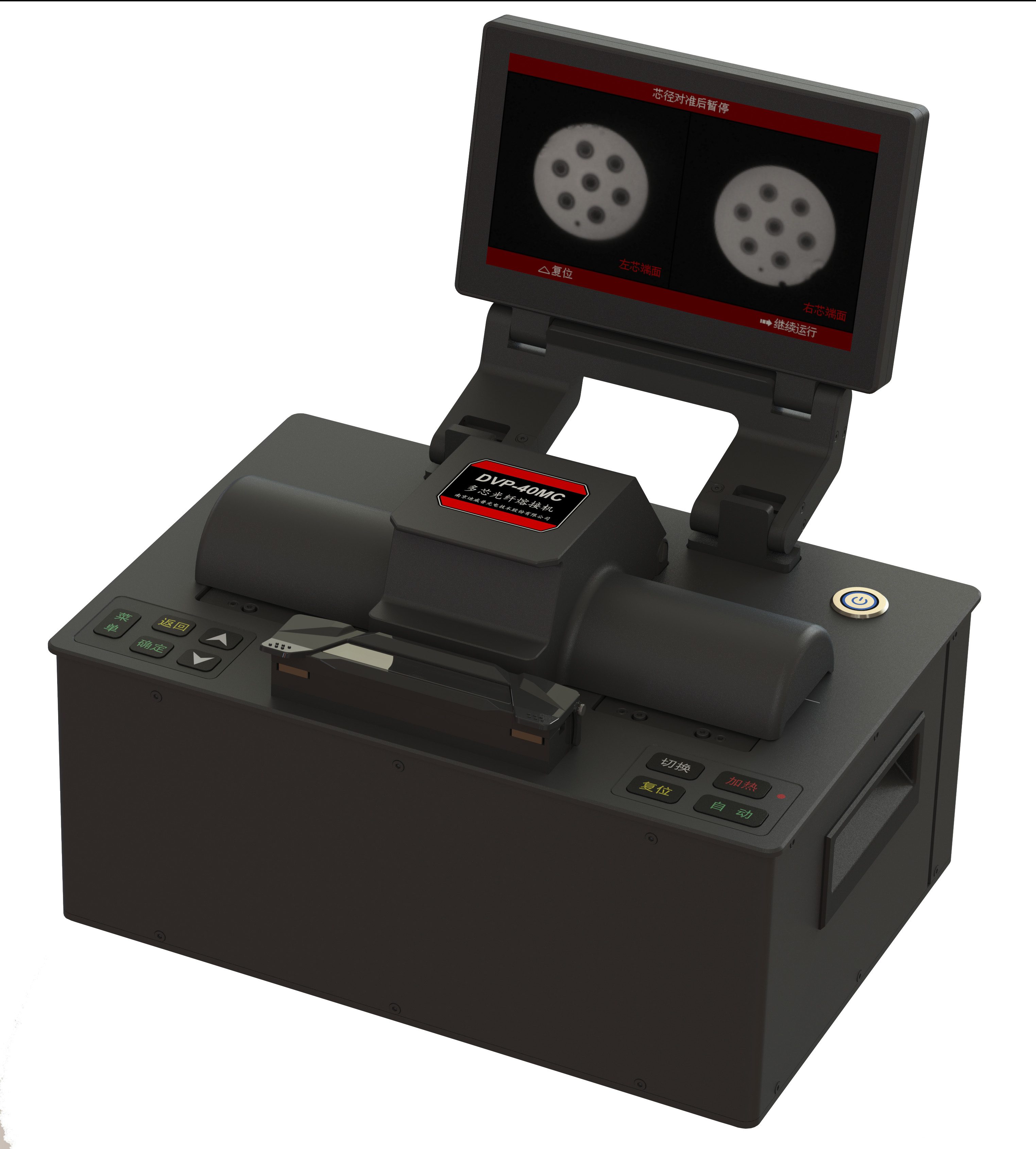
Reliability in a fiber optic splicer isn't something you can gauge from a spec sheet alone. It shows up when the machine is covered in dust at a roadside cabinet, or when the temperature drops below freezing and your fingers are numb. The first sign of a dependable unit is that it powers on without hesitation and holds calibration across dozens of splices, even after being bounced around in a truck bed. A splicer that needs constant re-calibration or throws vague error codes under real-world stress will cost you hours in the field.
Another telling condition is poor lighting or tight spaces. A truly reliable splicer gives you a clear, bright view of the fiber alignment no matter where you are, and its clamp mechanism doesn't fight you when you're working one-handed. If the unit struggles with a slightly dirty fiber or requires you to re-clean the v-grooves after every few splices, that's not dependability—that's a fragile tool. Watch how it handles a fiber that isn't perfectly cleaved; a good splicer will still estimate a loss and let you know if the splice is marginal, rather than silently producing a bad joint.
Finally, test it in wet or humid conditions. Condensation on the lenses, moisture inside the heating oven, or a touchscreen that becomes unresponsive with damp gloves all reveal weak points. A dependable splicer keeps its internals sealed and its electrodes dry, and it doesn't require you to carry a bag of desiccant packets just to get through a morning's work. In the field, the true test is simple: does the tool keep up with you, or do you end up working for it?
Maintenance Demands You Should Expect from a Quality Supplier
A dependable supplier doesn't wait for breakdowns to surface. They arrive with a documented maintenance calendar, calibrated tools, and a clear list of wear parts that need replacement based on actual operating hours rather than guesswork. You should expect them to track the service history of your equipment, flag recurring stress points, and adjust intervals before small issues become costly downtime.
Beyond routine checklists, a quality partner will leave behind actionable reports after every visit and respond to urgent faults with a realistic timeline, not vague promises. Ask whether they stock critical spares locally or rely on long-distance shipping, and whether their technicians can guide your team through basic upkeep. The real differentiator is ownership: they treat your uptime targets as their own metric, not an afterthought.
Signal Loss Patterns That Point to Inferior Fusion Quality
A sudden, complete dropout that repeats at regular intervals rarely reflects environmental blockage alone. When the gap duration aligns with the sensor's internal buffer flush or a mismatched baud rate, it exposes a synchronization fault in the fusion core. The system may continue to output a position or object track, but the underlying covariance inflates silently, leaving downstream logic unaware of the growing uncertainty.
Intermittent loss that alternates between channels—such as radar fading while camera remains stable, then reversing—points to a fragile arbitration layer. Healthy fusion engines maintain a weighted belief across all sources, so a single degraded input triggers graceful reweighting rather than abrupt handoffs. Frequent switching between primary and secondary signals often masks timestamp collisions or poorly tuned outlier rejection thresholds.
A slow, progressive decline in signal strength before complete absence carries a different warning: the fusion filter is not compensating for gradual sensor degradation. Quality fusion should track not only the raw signal but also its trend and noise floor, using that history to predict impending loss. When the output instead mirrors the fading input with increasing jitter, the system is effectively amplifying the failure instead of isolating it.
How Supplier Support Shapes Long-Term Network Reliability
Reliability in a network rarely comes down to a single piece of hardware. It builds up over time from the choices made during procurement, deployment, and routine maintenance. Suppliers that stay engaged after the initial sale—offering firmware updates, compatibility testing, and rapid diagnosis when faults appear—become an invisible backbone. Their support can mean the difference between a network that degrades quietly and one that keeps operating through unexpected stress.
The less obvious benefit shows up during scaling or reconfiguration. A supplier who understands the full lifecycle of their equipment can flag potential bottlenecks before they become outages, suggest topology changes that reduce single points of failure, and provide spare parts strategies that match real usage patterns rather than generic templates. This kind of ongoing collaboration helps network operators avoid the trap of designing for a static environment, which rarely exists in practice.
Long-term reliability also depends on how well a supplier responds when things go wrong. Detailed root-cause analyses, honest timelines for replacement units, and documented workarounds all contribute to a network's ability to recover quickly. Over years, these interactions shape the operator's own internal knowledge base—turning individual failures into institutional learning. That accumulated expertise, shared back and forth, is often what separates a network that merely meets its uptime targets from one that consistently exceeds them.
Scaling Multi-Core Deployments Without Compromising Splice Integrity
Multi-core fiber rollouts push bandwidth density upward, but every added core multiplies the number of fusion points that must hold under real-world stress. Rather than treating splice trays as an afterthought, field teams are rethinking bend radius management, cleave angle consistency, and alignment tolerances at the individual core level. The goal is straightforward: scale capacity without letting a single bad splice become the bottleneck for an entire trunk.
One practical shift is moving from manual inspection toward live attenuation profiling during the splicing process itself. By sampling loss per core as the splice is made, crews can catch micro-bends or core offsets before the heat-shrink sleeve locks them in place. This reduces the rework loop that typically grows with port count, and it keeps splice closures from turning into chaotic patchworks of good and marginal joints.
Equally important is how splice organizers handle the jump from 12-core ribbons to 24- or 32-core arrays. Higher density cannot mean tighter coiling or force-fit routing. Maintaining slack loops with consistent geometry, separating buffer tubes by thermal zone, and using ribbonized splicing only where the fiber geometry is uniform all help preserve long-term splice integrity. The result is a multi-core plant that scales without trading optical performance for port density.
FAQ
A dependable multi-core splicer aligns and fuses several cores in one operation, so the real difference shows up in core-to-core pitch accuracy and simultaneous loss control across all channels. Cheaper machines often struggle with residual stress or slight rotational misalignment between cores, which leads to uneven insertion loss. Look for machines that offer per-core loss feedback after the splice, not just an average value.
In a well-tuned splicer, variation should stay under 0.02 dB between the best and worst core for a 4-core or 8-core fiber. If you regularly see a spread above that, it usually points to poor electrode condition, inconsistent clamping, or a fiber holder that doesn't maintain rotational alignment. Field crews should track this spread as a maintenance indicator rather than only looking at the average loss.
Core alignment is almost always the safer choice because it references the actual core positions instead of the outer glass diameter. Multi-core fibers can have slight core eccentricity or twist, and clad alignment ignores those imperfections. That said, a supplier should be able to demonstrate how their core alignment handles rotational offset, since even a sub-degree twist can ruin the splice if the software doesn't correct for it.
Electrode replacement is the big one: on multi-core work, electrodes degrade faster because of the longer arc times needed to melt multiple cores evenly. Clean the V-grooves and objective lenses after every 50 to 80 splices in dusty environments, and recalibrate the arc power whenever you change fiber types or notice loss creeping up. A supplier that offers an annual calibration service and provides a simple way to check electrode wear in the field saves a lot of troubleshooting time.
Multi-core fibers need stable rotational positioning across the entire splice, not just linear alignment. A poorly fitted holder can let the fiber twist a few tenths of a degree under clamping pressure, which translates into significant lateral misalignment for the outer cores. Good holders use consistent spring tension and should be tested for rotation repeatability. Ask the supplier for a repeatability specification or a quick demonstration rather than accepting generic "high precision" claims.
Training should focus on trouble reading the splice estimation images, because a multi-core splice can look acceptable on the summary screen while one outer core has a crack or void. Technicians also need practice with rotational alignment checks and with verifying that all cores show comparable loss after each splice. A proper program includes hands-on time with intentionally misaligned fibers so the crew learns what early failure looks like before it becomes a field problem.
Ask for a splice test on fiber from your actual cable batch rather than their demo fiber. Pay attention to how they report loss: if they only give an average across all cores, ask for the per-core values. A supplier that is comfortable showing the worst core's loss and explaining how environmental factors affect repeatability is more useful than one that quotes a single optimistic number. Also check whether they stock spare electrodes and holders locally; long lead times for small parts often reveal how much field support they really provide.
Dust and wind are the usual suspects, but temperature swings have an outsized impact because multi-core splicing relies on precise thermal expansion matching during the arc. If a splice is made in direct sunlight on a hot enclosure, the fiber can shift slightly between alignment and fusing. Using a splice tent or wind guard and letting the splicer acclimate for ten minutes before starting usually reduces rework more than changing machine settings.
Conclusion
In real multi-core deployments, the gap between a clean lab demo and a dependable field splice often comes down to details that never appear on a spec sheet. Core alignment accuracy means little if the machine drifts after temperature swings or rough handling, so a supplier's claim should be tested against repeated on-site trials, not just factory data. Field conditions expose the true character of a fusion splicer: dust, humidity, uneven power, and operator fatigue all separate equipment that merely works from equipment that keeps working. A quality supplier anticipates these stresses rather than treating them as exceptions.
Maintenance expectations also shape long-term cost and uptime. A reliable multi-core splicer should not demand constant recalibration or proprietary consumables that create hidden bottlenecks. Watch for subtle signal loss patterns, such as consistently higher attenuation on outer cores or intermittent spikes under mechanical strain; these often point to inferior fusion quality that basic loss readings miss. The supplier's support network becomes part of the infrastructure itself. When a unit fails in a remote area, the difference between a technician who knows multi-core fiber and one who reads from a generic script can determine whether a network meets its reliability targets. Scaling deployments only works when each splice is as predictable as the last, so the supplier's training, spare parts availability, and honest failure analysis matter as much as the hardware.
Contact Us
Contact Person: Mr XU
Email: [email protected]
Tel/WhatsApp: 86-25-85582828
Website: https://www.dvp.cn/en/