

Precision Rolling Mills: Innovations in Factory Efficiency and Advanced Manufacturing Technology
2026-02-11
Welcome to the frontier of industrial innovation. In today's rapidly evolving manufacturing landscape, precision rolling mills stand at the heart of transformation, driving efficiency and redefining what's possible in advanced production. As industries worldwide seek smarter, more sustainable solutions, the innovations emerging from this field are not just incremental improvements—they are game-changers. At GRM, we're passionate about pushing the boundaries of technology. Our commitment to excellence has positioned us as a leader in developing cutting-edge rolling mill solutions that optimize performance and reduce operational costs. From AI-driven automation to energy-efficient designs, the advancements we'll explore in this blog highlight how precision engineering is reshaping factories for the future. In this post, we delve into the latest breakthroughs and real-world applications that make precision rolling mills indispensable in modern manufacturing. Whether you're an industry veteran or simply curious about the tech behind the products you use daily, join us as we uncover the innovations that are setting new standards. Discover how GRM is at the forefront of this revolution, empowering businesses to achieve more with less. Let's dive in and see what's next on the horizon.
Revolutionary Rolling Mill Designs Driving Modern Factory Efficiency
Recent advancements in rolling mill technology are reshaping manufacturing floors with designs that prioritize speed and precision. Innovations like compact strip production (CSP) systems eliminate multiple processing stages, allowing metals to be shaped in a single, continuous pass. This reduction in handling not only cuts production time by up to 30% but also minimizes energy consumption, leading to significant cost savings. Factories adopting these mills report fewer bottlenecks and enhanced throughput, making them more competitive in fast-paced markets.
Moreover, smart sensors and IoT integration are transforming rolling mills into self-monitoring units that predict maintenance needs before failures occur. By analyzing real-time data on temperature and pressure, these systems optimize rolling parameters on the fly, improving material quality and reducing waste. This proactive approach ensures consistent output with minimal downtime, allowing factories to maintain high efficiency even under demanding schedules.
Beyond hardware, modular designs enable rapid reconfiguration for different product lines, supporting agile manufacturing. These mills can switch between producing thin sheets and heavy plates with minimal setup time, enhancing flexibility. As industries push for greener operations, newer models incorporate recycled materials and closed-loop cooling systems, further boosting sustainability. Together, these innovations demonstrate how cutting-edge rolling mills are not just tools but strategic assets driving modern factory efficiency forward.
Cutting-Edge Automation Systems Transforming Manufacturing Workflows
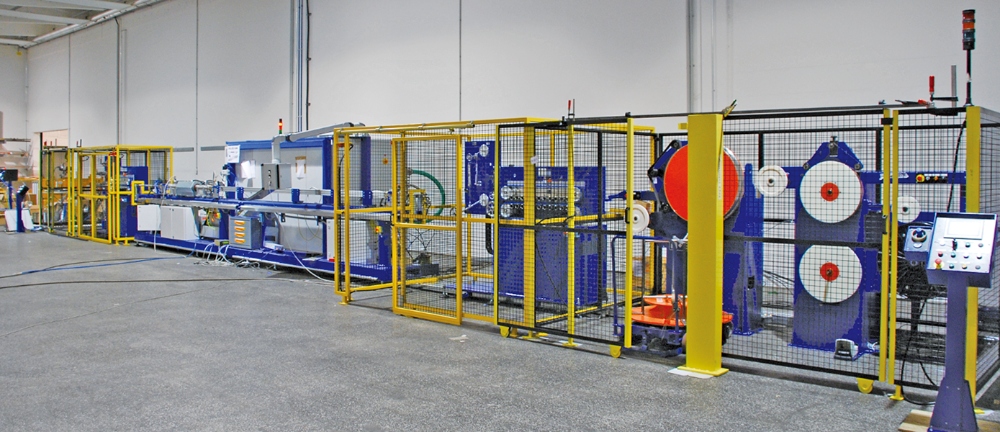
Manufacturing is undergoing a profound shift as cutting-edge automation systems redefine traditional workflows. Gone are the days of repetitive, manual tasks dominating factory floors. Instead, advanced robotics and AI-driven machines are stepping in, handling intricate assembly processes with remarkable precision and speed. These systems not only boost production rates but also minimize human error, leading to higher quality products and reduced waste. From automotive plants to electronics factories, the integration of such technologies is enabling companies to meet increasing demand while maintaining tight control over every stage of the manufacturing cycle, ushering in an era of smarter, more efficient operations.
At the heart of this transformation lies the synergy between IoT devices and machine learning algorithms. Smart sensors embedded in equipment continuously collect data on performance, temperature, and wear, feeding insights back to central systems that optimize processes in real time. This dynamic adjustment allows manufacturers to predict maintenance needs before breakdowns occur, drastically cutting downtime and extending machinery lifespan. As a result, workflows become more fluid and adaptive, capable of responding swiftly to changes in production schedules or material availability without sacrificing output, making factories not just automated but genuinely intelligent.
Looking ahead, the impact of these innovations extends beyond mere efficiency gains. They empower workers to focus on more creative, strategic roles—such as system oversight, troubleshooting, and innovation—while robots handle the heavy lifting. This human-robot collaboration fosters safer work environments and opens up new avenues for skills development. Ultimately, by embracing cutting-edge automation, manufacturers are not only transforming their immediate workflows but also positioning themselves at the forefront of a global industrial evolution, ready to tackle future challenges with agility and foresight.
Innovative Materials Handling Solutions for Enhanced Production Speeds
In today's fast-paced manufacturing environments, innovative materials handling solutions are no longer a luxury but a necessity for boosting production speeds. These systems go beyond mere transportation to integrate smart technologies like robotics and automated guided vehicles (AGVs) that adapt in real-time to workflow changes. By minimizing manual handling delays, they slash cycle times and enable seamless, continuous operations that keep production lines humming at maximum efficiency.
What sets modern materials handling apart is its ability to fine-tune logistics with precision, using data analytics and IoT sensors to predict bottlenecks before they occur. Imagine conveyor systems that self-optimize routing or robotic arms that handle fragile components with unprecedented speed and accuracy. This intelligent approach not only accelerates throughput but also reduces errors, ensuring that every step from raw material to finished product flows smoothly and swiftly.
Ultimately, these innovations translate into tangible competitive advantages, allowing businesses to respond quicker to market demands while lowering operational costs. By embracing cutting-edge materials handling, companies can unlock new levels of productivity, turning potential slowdowns into opportunities for growth and setting a new standard in manufacturing agility.
Advanced Control Technologies Optimizing Rolling Precision and Quality
In today's competitive steel and metalworking industries, achieving unparalleled precision in rolling processes is no longer a luxury—it's a necessity. Advanced control technologies, such as model predictive control (MPC) and neural network-based systems, have revolutionized how manufacturers approach quality assurance. By integrating real-time data from sensors and cameras, these systems dynamically adjust roll gaps, speeds, and temperatures to minimize deviations, ensuring products meet tight tolerances consistently. This shift from reactive to proactive control not only reduces scrap rates but also enhances material properties, leading to stronger, more reliable components for critical applications like aerospace and automotive engineering.
Beyond basic automation, innovations like adaptive learning algorithms are setting new benchmarks for rolling quality. These technologies analyze historical process data to predict and counteract potential defects before they occur, such as edge cracking or surface irregularities. By fine-tuning parameters in milliseconds, they maintain optimal rolling conditions even under fluctuating raw material inputs or environmental factors. This level of adaptability translates to smoother surfaces, uniform thickness, and improved mechanical performance, giving manufacturers a competitive edge in markets where precision is paramount.
The integration of digital twins and IoT connectivity further elevates rolling precision by enabling virtual simulations of entire production lines. Operators can test different scenarios in a risk-free environment, optimizing settings for specific alloys or product geometries. This holistic approach not only boosts quality but also slashes energy consumption and downtime, making operations more sustainable. As these technologies evolve, they're empowering teams to push the boundaries of what's possible, delivering products that exceed industry standards and customer expectations with every roll.
Sustainable Practices in Rolling Mills Reducing Energy Consumption
Implementing energy-efficient technologies in rolling mills has become a critical strategy for the steel industry to cut operational costs and minimize environmental impact. For instance, many mills are adopting advanced heat recovery systems that capture waste heat from rolling processes to preheat incoming materials or generate steam, thereby slashing fuel consumption. By integrating these systems with smart sensors and automation, mills can optimize energy usage in real-time, leading to reductions of up to 20% in overall energy demand without compromising production quality.
Another key practice involves upgrading to high-efficiency motors and variable frequency drives (VFDs) specifically for rolling mill operations. These technologies allow precise control over motor speeds and torque, reducing idle running and eliminating energy wastage during low-demand periods. Combined with predictive maintenance schedules, this not only extends equipment life but also prevents unexpected downtimes, contributing to a smoother, more energy-conscious workflow that sets forward-thinking facilities apart from competitors.
Beyond technological upgrades, operational adjustments like scheduling rolling campaigns to minimize energy-intensive start-ups and shutdowns can yield significant savings. Mills are increasingly adopting data analytics to monitor energy patterns and identify inefficiencies, enabling targeted interventions. This holistic approach, blending innovation with practical management, fosters a culture of sustainability that enhances both profitability and environmental stewardship in the long term.
Future Trends in Rolling Mill Technology and Industry Adaptations
The rolling mill sector is poised for a transformative shift driven by the integration of artificial intelligence and IoT. These technologies enable real-time monitoring of production lines, allowing mills to optimize processes through predictive analytics and automated control systems. This not only boosts efficiency and product quality but also reduces energy consumption, positioning companies to meet stringent environmental regulations and cut operational costs.
Another emerging trend involves the adoption of additive manufacturing and advanced materials in rolling mill equipment. By incorporating 3D-printed components and high-performance alloys, manufacturers can create more durable and flexible machinery capable of handling diverse metal grades. This adaptability supports the industry's move toward customized production runs, helping businesses respond swiftly to shifting market demands and enhance their competitive edge.
To stay ahead, rolling mill operators are increasingly investing in workforce upskilling and collaborative robotics. Training programs focused on digital literacy and automation skills prepare employees for new roles, while cobots work alongside humans to improve safety and precision in high-risk tasks. These adaptations foster a culture of innovation, ensuring the industry remains resilient amid global economic fluctuations and technological disruptions.
FAQ
Innovations like automated control systems and real-time data analytics allow mills to optimize production processes, reduce waste, and increase throughput, leading to significant efficiency gains.
Advanced technology integrates IoT sensors and AI-driven monitoring, enabling more precise material handling and quality control compared to older manual or semi-automated systems.
Modern mills incorporate energy recovery systems and efficient motors to minimize power consumption, lowering operational costs and supporting sustainable manufacturing practices.
Enhanced calibration and feedback mechanisms ensure consistent thickness and surface finish, improving product reliability and meeting strict industry standards.
Initial costs, staff training, and integration with existing infrastructure can pose hurdles, but long-term benefits often outweigh these obstacles.
By speeding up production and reducing defects, these mills help streamline material flow and reduce lead times, enhancing overall supply chain responsiveness.
Trends include greater use of machine learning for predictive maintenance and hybrid systems combining additive manufacturing for more flexible production setups.
Conclusion
Precision rolling mills have entered a transformative era, fundamentally reshaping factory efficiency as detailed under the title 'Innovations in Factory Efficiency and Advanced Manufacturing Technology.' Revolutionary designs, spotlighted in the first aspect, have led to more compact and agile mill setups that drastically cut downtime and boost throughput. These innovative layouts are seamlessly integrated with cutting-edge automation systems, which are revolutionizing manufacturing workflows by enabling real-time monitoring and adaptive control. This synergy ensures that production lines operate with unprecedented smoothness, minimizing human error and maximizing output consistency. By fusing advanced mechanical engineering with smart automation, modern mills achieve a level of operational fluidity that sets new benchmarks in the industry, pushing beyond traditional limits to deliver superior performance and reliability.
Further enhancing these gains are innovative materials handling solutions that accelerate production speeds, coupled with advanced control technologies that fine-tune rolling precision and quality to exacting standards. These elements work in concert to reduce waste and improve product uniformity. Simultaneously, a strong emphasis on sustainable practices is reducing energy consumption, aligning efficiency with environmental responsibility. Looking ahead, future trends promise continued adaptations, such as AI-driven optimizations and IoT connectivity, which will drive the industry toward even greater resilience and innovation. This holistic approach ensures that precision rolling mills not only meet current demands but are also poised to lead the next wave of manufacturing evolution, blending technological sophistication with practical, sustainable outcomes.
Contact Us
Contact Person: Rayna
Email: [email protected]
Tel/WhatsApp: 86 -173 1474 6343
Website: https://www.grmrollingmill.com/