

Specialty Fasteners Exporter Essentials for Reliable Industrial Supply Chains
2026-09-02
In the world of industrial supply chains, specialty fasteners often play the unsung hero—small components that hold together massive operations. Yet sourcing them reliably across borders is far from simple. From fluctuating material standards to unpredictable shipping delays, one weak link can ripple through entire production lines. This is where choosing the right exporter becomes a strategic decision, not just a procurement task. Peak Fasten has spent years refining the art of delivering precision-engineered fasteners without compromise. In this article, we’ll unpack the essential qualities that separate dependable specialty fastener exporters from the rest, and how you can build a supply chain that stays strong under pressure.
Material Heat Maps That Follow Every Lot
Averages lie. A coil of steel or roll of film might pass incoming inspection on mean thickness, yet still hide a thin streak that tears under tension two steps later. Material heat maps change that by capturing property values across every square centimeter as each lot moves through production.
The map gets built from inline scanners or rapid lab pulls tied to precise coordinates along the length and width. Once generated, it stays attached to that specific lot number. So when a downstream press operator sees a wrinkle at meter 340, the heat map shows exactly what the coating weight or hardness profile was doing in that zone before the material ever left the supplier.
That level of traceability turns containment from a guessing game into a targeted cut. You can route suspicious sections to less demanding jobs, push corrective action back to the right upstream variable, and stop paying for entire coils you only needed to trim. It also gives your suppliers a mirror they can't argue with.
Thread Verification Beyond the Sample Coupon
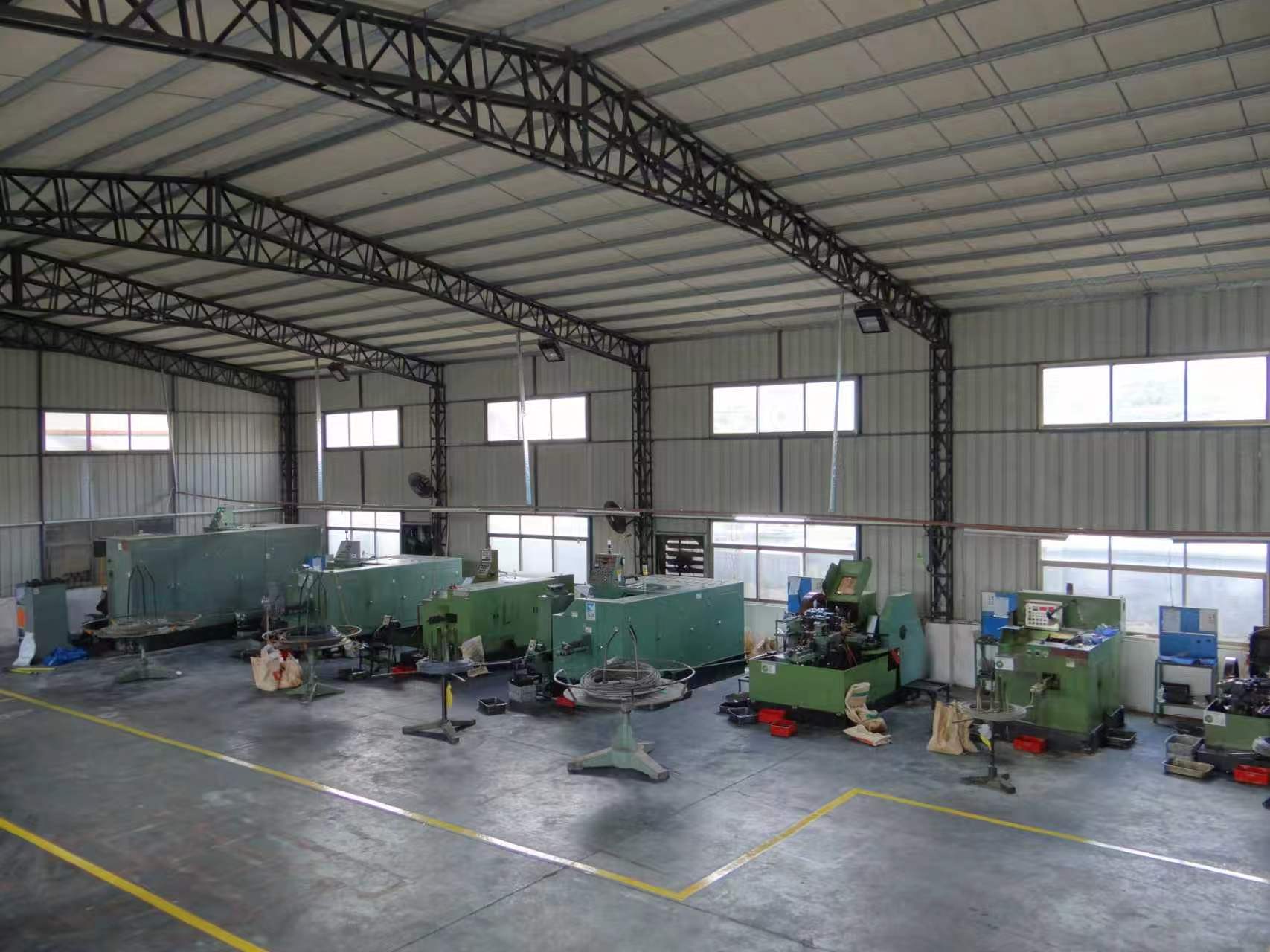
Relying solely on a sample coupon to verify thread integrity leaves blind spots. The coupon represents one set of conditions at one moment. Production threads can differ due to tool wear, material batch changes, temperature shifts, or setup drift. A robust program looks beyond that single reference point and verifies actual parts throughout the run.
Practical approaches include periodic in-process checks with dedicated thread gages, monitoring torque-tension signatures during assembly, or using optical comparators to catch flank angle variation before it becomes a field issue. Some shops also retain a few parts from each shift for cross-sectioning, but that's more about postmortem than prevention. The goal is to catch drift early, not to prove the coupon was good.
Data from these ongoing checks should feed back into tool life decisions and setup adjustments. Without that loop, even the best coupon result is just a snapshot. Over time, trends in minor diameter, pitch diameter, or thread form reveal how the process moves between changes, which is far more useful than a pass/fail on one sample.
Export Dossiers That Clear Customs Without Calls
Every shipment starts with paperwork, but the real skill is making that paperwork disappear into the background. A well-built export dossier does the talking before anyone picks up a phone. It carries the right incoterms, harmonized codes, and stamped certificates so the customs officer never has to ask what the goods are or why they're moving. When the documentation matches the physical cargo exactly, clearance becomes a quiet formality rather than a negotiation.
The trick is anticipating the questions that usually trigger calls. Inconsistent weights, vague product descriptions, or missing end-user statements are the typical culprits. By standardizing the dossier format and cross-checking every field against the commercial invoice, packing list, and transport document before submission, you remove the need for verbal clarifications. Customs teams begin to recognize your file as complete, which means fewer holds and fewer interruptions.
Over time, this approach builds a reputation that speeds up every border crossing. Brokers learn they can trust your paperwork and process it through the fast lane. Ports become just points on a map rather than bottlenecks requiring phone calls, emails, and extra fees. The goal isn't to avoid talking to customs entirely, but to make every conversation unnecessary because the dossier already answered the question.
Plating Adhesion Tests Done Before the Pallet Wraps
Before the pallet wraps come out, plating adhesion is checked on the exposed surface. Once the parts get bundled under stretch film, you lose easy access to the coating, so any questionable adhesion has to be caught now. On the line, this usually means setting aside a few sample pieces from the same lot and running a quick cross-hatch with a razor blade and a piece of 3M 250 tape.
The test itself isn't complicated: score a grid of shallow cuts through the plating, press the tape down hard, and pull it off at a steady angle. If more than a few small squares lift off with the tape, the plating is flagged. Some suppliers also bend a thin coupon around a mandrel or hit it with a brief thermal shock to see if the deposit separates at the edges. These checks take less than ten minutes, but they stop a lot of bad parts from getting wrapped and shipped.
What counts as a pass depends on the spec, but most shops want no more than 5% removal from the scribed area and no peeling beyond the cut lines. Edge adhesion matters too, because wrapped pallets can shift during transit and rub the coating. If a part fails, it goes back for strip and replate before the wrapper ever sees it, not after the pallet is already sealed up.
Critical Fastener Buffers Tied to Line-Down Costs
Maintaining buffer stock for a handful of critical fasteners isn't just a purchasing habit—it's a direct hedge against the hard arithmetic of downtime. When a single missing bolt can halt an entire assembly cell, the cost per minute of stopped production often dwarfs the annual carrying cost of holding a few extra boxes. Operations teams quickly learn that the most expensive fastener in the plant is the one that isn't there when the line is waiting.
Calculating an appropriate buffer level starts with the line-down rate, not the fastener's unit price. A machine that bills out at $2,800 per hour in lost throughput justifies a surprisingly large safety stock of even low-cost hardware. Suppliers' lead times, order minimums, and historical usage variability all feed into the formula, but the dominant factor is usually the potential revenue at risk. In practice, high-mix facilities often treat a short list of exotic or long-lead fasteners differently from commodity screws—giving those critical items dedicated kanban bins and reorder triggers set far above typical consumption.
The real challenge arises when buffer policies are set by a central purchasing group disconnected from the shop floor. Generic rules like 'two weeks of inventory' fail when a single line-down event consumes sixty days' worth of a specialty shoulder bolt. A more resilient approach ties buffer sizing to the actual cost of a stoppage, reviewed quarterly with production managers, so that the number of boxes on the shelf reflects the price of the line sitting idle—not just the purchase cost of the fastener itself.
Packaging That Keeps the Lead Thread Intact
A thin lead thread has a habit of finding the one weak spot in a box and folding there. Instead of leaving room for that to happen, the inner tray is shaped to match the coil's resting curve. The thread sits in a shallow groove with just enough grip to stop it sliding, but nothing pinches it along the outer edge.
The outer carton then acts as a brace rather than just a cover. Its side walls are reinforced at the two points where pressure usually lands, and the end flaps fold in without touching the exposed tip. As a result, the thread can be shipped flat, stacked, or knocked around a bit and still arrive with its original bend and finish.
FAQ
Look beyond price and lead time. A serious exporter will offer technical guidance on material selection, surface treatments, and tolerance stacks. Ask for sample test reports, not just certificates. If they can explain how their fasteners behave under vibration, thermal cycling, or corrosive exposure, that is usually a good sign.
Standard fasteners are often interchangeable, but specialty items are tied to specific performance requirements. That means a supply chain has to manage tighter specifications, lower volumes, and longer qualification cycles. A good exporter understands this and keeps revision-controlled documentation and approved samples on file.
Without traceability, a single mixed batch of fasteners can cause costly recalls or field failures. Reliable exporters maintain heat numbers, lot codes, and raw material certificates that link every box back to the mill. This lets buyers isolate problems quickly and prove compliance during audits.
Dimensional inspection with calibrated gauges, mechanical testing such as tensile or hardness, coating thickness measurement, and visual checks for thread damage or burrs. Some exporters also provide first article inspection reports and retain samples from each lot for future reference.
Proper packaging prevents corrosion, mixed lots, and transit damage. Reliable exporters use rust-inhibiting materials, sealed bags, and labeled compartments so that parts arrive ready for use. Poor packaging can turn a good fastener into scrap before it reaches the production line.
Consistent shipping routes, accurate customs documentation, and clear Incoterms matter as much as the product itself. Look for exporters who proactively share shipment milestones and can adjust to port congestion or regulatory changes without leaving buyers guessing.
Start with a small pilot order that includes a custom or modified part. Pay attention to how quickly they ask clarifying questions, provide a feasibility review, and offer practical alternatives. A responsive exporter treats the pilot as a partnership, not just a transaction.
Conclusion
Reliable supply chains for specialty fasteners depend on controls that reach far past a certificate of compliance. Every lot carries a material heat map tied to its heat number, so a batch of alloy steel socket heads can be traced back to the exact furnace cycle, cooling curve, and hardness band without digging through paper files. That same lot-level thinking extends to thread verification. Instead of relying on a convenient sample coupon or a single ring gauge pass, inspectors pull finished parts from multiple bins, check pitch diameter, flank angle, and root radius under a comparator, and reject the entire run if even one dimension drifts outside the tolerance envelope. This is how a fastener exporter prevents dimensional substitutions from reaching an assembly line.
Once the product clears the floor, the export dossier matters just as much as the fastener itself. Complete paperwork—mill certs, test reports, country-of-origin statements, and HS code references—moves through customs without a phone call, because nothing is left to interpretation. Plating adhesion is verified before the pallet wraps, not after a customer complains about flaking zinc or hydrogen embrittlement. Buffers for critical fasteners are sized against line-down costs, not just invoice value, so a ten-cent screw that could stop a million-dollar operation gets proper safety stock. Packaging completes the chain: boxes and trays protect the lead thread, preventing nicks and burrs that would cause cross-threading on the plant floor.
Contact Us
Contact Person: Mason Lv
Email: [email protected]
Tel/WhatsApp: +86 13027998452
Website: https://www.peakfastentech.com