

Stainless Steel Hex Nuts Supplier: Your Ultimate Guide to Quality Fasteners
2026-11-16
Behind every rock-solid assembly lies a component that rarely gets the spotlight: the humble hex nut. Yet when reliability, corrosion resistance, and sheer holding power are on the line, stainless steel hex nuts become non-negotiable. As a trusted name in industrial fastening, Wanluo has spent years refining what it means to supply quality—from raw material selection to precision threading. Whether you’re battling harsh environments or engineering high-torque connections, knowing your supplier’s standards can save you more than just time. In this guide, we peel back the layers on what truly defines a dependable stainless steel hex nut and why your choice of partner matters far more than the part number stamped on the side.
Why Your Fastener Choice Could Make or Break Your Project
We tend to overlook the small stuff until it fails. A bolt that shears under pressure or a screw that corrodes silently inside a joint can unwind months of careful work. It’s never just about diameter or thread count—surface coatings, material fatigue, and even the way a washer beds against a mating surface can decide whether a structure stays put or drifts apart when nobody’s watching.
Field conditions have a nasty habit of exposing lazy specs. That stainless fastener you dropped into a marine environment might hold up beautifully for the first season, only to trigger galvanic corrosion where it contacts a different alloy. Or maybe your high-strength bolt sails through static load tests but snaps weeks later because hydrogen embrittlement wasn’t on your radar. These aren’t edge cases—they’re the predictable outcomes of treating fasteners as afterthoughts rather than load-bearing design decisions.
The real trap is thinking you can swap one fastener for another because the size matches. Clamping force, preload scatter, relaxation under heat cycling, vibration-driven loosening—each demands its own answer. When something lets go on site, the post-mortem rarely blames the engineer who picked the cheapest nut in the catalog. It blames the assembly. Spend your detail time where the stress lines concentrate, and your project won’t become someone else’s cautionary tale.
The Hidden Costs of Subpar Hex Nuts
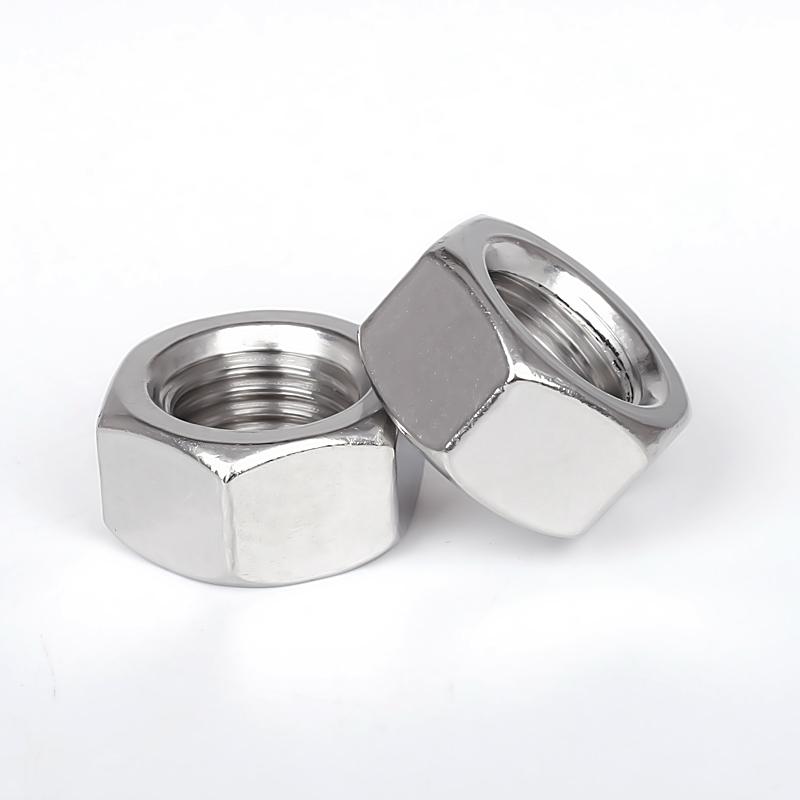
Cheap hex nuts often carry a price tag that looks tempting on a purchase order, but the real expense shows up later in ways that rarely make it onto a balance sheet. Threads that strip after a few turns or a fit that’s just loose enough to vibrate free will quietly eat into maintenance hours. Instead of a one-and-done assembly, crews end up retightening, replacing, and sometimes redesigning joints that were supposed to be permanent. Those extra labor minutes stack up fast, turning what seemed like a bargain into a repetitive drain on productivity.
Then there’s the problem of material mismatches and inconsistent tolerances. A batch of subpar nuts might pass a casual visual check but fail under thermal cycling or mild corrosion because the alloy was skimped on or the dimensions drifted outside spec. When a fastener lets go in the field, the collateral damage isn’t limited to the nut itself—it can take out adjacent components, stall a production line, or trigger a safety incident. Suddenly that five-cent saving per unit looks absurd next to an unplanned outage or a warranty claim.
What rarely gets tallied is the trust that erodes when deliverables start failing prematurely. End users remember the leaks, the wobbles, the unexpected callouts, and they connect that disappointment to the brand on the assembly. Once that confidence cracks, winning it back costs far more than sourcing a consistent, properly graded hex nut from the start. The hidden cost is ultimately a reputation hit that no discount can offset.
Navigating Stainless Steel Grades Without the Jargon
Sorting through stainless steel grades often feels like deciphering a secret code—304, 316, 430—but you don’t need a metallurgy degree to pick the right one. At its core, the difference boils down to what the steel is mixed with and how those additions handle real-world challenges like water, heat, and daily wear. Think of it less as memorizing numbers and more as understanding what each family of stainless steel is built to do.
The most common grades break into a few simple camps. The 300-series steels gain their corrosion-fighting superpowers from nickel and chromium, making them a go-to for kitchens, medical tools, and coastal railings where rust is the enemy. Shift to the 400-series, and you’ve traded some of that rust resistance for magnetic properties and extra hardness—ideal for knife blades or automotive trim where strength matters more than constant moisture exposure.
When someone tosses around terms like 18/8 or 18/10, they’re not reciting coordinates. Those numbers point to chromium and nickel percentages, telling you at a glance that a pan or sink will handle acidic foods and dishwashers without fuss. Instead of getting tangled in technical specs, simply match the grade’s strength to the job: weld a 304 bracket for outdoors, choose 430 for a dry indoor shelf, and only step up to 316 when you’re dealing with salt spray or harsh chemicals regularly.
How Custom Hex Nuts Solve Problems Standard Parts Can’t
Standard hex nuts often fall short when a project demands non-standard thread pitches, unusual material properties, or specific environmental resistance. Whether it’s a vintage machinery restoration needing Whitworth threads, a marine installation requiring superior corrosion resistance beyond typical stainless steel, or a high-temperature aerospace component that must retain strength where standard alloys soften, off-the-shelf parts simply can’t comply. Custom hex nuts are engineered from the ground up to match these exacting specifications, eliminating the compromises that lead to premature wear, galling, or outright failure.
Another overlooked advantage of custom hex nuts is their ability to adapt to restrictive physical envelopes. Standard nuts are typically dimensioned for common wrench clearances and bolt diameters, leaving engineers frustrated when they encounter tight cavities, thin-walled structures, or integrated assemblies where a flange, reduced height, or special drive feature is the only viable solution. By precisely controlling the width across flats, thickness, and even the corner geometry, a custom nut can occupy less space while still delivering full clamping force. This is especially critical in compact valve bodies, robotic joints, and automotive subsystems where every millimeter is contested.
Beyond dimensions and materials, custom hex nuts can incorporate functional variations that standard catalogs ignore. Slotted designs for cotter pins, pre-applied dry film lubricants for automated assembly, or captive washers tailored to a specific surface finish all become possible when you step outside mass-produced limits. These small modifications often eliminate the need for secondary operations, reduce fastener scatter, and simplify inventory. In maintenance-intensive industries, such customizations translate directly to faster changeovers and fewer mistakes—things that no generic hex nut can promise.
The Marks of a Supplier You Can Actually Rely On
Real dependability doesn’t announce itself with a polished pitch deck or a wall of certifications. You spot it in the small things that happen when no one is watching: the way they handle a shipping delay before you even notice, or how they react when a batch doesn’t quite match the spec. A supplier worth leaning on treats your deadlines as their own, not because a contract says so, but because their reputation is stitched into every order. They keep you in the loop with plain, unvarnished updates—good or bad—and they never make you chase them for an answer.
Another quiet signal is consistency that goes deeper than the product itself. Sure, they’ll get your tolerances right time after time, but watch what happens when your needs shift unexpectedly. A reliable partner adapts without inflating the invoice or dragging their feet. They remember your preferences from six months ago, suggest tweaks that save you money, and flag potential hiccups early instead of letting them snowball. Over time, you realize you’ve stopped checking their work because they’ve never given you a reason to doubt it.
Perhaps the clearest mark, though, is a kind of stubborn honesty. They’ll tell you when your lead time is unrealistic, even if it risks losing the order. They’ll own mistakes before you discover them and come with a fix already in motion. This breed of supplier doesn’t vanish after the invoice clears—they stay reachable, treat your future ideas with genuine curiosity, and build a relationship that feels less transactional and more like a shared obsession with getting things right.
Building a Sourcing Strategy That Grows With Your Needs
A rigid sourcing plan might work for a while, but it inevitably cracks under the pressure of shifting demand, new product categories, or expansion into unfamiliar markets. The most resilient approaches treat sourcing as a fluid system rather than a fixed set of suppliers. You start by mapping your needs not just for today, but for the next two to three turns of the business cycle. Which components or materials are likely to scale? Where could quality or compliance risks spike? By identifying these inflection points early, you can build a supplier base that includes both steady, high-volume partners and flexible, nimble ones who can absorb sudden shifts without rattling your cost structure.
The real differentiator lies in how you reconnect the sourcing function with the rest of the organization. Too often, procurement operates at arm's length from product development or sales forecasting. When those walls come down, the strategy becomes a living conversation. A minor design tweak that cuts a risky raw material, or early intel about a regional supply disruption, suddenly turns into actionable moves rather than after-the-fact scrambles. Embedding sourcing conversations into quarterly business reviews or innovation pipelines ensures the strategy doesn't just grow with your needs—it leads them.
Finally, measurement deserves a rethink. Traditional supplier scorecards fixate on cost avoidance and on-time delivery, but a growth-aligned strategy tracks indicators like supplier-led innovation count, speed of onboarding for proof-of-concept runs, and how quickly a secondary source can scale when a primary one stumbles. These metrics reveal whether your sourcing base is truly pliable, not just theoretically expandable. Over time, the goal shifts from finding the “best” supplier at a single moment to cultivating a network that subtly reshapes itself as your business evolves.
FAQ
Their corrosion resistance is the biggest advantage. Unlike plain steel, stainless steel won’t rust when exposed to moisture or chemicals, so they hold up in marine environments, food processing plants, and outdoor structures without costly coatings or frequent replacements.
Look beyond their website. Ask for material certifications and test reports on the specific heat number. A trustworthy supplier will freely share mill certificates, discuss traceability, and let you audit their quality control process or even visit their warehouse without hesitation.
Grades completely change the game. 304 is fine for general outdoor use, but if you’re dealing with saltwater or harsh chemicals, you need 316 for the added molybdenum. Using the wrong grade leads to pitting or stress cracking, so always match the nut grade to your environment.
That galling or cold welding happens when stainless steel threads bind under pressure, especially with coarse threads and high torque. Slowing down rpm during assembly, using a dedicated anti-seize lubricant, or opting for nuts with reduced friction coatings can nearly eliminate the problem.
Confirm whether they follow a recognized standard like ISO metric or ANSI/ASME. After that, watch for consistency in thread class—6H is common for nuts—and ask for a random batch inspection report showing go/no-go gauge results. Hand-tight test a few samples yourself if possible.
Absolutely. When all components come from the same source, you avoid galvanic mismatch and tolerance stacking issues. Plus, you can often negotiate better pricing, reduce paperwork, and trust that the passivation treatment on every part aligns, which prevents weird localized corrosion in the field.
Conclusion
Projects pivot on details that are easy to dismiss until they fail. Stainless steel hex nuts are rarely the star of an assembly, yet a substandard choice quietly drains resources through unplanned maintenance, seized threads, or sudden breakage under stress. These hidden costs compound fast, especially when corrosion creeps in because the steel grade didn’t match the actual environment. You don’t need a metallurgy textbook to pick correctly—just a clear-eyed look at whether your application demands the basic corrosion resistance of 304 or the extra protection of 316 against chlorides and harsh chemicals. Shifting the conversation away from jargon and toward real performance requirements saves time and prevents expensive do-overs.
Standard catalog parts have their limits, and that’s where custom hex nuts earn their place. Whether it’s a non-standard thread, a wide bearing surface for softer base materials, or a specific coating that eliminates galling, tailored fasteners solve problems that generic stock cannot. But none of that matters if the supplier behind them cuts corners. Look for a partner who treats material traceability as non-negotiable, shows you real test reports without hesitation, and can walk you through their quality checks on a moment’s notice. That kind of reliability lets you build a sourcing strategy that breathes with your business—adding capacity, shifting to new alloys, or managing vendor-managed inventory programs—so your supply chain never becomes the bottleneck.
Contact Us
Contact Person: Shane
Email: [email protected]
Tel/WhatsApp: 8613357785029
Website: https://www.wanluohardware.com