

Toilet Paper Rewinding Machine Manufacturer: What Sets the Best Apart
2026-10-04
When it comes to toilet paper rewinding machines, the difference between a good manufacturer and a great one isn't just about speed or price—it's about the invisible engineering that keeps your production line running without surprises. Many suppliers can sell you a machine, but only a handful actually understand what happens after the first 10,000 rolls. That's where DAXIN stands apart, not by louder claims, but by a quieter obsession with the details that others skip. In this post, we'll pull back the curtain on what truly separates the best from the rest—and why your next rewinding line may depend on it.
The Difference Between Cast Iron Frames and Lightweight Fabrications
Cast iron frames carry their mass as a structural asset. The damping capacity of cast iron absorbs vibration before it reaches the workpiece or measuring system, which is why many high-precision machine tools still rely on thick ribbed castings despite their weight. Lightweight fabrications, by contrast, are welded or bolted assemblies of steel plate and tube. They can be shaped to follow stress paths more directly, but they lack the same internal damping. A fabrication may ring longer after an impact, and that ringing can show up as surface finish chatter if the machine is not carefully tuned.
Thermal behavior separates the two approaches in day-to-day use. Cast iron changes temperature slowly and unevenly, which can create temporary distortion but also gives a predictable, gradual response. Fabricated steel structures heat up and cool down faster, and because they often have thinner sections, they respond quickly to ambient shifts. That can be an advantage in a shop without climate control, but it demands tighter compensation logic when the machine must hold micron-level tolerances over a long cycle.
Cost and lead time rarely tell the whole story. A casting requires pattern tooling and foundry capacity, so the initial investment is high and design changes are expensive. Fabrications can start from stock plate with little dedicated tooling, making them attractive for one-off or quickly evolving designs. However, a well-designed casting can consolidate dozens of components into a single near-net-shape part, reducing assembly and alignment work. The better choice depends on whether the machine will be produced in volume or adapted frequently.
Closed-Loop Tension Control vs. Guesswork in Rewinding
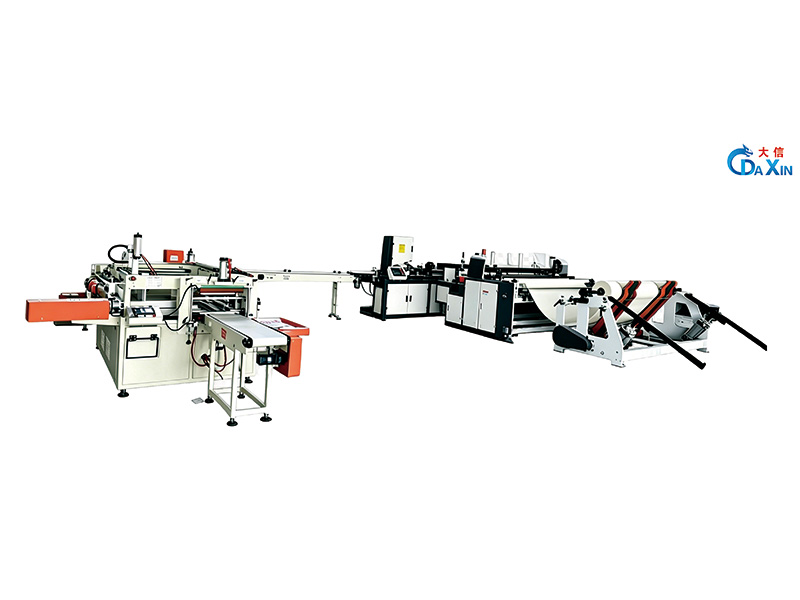
Manual rewinding often relies on an operator's feel—a tweak here, a touch there—but that approach quickly falls apart when film thickness shifts or speed changes. Closed-loop tension control reads the actual web tension in real time and adjusts the unwind brake or rewind drive automatically, keeping the pull within a narrow band. Guesswork, by contrast, only reacts after a defect shows up, whether it's telescoping rolls, wrinkles, or edge wander.
The difference becomes obvious on lightweight films or stretchy substrates. An experienced hand might manage a stable run for a while, but fatigue and distraction introduce variability. A closed-loop system, though, watches every rotation and compensates for diameter buildup, friction changes, and even ambient temperature drift. That consistency means fewer rejected rolls and less time spent reworking or babysitting the machine.
None of this implies sensors and controllers turn operators into bystanders. They still set parameters, monitor alarms, and handle splices. But the system removes the constant micro-corrections that lead to inconsistent winding hardness. In high-volume converting, that edge in repeatability shows up directly in downstream processes like slitting, coating, or printing.
Changeover Times That Decide Whether a Line Stays Profitable
Changeover is rarely just a gap between runs; it’s the moment a profitable line bleeds money. Every minute spent swapping tooling, cleaning hoppers, or waiting on a recipe download is a minute the machine isn’t producing a sellable part. On high-mix lines, unmeasured changeovers quietly consume 15–25% of available capacity, and because the loss is spread across shifts, it rarely shows up as a single alarming line item on a financial report.
The arithmetic is unforgiving. A 45-minute changeover on a line with a $400-per-minute gross margin costs $18,000 for every event. If that happens twice per shift, the monthly leak easily tops six figures. Cutting that time to 25 minutes isn’t just a lean exercise—it’s the difference between a quarter that needs weekend overtime and one that ships early. But rushing the changeover without separating internal and external tasks often creates startup defects that erase the savings.
Lines that stay profitable treat changeover as a KPI, not an afterthought. Pre-staging dies, using quick-release clamps, color-coding hoses, and training operators to work in parallel can shave 8–12 minutes per event. Those minutes stack up fast: five changeovers a day at 10 minutes saved each adds back almost an hour of production. That’s often enough to avoid adding a second shift or buying a new line—proof that speed between products matters as much as speed during them.
Servo-Driven Accuracy Without the Complexity Penalty
Most motion systems ask you to choose between precision and practicality. Servo-driven designs flip that trade-off on its head. Instead of bolting on extra tuning layers or fumbling with fragile encoder setups, the servo loop handles fine corrections natively. You get repeatable positioning that feels almost boring in its consistency—no dramatic recalibration rituals, no cryptic error logs. Just clean, predictable motion that stays put where you left it.
The real advantage shows up in day-to-day operation. Where stepper-based setups lose steps under load or drift with temperature swings, a properly tuned servo reads actual position and quietly compensates. It is not about chasing lab-grade specs. It is about trusting the machine to hit the same spot at three in the afternoon and three in the morning, without someone hovering over a dial. That kind of confidence does not come from a spec sheet—it comes from the control architecture staying out of your way.
Complexity normally creeps in through workarounds: external dampers, spring-loaded backlash nuts, manual homing rituals. With a servo doing the heavy lifting, most of those add-ons become unnecessary. The loop itself absorbs minor mechanical variance, so the mechanical design can stay simpler—fewer wear points, fewer adjustments, less grease and guesswork. You end up with a system that feels less like a science project and more like a tool that simply does its job.
Spare Parts Availability When a Line Goes Down at 2 a.m.
A production line stopping in the middle of the night is every plant manager's worst scenario. The first question isn't about why it happened, but whether the needed part is sitting on a shelf within reach. Many operations keep only a thin buffer of critical spares for high-wear components, betting that failures won't overlap. When a gearbox seizes or a servo drive burns out at 2 a.m., the lack of an immediate replacement turns minutes of downtime into hours of waiting for a courier or a morning shift machinist.
Reliable overnight support depends on agreements that go beyond standard catalog stock. Some suppliers offer consignment bins placed directly at the plant, restocked monthly and billed only when parts are pulled. Others maintain regional after-hours hubs with a guaranteed dispatch window, but these arrangements often require a clear list of priority SKUs and updated machine schematics. Without such groundwork, the 2 a.m. call becomes a frustrating search through old invoices and vague part numbers while the line stays dark.
Smart teams treat spare parts availability as a planned resource, not an afterthought. They map failure-prone points from maintenance records, hold physical inventory for items with lead times longer than the acceptable downtime, and periodically test the night-call procedure. A mock breakdown at 2 a.m. can reveal whether the on-call technician actually has access to the locked crib, or whether the “available” part was borrowed weeks ago and never restocked. Those small gaps, invisible during daylight reviews, are what turn a minor fault into a shift-long stoppage.
Custom Core Sizes and Embossing Patterns That Actually Get Delivered
Plenty of suppliers will nod along when you ask for a non-standard core size or a custom emboss, but the gap between a sales quote and a roll that actually fits your machine is where projects stall. We keep a running inventory of uncommon core diameters and wall thicknesses, and our embossing rollers are machined in-house. That means the pattern depth, repeat length, and edge alignment are verified on a physical sample before the production run, not after it ships.
If your line needs a 2.25-inch core instead of the usual 2-inch, or you want a quilted texture that won't flatten under tension, those details are treated as baseline requirements rather than special requests. We've learned that the real test is consistency across thousands of rolls, so every batch is checked against the approved drawdown. The result is a product that arrives ready to run, without the usual back-and-forth about what was actually agreed to.
FAQ
It usually comes down to how they handle the details that don't appear on a spec sheet. A strong manufacturer will ask about your paper grades, core sizes, and expected daily output before quoting anything. They'll also be upfront about things like maximum jumbo roll diameter, tension control accuracy, and how often you'll need to replace belts or blades. The weaker ones just send a generic brochure and price.
More than many buyers realize. A well-tuned PLC with proper tension feedback keeps the sheet from wrinkling or breaking at higher speeds, and it makes changeovers faster. Cheaper machines often rely on simpler drives that require constant manual adjustment, which eats into your output and creates waste. If you plan to run at or above 200 meters per minute, don't compromise here.
Neither approach is automatically better. A specialist may have deeper knowledge of embossing, perforating, and log saw synchronization. A broader manufacturer might offer better integration if you later add kitchen towel or napkin lines. What matters is whether the company has multiple installations running the same core configuration you need.
Ask for the maximum mechanical speed versus the recommended running speed, the required air pressure and power supply, the time needed to change a jumbo roll, and the expected life of key wear parts. Also request a video of a recent machine running the same paper grade and basis weight you use.
Request unedited videos from customer sites, not just marketing clips. Ask for the contact information of at least two buyers who have run the machine for over a year. You can also ask for a written acceptance test procedure that states speed, waste rate, and finished roll hardness tolerances. A manufacturer that hesitates on any of these is often hiding something.
Watch out for vague answers about electrical brands, no local spare parts stock, and a refusal to share customer references. Extremely low prices are another flag, since they often come from thinner frames, non-branded bearings, or motors rated just barely above the promised speed. Also be cautious if they push you to sign before doing any technical review.
The visible parts are only half the story. One may use a heavier steel frame, better-balanced rollers, and a servo-driven perforation unit, while the other uses a lighter structure and basic AC motors. Those differences affect vibration, roll density consistency, and how long the machine holds its alignment. You'll notice the gap after a few months of daily production.
Yes, and this is often a good test of professionalism. A capable supplier will provide a footprint drawing, electrical and air requirements, and advice on where to place the jumbo roll stands and log saw. Some will even help you calculate the space needed for finished log storage and packaging. If they can't offer that before delivery, expect problems during installation.
Conclusion
What truly separates a top toilet paper rewinding machine manufacturer often comes down to how the frame is built and how the machine handles tension. Cast iron frames absorb the constant vibration of high-speed rewinding far better than lightweight fabrications, which means the sheet stays aligned and rolls come out tight and uniform. Closed-loop tension control adds another layer: instead of an operator guessing at settings and dealing with wrinkles or breaks, the system reads the web in real time and adjusts on the fly. That kind of feedback loop prevents most of the scrap and downtime that quietly eat into margins. Changeover speed is just as critical, because every minute spent swapping parent rolls or adjusting core sizes is a minute the line is not producing. The best machines make these changes quick, tool-free, and repeatable, so even a less experienced operator can keep the line running near capacity.
Servo-driven accuracy matters, but only if it does not demand a controls engineer standing by. Leading manufacturers build servo systems that deliver precise cut lengths and roll diameters through simple, intuitive interfaces, so complexity stays behind the screen. Just as important is what happens when something does go wrong: a line down at 2 a.m. needs spare parts that are actually in stock and can ship immediately, not a promise of a two-week lead time. Finally, custom core sizes and embossing patterns should be treated as standard capabilities, not special favors. A manufacturer that consistently delivers the exact cores and patterns you ordered, without delays or excuses, proves its supply chain and production discipline. Together, these details separate the best from those who merely sell machinery.
Contact Us
Contact Person: Sam Xie
Email: [email protected]
Tel/WhatsApp: 86-18938538530
Website: https://www.daxin321.com/