
Top Sliding Head Lathe Supplier for Precision Machining Solutions
2026-07-24
Precision machining demands equipment that delivers accuracy, speed, and reliability without compromise. In an era where every micron counts, choosing the right sliding head lathe supplier can make or break your production efficiency. This is where WINNRUI CNC enters the picture—a name synonymous with cutting-edge solutions tailored to complex manufacturing needs. Whether you're crafting intricate medical components or high-volume automotive parts, the lathe's ability to handle simultaneous operations with Swiss-style precision is non-negotiable. But what sets a top-tier supplier apart from the rest? In this article, we uncover the critical factors that define excellence in sliding head technology and explore how WINNRUI CNC consistently delivers engineering that pushes boundaries. Read on to discover how the right partner can elevate your machining capabilities to unprecedented levels.
Mastering Precision with Advanced Sliding Head Technology
In the world of high-precision machining, the ability to hold tight tolerances on complex parts isn't just a goal—it's a baseline requirement. Advanced sliding head technology, often called Swiss-type turning, redefines what's achievable by guiding the bar stock through a fixed headstock while the cutting tools move. This creates an exceptionally rigid setup near the point of cutting, drastically reducing deflection even during deep cuts and enabling unmatched concentricity. The result is a process that consistently produces intricate components with surface finishes and dimensional accuracy that conventional lathes struggle to match.
What sets modern sliding head machines apart is their capacity to integrate multiple operations into a single setup. Live tooling spindles, sub-spindles, and versatile tool carriers allow milling, drilling, tapping, and even gear cutting to be performed seamlessly without moving the workpiece between machines. This fusion not only slashes cycle times but also eliminates the cumulative errors that arise from repeated handling. In production environments where every micron counts, the ability to complete a part from raw stock to finished piece in one pass is a transformative advantage.
Beyond mechanics, mastering this technology demands a shift in how we think about process control. Thermal stability, chip management, and tool wear become paramount, especially when lights-out automation is the norm. The real art lies in fine-tuning parameters like speed synchronization between spindles and the timing of secondary operations—nuances that separate mere operation from true mastery. For workshops aiming to push the limits of precision-driven manufacturing, investing in the expertise and equipment for advanced sliding head machining isn't an upgrade; it's a strategic leap toward defect-free production and new market opportunities.
How Our Lathes Redefine Complex Part Production
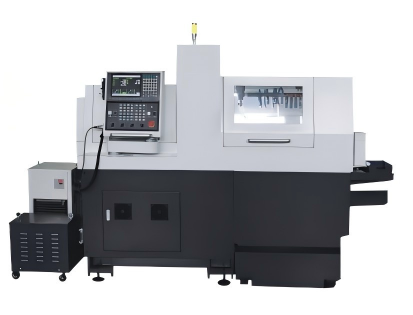
When machining intricate components, precision and repeatability matter most. Our lathes eliminate the guesswork with advanced motion control systems that maintain tolerances within microns—even during high-speed, multi-axis cuts. From aerospace turbine blades to medical implant geometries, every pass is governed by closed-loop feedback, ensuring the final part matches the digital model without deviation.
Complex parts often require multiple setups, but our lathes handle hard-to-reach contours in a single clamping. Live tooling capabilities let you mill, drill, and tap at compound angles while the spindle remains synchronized. This not only slashes cycle times but also removes alignment errors that plague traditional sequential workflows. The result: components with intricate internal features are completed faster and emerge with flawless surface integrity.
Material versatility is where these machines truly stand apart. Whether turning hardened Inconel or delicate aluminum alloys, adaptive chip control automatically adjusts feed and speed to prevent tool wear and thermal distortion. Operators can switch between roughing and finishing modes instantly, pushing the boundaries of what’s achievable on a single platform. Complex part production becomes not just possible, but reliably scalable.
Tailored Machining Solutions for High-Tolerance Industries
In sectors where precision defines success, standard machining falls short. High-tolerance industries—like aerospace, medical devices, and advanced robotics—demand more than off-the-shelf processes. They require a partner who understands that a deviation of even a few microns can compromise entire systems. Our approach begins by aligning engineering expertise with the unique material and stress requirements of each component, ensuring that every cut, turn, and finish meets exact specifications from the very first prototype.
Beyond numeric accuracy, we focus on the behavioral characteristics of materials under extreme conditions. Whether it’s nickel-based superalloys that heat-harden unpredictably or delicate titanium grades that demand gentle tool pressure, our process adapts in real time. By integrating thermal modeling and real-time metrology feedback, we catch potential drift before it becomes a flaw. This isn’t just machining—it’s a continuous conversation between the machine, the material, and the engineering team.
What sets our work apart is the absence of rework loops. Most shops rely on iterative correction, chasing tolerances over multiple setups. We invest the upfront time to characterize machine dynamics, tool wear patterns, and environmental variables so that the first part off the line is production-ready. For industries where failure is not an option, this mindset transforms machining from a cost center into a strategic advantage.
Behind the Scenes: Engineering Excellence in Every Turn
Every curve, every surface, every mechanical movement is the result of countless hours of refinement. Our engineers don’t just design parts; they obsess over how each component interacts with the next, chasing a level of precision that most would consider excessive. It’s in the subtle damping of a control knob, the consistent resistance of a hinge, and the silent glide of a sliding mechanism—details that often go unnoticed but fundamentally shape the experience.
This obsessive attention isn’t confined to the final product. The prototyping phase is where ideas collide with reality, and failures are welcomed as stepping stones. We push materials to their limits, test assemblies under punishing conditions, and iterate until the boundary between good and exceptional disappears. The prototypes that never see the light of day outnumber the ones that do—each one a lesson carved into the final masterpiece.
What truly sets this process apart is the culture of craftsmanship. It’s the quiet understanding that engineering isn’t just about making things work; it’s about making them feel right. From the initial sketch to the final polish, every decision is made with the end user in mind—not as an abstract persona, but as someone who appreciates the seamless harmony of form and function. This relentless pursuit of excellence is invisible by design, yet it defines everything we create.
From Prototype to Mass Production Without Compromise
Taking a concept from early-stage prototyping to full-scale manufacturing often forces difficult trade-offs. Features that worked flawlessly in the lab can stumble under real-world stress, and the materials that felt premium in small batches may prove impractical at scale. We approach this transition as a continuous refinement process—not a handoff. Every decision, from component sourcing to assembly line layout, is pressure-tested against the original design intent, so the final output remains faithful to the prototype’s promise.
Instead of treating manufacturing as a separate phase, we embed production engineering insights right from day one. This means prototyping with production-grade materials, simulating high-volume assembly early, and designing fixtures that eliminate variability. When issues surface—whether a tolerance stack-up or a cosmetic flaw—they’re resolved iteratively without diluting the product’s core identity. The result is a manufacturing process that amplifies quality rather than compromising it.
Behind the scenes, rigorous validation protocols bridge the gap between bespoke prototyping and repetitive output. Statistical process control, automated optical inspection, and periodic destructive testing are calibrated against the prototype’s benchmark. Supply chain partners are selected not just for cost, but for their ability to replicate the nuance of hand-built models. By the time a product reaches the line, the only difference between unit one and unit one thousand is the serial number.
Why Top Manufacturers Trust Our Sliding Head Expertise
It’s not about fancy brochures or hollow claims. For two decades, we’ve been the unseen force behind some of the most demanding turned-part projects, quietly solving complexity that others walk away from. From micro-medical bone screws that require near-perfect surface finishes to intricate watch components that cannot tolerate even a whisper of deviation, our shop floor has been the final answer for manufacturers who have tried—and been burned by—other vendors. That kind of trust isn’t bought; it’s earned over thousands of late-night problem-solving sessions and a bone-deep understanding of what Swiss-type machines can actually deliver when pushed to their limits.
What really cements the relationship, though, is our refusal to treat every job like it’s the same. A top-tier automotive supplier and a startup prototyping a surgical robot have fundamentally different needs, and we adjust our engineering support, material sourcing, and inspection rhythm accordingly. One client might need us to hold a 2-micron true position on a batch of a million parts, every single one verified. Another might need a materials upgrade that won’t gall during high-cycle use, which we’ll catch before the first bar gets fed. That proactive, “what are you really trying to achieve?” approach turns one-off trials into decade-long partnerships.
Then there’s the part that doesn’t show up on a CMM report: communication. Our lead engineers are reachable, our delivery dates are honest even when it hurts, and our packaging has never once been the reason a line stopped. For manufacturers whose own reputations depend on getting exactly what they spec—right now, not eventually—those softer edges matter as much as the tolerances. That’s why the factories that take their supply chain seriously keep coming back, even when there are cheaper options on the table. Once you’ve experienced sliding head work done without excuses, there’s no going back.
FAQ
Sliding head lathes, also called Swiss-type lathes, guide the bar stock through a sliding headstock while the tool cuts very close to the guide bushing. This gives exceptional support and rigidity, so you can hold tight tolerances on long, slender components without deflection.
It really comes down to the geometry of your parts. If you're machining tiny, intricate pieces like bone screws or connector pins with length-to-diameter ratios above 3:1, a sliding head lathe is almost certainly the way to go. High-volume runs of such parts benefit hugely from the one-and-done machining these machines offer.
You want a partner who understands your workflow, not just a vendor. Look for application engineering support, help with tooling layouts, and responsive after-sales service. Can they train your team on-site? Do they stock critical spares? Those details matter more than a flashy spec sheet.
The biggest headache is usually synchronizing the main and sub-spindle, especially during bar pull-out and cutoff. If your timings are off, you'll see witness marks or even scrap parts. Another trap is ignoring the guide bushing adjustment as the bar diameter changes—it can lead to inconsistent finishes.
Your bar stock has to be ground and polished to a consistent diameter, or you'll fight the bushing all day. Even tiny variations cause vibration. Also, some bushings add heat, so you might need to tweak feeds and speeds for materials that work-harden easily, like stainless steels or titanium.
It's all about cleanliness and daily checks. Keep the guide bushing and collet areas spotless—swarf buildup kills precision. Monitor the cutting oil condition and change filters religiously. Also, regularly check and calibrate the gang tool post and back-working tool positions; a small drift here can lead to big part rejections.
Conclusion
Advanced sliding head lathe technology is at the core of our manufacturing philosophy, enabling levels of precision that go well beyond standard CNC turning. This isn't just about holding tight tolerances—it's about mastering the intricate geometries that define modern complex parts. Our machines handle everything from micro-scale medical instruments to demanding aerospace components, with features like simultaneous multi-axis control and high-pressure coolant delivery that maintain consistency across thousands of units. We've spent years refining our processes so that parts with deep internal contours, thin walls, and overlapping features come off the line without the need for secondary operations, compressing lead times while improving overall quality.
But the technology alone isn't what sets us apart—it's how we bring that capability to life for clients in high-tolerance industries. We work directly with engineering teams to develop tailored machining strategies, whether for a single prototype that needs to prove a concept or a full-scale production run that can't afford even a minor deviation. Behind every turned component is a team focused on toolpath optimization, material science, and real-time process monitoring to prevent drift before it occurs. That's why medical device innovators, automotive system developers, and industrial OEMs continue to rely on our sliding head expertise: not because we promise precision, but because we've built a track record of delivering it at every scale, with a responsiveness that turns supply chains into genuine partnerships.
Contact Us
Contact Person: Tim
Email: [email protected]
Tel/WhatsApp: +86 15522553731
Website: https://www.winnrui-cnc.com/