

Ultrasonic Spray System Manufacturer Reveals How Precision Coating Improves Product Quality
2026-11-16
Most coating defects don't come from the material—they come from the application. Siansonic, an ultrasonic spray system manufacturer, has shown how precision coating eliminates uneven layers, overspray, and waste, directly lifting product quality. If your current process still tolerates those flaws, you might be settling for less than your product can deliver. Here's what changes when coating becomes truly controlled.
The Overlooked Connection Between Spray Uniformity and Product Failure
Many quality engineers focus on chemical formulation or substrate preparation when a coating fails, yet the spray pattern itself often carries the hidden blame. A nozzle worn just enough to shift droplet size distribution can leave micro-thin patches that pass initial visual checks but degrade under thermal cycling or moisture exposure. These uneven deposits concentrate stress, invite corrosion, or compromise adhesion well before the nominal service life ends.
The disconnect usually starts at the process setup. Operators verify average flow rate and maybe a single cross-section of the pattern, but this misses slow drift in fan angle or pulsation at the edges. Over time, those marginal zones become initiation sites for blistering, cracking, or delamination. The failure is rarely attributed to the spray step because it looks acceptable on a checklist—until field returns force a deeper look at uniformity, not just output.
Why Thinner Coatings Often Outperform Thicker Ones
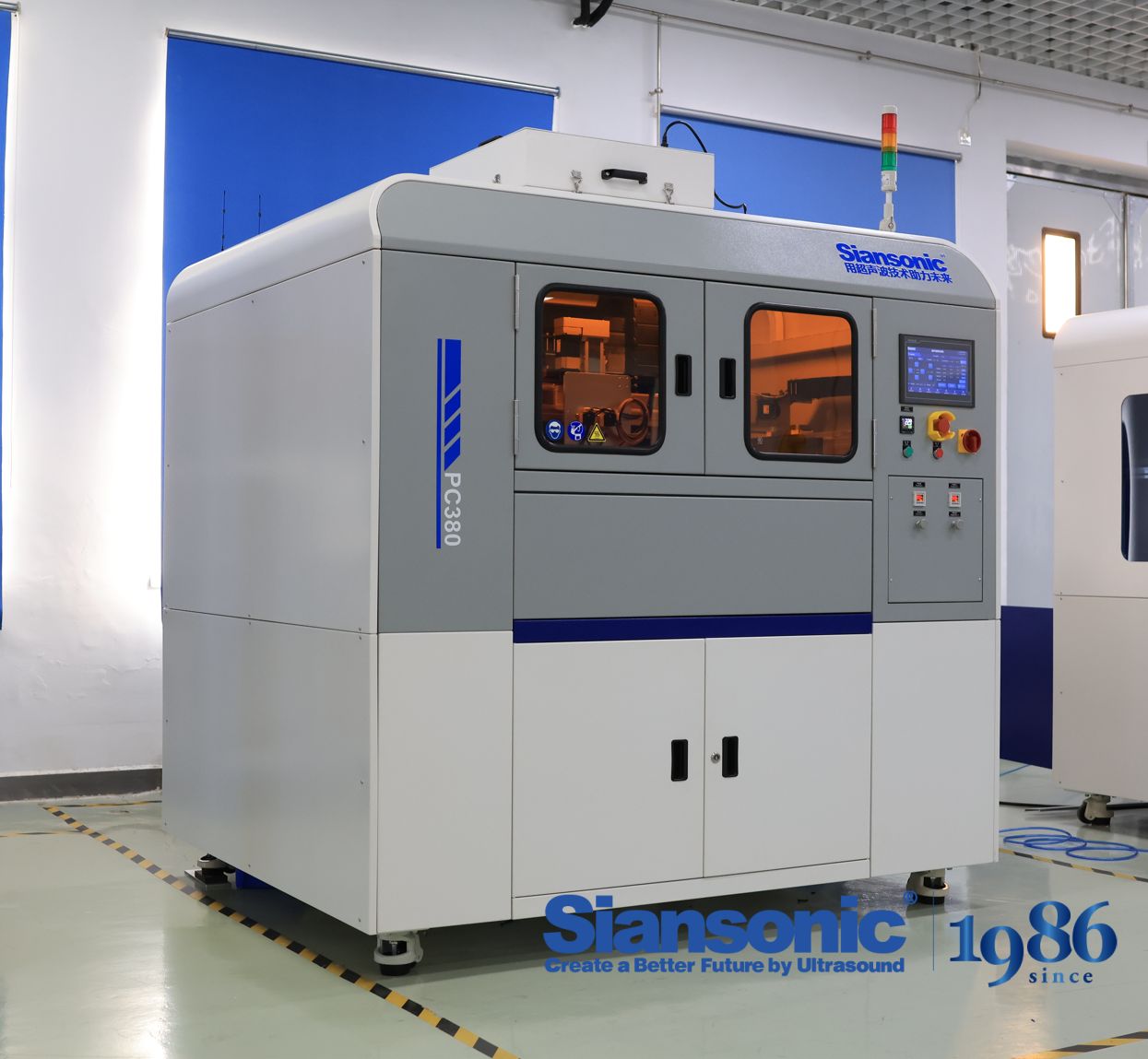
Thicker coatings are often assumed to provide greater protection, but in practice they can create their own failure modes. Internal stress builds as a film cures, and beyond a certain thickness that stress exceeds the coating's cohesive strength, leading to micro-cracking, delamination, or cratering. Thinner layers, applied in multiple passes if more total build is needed, stay below the critical stress threshold and cure more uniformly from surface to substrate.
There's also a subtler advantage: thinner films tend to wet the substrate more effectively during application. They follow surface contours without bridging pores or leaving solvent trapped at the interface. As a result, adhesion improves and the coating can flex with the underlying material instead of fighting it. In many industrial and automotive applications, a 20-micron layer outperforms a 50-micron one simply because it remains continuous, elastic, and tightly bonded under thermal cycling and mechanical strain.
Inside the Nozzle Design That Reduces Waste and Rework
The internal bore geometry gets most of the credit here. Instead of a simple straight taper, the nozzle uses a stepped reduction that stabilizes fluid velocity before the orifice. That prevents the sudden pressure spike that normally causes spitting at the start of a bead, which is where a lot of scrap originates.
A short, polished land just behind the tip gives the stream a clean break when the valve shuts. Without that feature, residual material clings to the edge, hardens, and then ruins the next cycle's first few millimeters of dispense. The design also routes a small amount of purge air across the face, keeping the outlet clear without blowing the bead off target.
What really cuts rework is the way the seat and needle align. The needle's guide is moved further back, leaving a longer unsupported length that flexes slightly to self-center into the seat. That creates a tighter shutoff at lower spring pressure, so operators spend less time adjusting and trimming after each shift.
How Precision Coating Shifts the Quality Control Conversation
Precision coating pushes quality control away from the old habit of measuring thickness after the fact. A coating that is only a few microns thick can still vary in surface energy, porosity, and interfacial adhesion—traits that standard calipers or optical comparators miss. So the conversation now starts with how the coating changes the part’s behavior under load, temperature cycling, or chemical exposure, not just whether it meets a dimensional tolerance.
That emphasis on functional performance pulls inspection into the coating process itself. In-line sensors track droplet size, solvent evaporation, and cure temperature in real time, giving operators a chance to adjust parameters before defects harden into place. Instead of asking whether a batch is within spec, teams begin asking what needs to be controlled right now to keep every part behaving the same way.
The shift also redraws the roles around the quality table. Coating specialists, process engineers, and quality managers now define critical attributes together, often replacing visual pass-fail checks with tests that measure release force, friction, or optical clarity. Quality control becomes less about sorting good from bad and more about predicting how a coated surface will perform in the hands of the user.
Real-World Examples Where Ultrasonic Spray Solved Chronic Defects
A PCB assembly line in the automotive sector struggled for years with conformal coating that pooled at the base of tall capacitors and left fine-pitch leads exposed. The switch to an ultrasonic spray system changed the droplet size distribution from roughly 60–120 µm down to a narrow 20–40 µm band. Because the droplets landed with very little kinetic energy, they no longer pushed coating into low-clearance areas or created the capillary bridges that had caused field failures in humid environments. The same line reported a 70% drop in touch-up rework within the first quarter.
Drug-eluting stent manufacturers faced a different chronic defect: webbing and filament formation between stent struts during the polymer coating step. Conventional air-assisted nozzles generated enough shear to stretch the solution into thin strands that dried across open cells. Ultrasonic atomization removed the high-velocity air stream entirely, allowing the coating to deposit only where the stent surface intercepted the low-momentum mist. Process engineers were able to hold coating thickness within ±2 µm across the entire strut network and eliminated the post-coating laser trimming step that had previously been used to clear blocked cells.
In fuel cell production, membrane electrode assemblies had long suffered from pinhole-sized catalyst layer defects that only appeared after hot pressing. These were traced back to intermittent spitting from conventional airbrush-style nozzles when viscosity drifted during long coating runs. By moving to an ultrasonic nozzle with closed-loop flow control and a gentle, pulseless spray pattern, the team eliminated the spitting events and tightened the catalyst loading standard deviation from 0.08 mg/cm² to 0.02 mg/cm². The resulting drop in scrap rate paid back the nozzle retrofit in less than six months.
What Manufacturers Don't Tell You About Coating Consistency
A batch of coating can pass every spec on paper yet still fail in the field, and that gap is where the real story lives. The numbers on a data sheet—viscosity, solids content, dry film thickness—are averaged from a controlled lab run, not from the edge of a spray booth on a humid Tuesday. What rarely makes it into the brochure is how sensitive the final surface is to things like line speed, nozzle wear, or even which operator mixed the drum. One shift can lay down a finish that looks flawless under the shop lights, while the next shift, using the same product, ends up with a subtle orange peel that only shows up after the customer installs it.
Another quiet variable is how the material behaves as it sits in the pot. Most coatings are formulated with a specific pot life and recoat window, but those limits assume a narrow temperature band and continuous agitation. In real production, a painter might pause for lunch, come back, and find the viscosity has drifted just enough to change the transfer efficiency. The manufacturer won't mention that the viscosity cup reading you took at 8 a.m. means almost nothing at 2 p.m. unless you're also tracking solvent loss, humidity swings, and how long the hose has been sitting in direct sun. When a finish starts showing tiger stripes or dry spray, the natural instinct is to blame the gun settings or the technique, but often it's the coating's own consistency that has quietly shifted.
The most overlooked truth, though, is that consistent appearance doesn't equal consistent performance. A coating can look perfectly uniform on a panel but have microscopic variations in film build that leave thin spots over weld seams or rivet heads. You won't find that on a test plaque. The only way to catch it is to measure film thickness in multiple locations after the part cools, not while it's wet and glossy. Some applicators learn this the hard way when a warranty claim comes back two years later for rust bleed along an edge. The coating was consistent, just consistently hiding its own weak points. That level of detail doesn't fit neatly into a technical data sheet, so it gets left out of the conversation entirely.
FAQ
It creates a uniform, thin film that eliminates common defects like pinholes and overspray. Since the droplets are extremely fine and consistent, the coating bonds more reliably to the surface, which leads to better adhesion, sharper edge definition, and longer-lasting protection without adding unnecessary thickness.
Unlike air-pressure sprayers that fling a wide range of droplet sizes, ultrasonic nozzles use high-frequency vibration to break liquid into a narrow, low-velocity mist. This gives you far more control over layer thickness and placement, so you get a consistent finish even on complex 3D shapes or delicate components.
Medical device makers benefit from uniform drug-eluting coatings on stents and catheters. Electronics manufacturers use it for precise conformal coatings on circuit boards. Energy storage companies rely on it for even catalyst layers in fuel cells and solar cells. Any field where coating consistency directly affects performance tends to see measurable improvements.
Yes, and that's one of the main reasons manufacturers adopt it. Because the droplets are so controlled and the spray pattern is tightly focused, very little liquid drifts off-target. You end up using 30 to 50 percent less coating material in many applications, while still achieving full, even coverage. Less waste also means fewer cleanup steps and lower per-unit costs.
It greatly reduces pinholes, orange peel texture, bubbles, and overspray. The low-velocity mist avoids the turbulence that traps air or blows coating away from sharp edges. The result is a smoother, denser film that holds up better under stress, heat, or moisture.
It scales well to high-volume lines. Modern ultrasonic systems can run continuously for hours with stable output, and the nozzles don't clog as easily as conventional tips. Once the process parameters are dialed in, you can repeat the same coating quality across thousands of parts without constant manual adjustment.
Often not. The spray heads can be mounted on standard robotic arms or XYZ stages, and the control interface is built to integrate with common PLC systems. Most manufacturers start with a pilot station to fine-tune parameters, then expand to full production without reworking the entire line.
By applying a flawless, uniform layer, the coating protects every part of the surface equally. There are no thin spots that wear through first or thick spots that crack under thermal cycling. This balanced protection reduces corrosion, abrasion, and electrical failure, which directly extends how long the product remains reliable in the field.
Conclusion
In most production lines, coating failures rarely announce themselves until parts start coming back from the field. Ultrasonic spray system manufacturers have spent years mapping the quiet correlation between uneven droplet distribution and premature product breakdown. A nozzle that drifts by a few microns in spray width can leave micro-thin patches that pass initial inspection but corrode, delaminate, or short out weeks later. The overlooked truth is that spray uniformity isn't a cosmetic metric—it's a structural one. When engineers switch to ultrasonic atomization, the coating thickness variation drops from double-digit percentages to single digits, and suddenly the same adhesion tests that used to yield scattered results begin to look almost boring in their consistency.
The counterintuitive part is that thinner often works better. Because ultrasonic nozzles generate droplets with remarkably tight size distribution, they can achieve full coverage at 2–5 microns where conventional air spray needed 10–15 microns to hide its own unevenness. That thinner, more even layer reduces material consumption by up to 40%, cuts drying time, and eliminates the pooling that causes edge defects. Inside the nozzle, a carefully tuned standing wave breaks the liquid into droplets without the violent air blast that creates overspray and bounce-back—two major sources of rework in cleanrooms. Coating consistency stops being a topic for the lab and becomes a line-level conversation: instead of asking whether a part passed, teams start asking how narrow the process window can be. Real-world examples range from medical stents that stopped shedding polymer fragments to fuel cell bipolar plates that no longer leak at the gasket interface. What most suppliers won't volunteer is that coating variance is often the hidden tax in scrap rates, warranty claims, and customer audits—and precision ultrasonic spray simply removes that tax from the equation.
Contact Us
Contact Person: Ivy Zhang
Email: [email protected]
Tel/WhatsApp: +86 1081502288
Website: https://www.siansonic.com/