

VoWiFi & VoLTE Deployment: Proven Best Practices for Seamless Connectivity
2026-05-18
In an era where every call must be crystal clear and uninterrupted, VoWiFi and VoLTE have become the backbone of modern mobile communication. Yet, deploying them without hiccups remains a challenge—until now. Drawing from real-world successes, this guide unveils proven best practices that ensure seamless connectivity. For operators seeking reliable core network solutions, IPLOOK stands as a trusted partner in turning these insights into action. Whether you're tackling handover glitches or coverage gaps, get ready to discover the playbook that goes beyond the hype.
Pre-Deployment Audit: Network Gaps That Sabotage VoWiFi/VoLTE
Before you ever make that first VoWiFi call, there are quiet failures waiting in the network design. These aren't the obvious mismatches—like missing codecs or broken SIP trunks—but subtler gaps that surface only under real-world conditions. Think of the QoS markings that get stripped at the access edge, or DSCP values that make it through the core but vanish on the last hop to the IMS. Each one silently chips away at call quality, turning what should be a seamless handover into a dropped call or an unintelligible conversation.
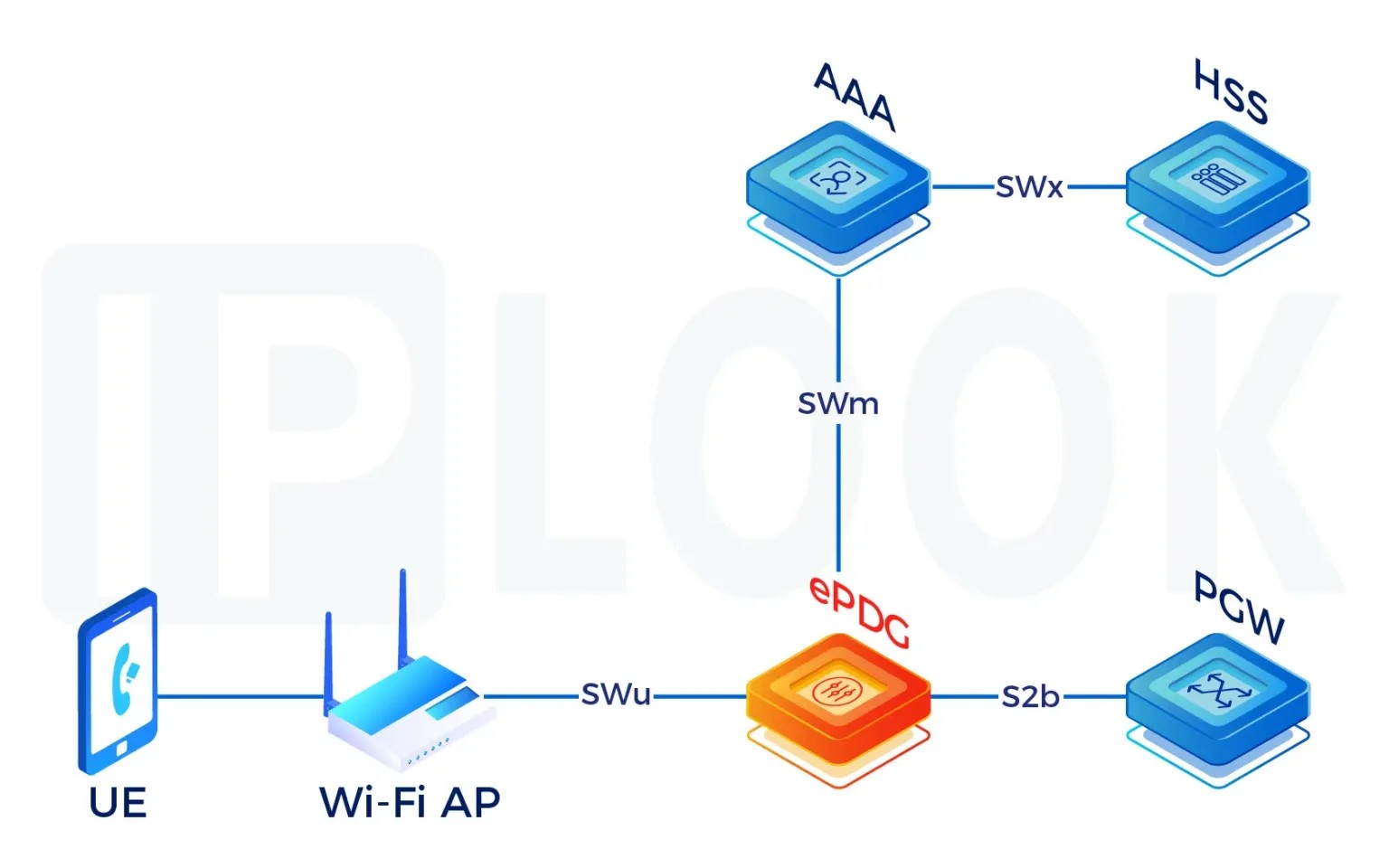
One of the most persistent issues we uncover during pre-deployment audits stems from how IPsec tunnels interact with fragmented networks. Many operators assume that a properly configured ePDG will handle encryption without a second thought, but when path MTU discovery fails—often due to ICMP being blocked somewhere in between—packets get fragmented, reordered, or simply dropped. This isn't a theoretical edge case; it's the reality of Wi‑Fi backhaul that’s been shaped by years of consumer-grade optimizations. Even something as mundane as a misaligned MTU setting on a backhaul router can cripple VoWiFi before a single call is placed.
The real subtlety lies in how these gaps compound. A single mismatch might cause only a minor degradation, but layer on a slightly aggressive retransmission timer, an authentication timeout that’s just a bit too tight, and a proxy that decides to rewrite the Contact header—and suddenly you're debugging a ghost. Pre-deployment audits that focus only on compliance checklists will miss these interactions. They require tracing the full call path, applying asymmetric load, and observing what breaks first under bursty traffic that mimics real subscribers. It's the only way to catch the network’s hidden sabotage before it reaches your customers.
Device Fragmentation: How to Guarantee Consistent HD Voice
The sprawling range of smartphones, each with its own audio hardware and software stack, makes uniform HD Voice delivery a real headache. What sounds crystal clear on one flagship might come through muddled on a mid-ranger, even when both support the same codec like EVS. The problem often hides in subtle mismatches—gain levels, jitter buffers, or how aggressively a device applies noise suppression—that silently defeat the “high definition” promise.
Pushing a one-size-fits-all configuration across devices rarely works. Instead, operators need device-aware tuning: adaptive bitrates that shift without audible glitches, codec parameters tailored to each model’s acoustic profile, and real-time monitoring that detects a call drifting below the HD threshold. This isn’t about slapping on a certified logo; it’s about continuously adjusting the audio pipeline so the user never notices when a handset’s quirks are being compensated for.
Field testing on a handful of popular models still leaves blind spots. A more reliable approach couples lab-based perceptual scoring with crowdsourced call analytics, catching degradation patterns that only emerge at scale. When that loop feeds back into dynamic profile updates, the network learns to anticipate fragmentation hazards—whether from an unexpected firmware update or a newly popular device—and keeps voice quality predictably high, not just on paper but in every pocket.
Traffic Engineering: QoS Tactics That Put Voice First
When every packet competes for the same path, voice traffic invariably suffers. Jitter and latency aren't just technical annoyances—they make conversations unintelligible. Smart traffic engineering starts by classifying voice with a DSCP value of EF (46), ensuring it's recognized as high-priority across every hop. This isn't about simply tagging packets; it's about instructing every router along the way to place voice into a strict priority queue, pushing it ahead of bulk data transfers and even video. The real magic happens when you combine this with call admission control, preventing new sessions from degrading existing ones when WAN links run hot.
Queuing mechanisms like Low Latency Queuing (LLQ) give voice its own dedicated slice of bandwidth, policed but never starved. It's tempting to over-provision, but the smarter move is to set a fixed amount—say 30% of a link—reserved exclusively for RTP streams. If voice isn't using it, other traffic can borrow it, but the moment a call setup request arrives, that capacity is reclaimed. Pair this with link fragmentation and interleaving on slower circuits, and you prevent a 1500-byte data packet from adding 20ms of serialization delay right when someone is speaking.
None of this works if the monitoring is passive. You can't tune what you don't measure, so active probes and synthetic voice calls running between sites uncover issues before users complain. Metrics like MOS and R-factor become your dashboard, not just post-mortem tools. When a circuit starts flapping, route voice out through an alternate path automatically—SD-WAN policies make this trivial. At the end of the day, putting voice first isn't a set-and-forget configuration; it's an ongoing balancing act where every QoS knob turned either preserves clarity or invites frustration.
The Handover Puzzle: Smoothing Every Hop Between WiFi and LTE
Mobile devices constantly dance between WiFi and LTE, but the choreography often stumbles. One moment you're on a video call over office WiFi, the next you're walking to your car—and without realizing it, your connection drops for a few seconds before LTE picks up. That silent gap isn't just annoying; it breaks the illusion of seamless connectivity. The core issue is that WiFi and LTE were built by different tribes, each with their own rules for how devices discover, authenticate, and hand over sessions. Bridging these two worlds means solving a puzzle where packets can get lost, IP addresses change, and timing becomes everything.
The tricky part isn't just moving data from one radio to another—it's keeping the session alive while the device re-anchors to a new network. WiFi access points and LTE base stations don't naturally share context, so the phone has to simultaneously hold onto a fading WiFi signal and negotiate an LTE connection, often dropping the ball. Techniques like Multipath TCP or clever IP address preservation help, but they add complexity. Even with those, the handover can feel like a relay race where baton passes happen in the dark—unless the network can anticipate the move before the signal fades.
What makes this truly challenging is the reality of user movement. You might be streaming music while wandering through a building with spotty WiFi, expecting no interruption. Solutions today lean on tighter integration: using the hot spot 2.0 framework, pre-authentication in trusted venues, and even phone-home mechanisms where the device whispers its location to the core network. By blending predictive signal analysis with just-in-time key exchanges, the hop between WiFi and LTE can start feeling less like a leap of faith and more like stepping through an open door.
Security Integration: Protecting Voice Without Performance Hits
Modern voice applications demand robust security measures to safeguard sensitive data, yet encryption can introduce latency and degrade audio quality if not implemented carefully. We sidestep this trade-off by integrating lightweight, hardware-accelerated cryptographic protocols that operate transparently within the audio pipeline. This approach ensures that voice streams remain fully encrypted from capture to playback without adding perceptible delay or compromising the naturalness of the sound.
Beyond encryption at rest and in transit, our system enforces strict access controls that do not burden the processor. By using on-the-fly token-based authentication tied to user roles and device trust levels, security checks happen in parallel with audio processing rather than sequentially. This concurrency keeps the voice experience smooth and responsive, even during multi-party calls or real-time transcription, while preventing unauthorized interception or replay attacks.
We also address the often-overlooked risk of side-channel leakage on shared hardware. Through careful memory compartmentalization and noise masking techniques, sensitive operations leave no distinguishable footprint that can be exploited. All of this runs within a secure enclave that isolates voice data from the main OS, preserving both privacy and the ultra-low latency that demanding users expect. The result is a voice platform where protection never feels like an afterthought or a drain on performance.
Real-World Diagnostics: Monitoring That Catches Issues Before Users Do
Modern applications often fail in ways that are invisible until a customer complains. Real-world diagnostics flips this model by embedding proactive health checks directly into the software. Instead of waiting for error reports, the system continuously simulates user actions, verifies database connections, and measures response times from actual devices spread across different locations. When a checkout flow suddenly slows down in one region, the diagnostic tool flags it immediately, often before the first frustrated message lands in support.
Effective monitoring mimics real user behavior rather than just pinging servers. A synthetic transaction that walks through a login, a product search, and an add-to-cart sequence can reveal dependency failures that simple uptime checks miss. Teams get alerts with precise context: third-party payment API timeout in Frankfurt, latency 4.2 seconds above baseline. This granularity turns a vague sense of something feeling off into a targeted fix, reducing mean time to resolution from hours to minutes.
FAQ
The main goal is to deliver seamless voice services across different access networks, ensuring calls can transition smoothly between LTE and Wi-Fi without interruption, thus enhancing user experience and coverage.
Operators commonly face issues like ensuring consistent quality of service across varied access types, managing device compatibility, maintaining security equivalent to cellular calls, and handling session continuity during handovers.
Implementing an IP Multimedia Subsystem (IMS) with robust session border controllers and anchoring calls in the core network allows seamless handover. Proper ePDG integration and coordinated radio access policies are also critical.
The Evolved Packet Data Gateway (ePDG) establishes a secure IPsec tunnel from the device over untrusted Wi-Fi networks to the operator's core, enabling authentication and encrypted voice traffic, making VoWiFi as secure as cellular calls.
Quality of Service (QoS) guarantees that voice packets receive priority over less time-sensitive data, reducing latency, jitter, and packet loss. This is essential for maintaining call clarity, especially during network congestion.
A thorough testing regime includes interoperability testing across multiple chipset and OS versions, field trials in diverse radio conditions, validation of emergency calling over both VoLTE and VoWiFi, and verification of seamless handoffs.
By allowing voice calls over Wi-Fi, operators can reduce the load on congested LTE macro cells, improve indoor coverage without additional small cells, and lower capital expenditure while enhancing customer satisfaction.
Conclusion
Rolling out VoWiFi and VoLTE without first auditing the network is like building a skyscraper on sand. Gaps in RAN coverage, inadequate backhaul capacity, or misconfigured IMS core elements can silently undermine call quality. Providors who skip this step often find subscribers blaming the service when the real culprit is a forgotten RF shadow or a congested GTP path. Pre-deployment audits that combine drive tests, indoor coverage mapping, and load-testing the packet core reveal choke points before they become customer complaints. Once those holes are patched, traffic engineering can do its job: putting DSCP tagging, dedicated bearers, and uplink air-interface scheduling to work, ensuring voice packets never get queued behind a bulk software update.
Device fragmentation remains a real headache—one high-profile flagship might deliver pristine HD voice, while a budget handset sold in the same market muddles the AMR-WB rate or drops the first SIP invite. The only safeguard is lab-based certification that verifies not just IMS registration but the entire call lifecycle across chipset families, radio conditions, and roaming scenarios. Security adds another layer of complexity: IPsec tunnels that anchor WiFi calls to the EPC can add latency if hardware accelerators aren't provisioned, so tuning keepalive timers and crypto profiles is mandatory. Handovers between WiFi and LTE call for precise measurement reports and a finely tuned ePDG—miss the SRVCC or eSRVCC break-out point, and the audio stutters right when the user walks through the front door. When all these pieces are in place, real-world diagnostics with passive probes and end-to-end RTP analysis catch the anomalies that synthetic testing misses—jitter spikes, one-way audio, and silent registration failures—long before a single subscriber ever opens the carrier's help app.
Contact Us
Contact Person: Shimmy
Email: [email protected]
Tel/WhatsApp: 85253392231
Website: https://www.iplook.com