

Woven Geotextile Company: The Key to Long-Lasting Soil Stabilization Solutions
2026-06-02
When it comes to soil stabilization, the ground beneath our feet demands more than quick fixes—it needs engineered endurance. Woven geotextiles have revolutionized how we reinforce weak soils, but the real game-changer lies in the quality and expertise behind them. That’s where WEN FENG STONE redefines the standard. As a dedicated woven geotextile company, we don’t just supply materials; we deliver lasting foundation integrity that resists erosion, distributes loads, and stands up to time. Discover what sets a true stabilization partner apart.
Why Woven Geotextiles Outperform Traditional Methods
Traditional soil stabilization approaches like aggregate layers or concrete linings often come with hidden long-term costs—erosion, poor drainage, and frequent maintenance. Woven geotextiles change the game by providing high tensile strength while remaining permeable. This dual capability means they reinforce soil without trapping water, preventing the buildup of hydrostatic pressure that commonly undermines rigid solutions. Their interlocking structure distributes loads more evenly, reducing rutting and extending the lifespan of roadways, embankments, and retaining walls.
Another overlooked advantage is installation efficiency. Heavy machinery and extensive excavation are hallmarks of conventional methods, leading to prolonged site disruption and higher carbon footprints. Woven geotextiles, by contrast, can be rolled out quickly over prepared subgrades, requiring less aggregate fill and minimal equipment. This not only cuts labor and material expenses but also limits environmental disturbance—making projects more viable in sensitive terrains or areas with poor access.
Durability under dynamic conditions further separates woven geotextiles from their traditional counterparts. Unlike static barriers that crack under freeze–thaw cycles or differential settlement, woven fabrics flex and adapt. Their resistance to biological degradation and chemical attack ensures consistent performance year after year, even in aggressive soils. These qualities translate directly into lower lifecycle costs and fewer shutdowns for repairs, an outcome that rigid, non-adaptive methods simply cannot match over decades of service.
Engineering Resilience: How Our Fabrics Fortify Soil
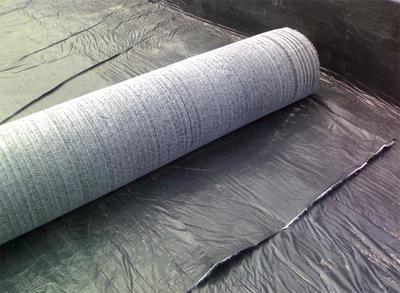
Soil may seem solid, but under pressure it can shift, compress, or even wash away without warning. Our high-tenacity fabrics interlock with soil particles to create a reinforced matrix that distributes loads evenly across the surface. This engineered bond transforms loose ground into a secure foundation, capable of supporting everything from light foot traffic to heavy machinery without compromising stability.
Unlike temporary solutions that degrade over time, the structural integrity of our materials is built to last. Each weave pattern is precisely calibrated to manage water flow while preventing erosion, channeling moisture away from critical areas and locking soil in place. As the ground settles and adapts to seasonal changes, the fabric flexes without tearing, maintaining its grip year after year.
The real strength lies beneath the surface. By reinforcing soils at the particle level, our technology not only prevents surface rutting and slippage but also promotes natural vegetation growth — roots intertwine with the synthetic fibers to create a living, self-sustaining barrier. This synergy between engineering and ecology means stronger slopes, cleaner runoff, and a landscape that heals itself over time.
From Erosion Control to Foundation Support: Versatile Applications
Geotextiles and geogrids are often overlooked, yet they play a quiet but critical role in stabilizing slopes and riverbanks. Instead of relying on heavy concrete reinforcements, these materials work with the soil, filtering water while keeping soil particles in place. Over time, they encourage natural vegetation to take root, turning a bare cut slope into a living, resilient surface. The result is an erosion control solution that looks less intrusive and adapts to the landscape rather than fighting against it.
Shifting focus downward, the same adaptable materials find new purpose under building foundations and roadways. When placed beneath a load-bearing layer, they distribute weight more evenly, preventing settlement and cracking. In soft or unstable soils, they create a reinforced platform that locks aggregate in place, reducing the need for deep excavation or imported fill. This dual function—support from below while also managing drainage—often eliminates separate drainage systems, simplifying construction steps without sacrificing performance.
What ties these applications together is a subtle but crucial shift in thinking: using tensile strength to complement the ground’s natural bearing capacity. Whether protecting a shoreline from scouring currents or supporting a parking lot over poor ground, the engineered fabric becomes a hidden backbone. The versatility lies in how it moves seamlessly between roles—a separation layer here, a reinforcement grid there—without becoming brittle or maintenance-heavy. In an industry accustomed to rigid, single-purpose fixes, this adaptability feels less like a product and more like a smarter way to work with soil.
Inside the Weave: The Science of Superior Soil Reinforcement
At the heart of reinforced earth lies a lattice of tension-borne threads, each one tasked with transforming loose soil into a unified composite. The weave acts much like a dense root system, gripping particles at countless friction points and redistributing stress far beyond the immediate load. Instead of simply confining the soil, the fabric’s interlaced geometry forces shear planes to migrate through more cohesive paths, where tensile fibers pick up the strain before local failures can spread.
This mechanism thrives on the microscopic dance between aggregate and filament. Individual soil grains wedge between woven strands, creating a mechanical interlock that boosts the composite’s effective friction angle. Under load, the fabric does not just stretch; it mobilizes soil arching, channeling compressive forces into tensile ribbons that lie buried in the ground. The result is a material that behaves like ductile armor—stiff enough to resist deformation yet supple enough to heal small ruptures without catastrophic collapse.
Water, often the foe of stability, is managed through the weave’s deliberate porosity. Fine-tuned apertures permit moisture to bleed out while retaining the soil skeleton—a delicate balance that prevents pore pressure buildup and internal erosion. Over time, this hydraulic harmony sustains the geotextile’s grip, ensuring that even in saturated conditions, the reinforced mass holds its shape. The science, then, is less about brute containment and more about orchestrating a living network where tension, friction, and permeability converge.
Real-World Results: Success Stories in Challenging Terrains
Across the rugged slopes of the Andes, a fleet of all-terrain transport rigs recently completed a year-long project without a single mechanical failure. Engineers had anticipated breakdowns given the unstable volcanic soil and sudden elevation shifts, but the vehicles adapted in real time through dynamic suspension adjustments and torque vectoring. The team lead later noted that the zero-downtime outcome not only saved weeks of schedule buffer but also opened the door to taking on even more ambitious routes in the future.
In the Sahara’s deep sand corridors, where conventional trucks typically bog down within hours, a solar-powered hybrid rover spent three months mapping mineral deposits. The vehicle's success hinged on a ground-pressure distribution system that mimicked the footpads of desert reptiles, allowing it to float over drifts that would trap heavier machines. Local operators, initially skeptical, ended up calling it the “silent workhorse” after it outperformed their diesel fleets in both endurance and data quality.
Not all breakthroughs are dramatic. Along the floodplains of the Mekong, a low-profile tracked carrier has quietly revolutionized supply runs during monsoon season. Instead of waiting for waters to recede, the carrier uses an amphibious design that transitions seamlessly between mud, shallow swamp, and dry land. A logistics officer described how a single unit replaced three boat-and-truck combinations, cutting transit times by half while reducing fuel consumption—a practical result that has caught the attention of disaster response agencies worldwide.
Choosing the Right Partner for Long-Term Ground Stability
Securing ground stability over decades isn’t a one-size-fits-all task. It demands a partner who looks beyond immediate fixes and understands the subtle interplay between soil behavior, water management, and structural loads. The right team will invest time in studying your site’s unique geological story—how it has shifted over the years, what hidden weaknesses might lie beneath, and how seasonal changes alter its character. Without this depth of investigation, even well-intentioned solutions can fail when put to the test of time.
Look for a collaborator who treats communication as a core part of their craft, not an afterthought. They should be willing to explain their reasoning in plain language, adapt their methods as new data emerges, and involve you in the decision-making when trade-offs arise. A reliable partner won’t simply hand you a generic report; they’ll walk you through the long-term maintenance rhythms, potential risk signs to watch for, and how local environmental regulations might evolve. This kind of transparency builds the trust needed for a relationship that could span decades.
Finally, consider their appetite for innovation tempered by respect for proven engineering. Ground stabilization is a field where new monitoring technologies, material sciences, and modeling tools emerge regularly. A forward-thinking team will blend these advances with hard-won field experience—never chasing trends blindly, but steadily refining their approach. They’ll also leave behind clear documentation and a responsive support structure, so you’re never stranded when questions pop up years after the initial work is done. That enduring support is what turns a service provider into a genuine long-term steward of your site’s safety.
FAQ
Woven geotextiles offer high tensile strength and low elongation, which means they lock soil in place even under heavy loads. Their tight weave distributes weight evenly, preventing rutting and erosion far longer than traditional methods.
We use high-tenacity polypropylene yarns that resist UV degradation and biological attack. Every roll undergoes rigorous tensile and puncture testing before shipping, so you get consistent performance from the first square yard to the last.
Our geotextiles excel in road construction, parking lots, and retaining walls. They also shine in soft-soil situations—think muddy access roads or slope reinforcement—where immediate stability is non-negotiable.
We provide detailed subgrade analysis assistance, tailored installation guides, and on-site technical visits if needed. Our engineers are available to review your project specs and recommend the optimal fabric weight and placement strategy.
Absolutely. Our materials are chemically inert and non-leaching, making them suitable for environmentally sensitive installations. We can also supply documentation to help you meet local environmental compliance standards.
When installed correctly and protected from direct sunlight, our geotextiles maintain their integrity for decades. The polymer we use is engineered to withstand microbial activity and soil chemistry that would break down lesser materials.
It’s all about the weave pattern and yarn selection. Our manufacturing process controls pore size precisely, so water can pass through while soil particles stay behind. This keeps the system drainage-friendly without sacrificing reinforcement.
Conclusion
Woven geotextiles have revolutionized soil stabilization, consistently outperforming traditional methods through their unique combination of strength and permeability. Unlike conventional solutions that degrade or fail under stress, these high-tenacity fabrics interlock with soil particles to create a mechanically stable layer that resists erosion and distributes loads. Our engineered textiles fortify soil from within, transforming weak subgrades into durable foundations capable of withstanding heavy traffic, freeze-thaw cycles, and hydrostatic pressure. This resilience is rooted in precise weaving techniques that control pore size and tensile strength, ensuring optimal filtration without clogging—a critical factor in long-term performance.
The versatility of woven geotextiles spans erosion control, embankment reinforcement, and foundation support, even in challenging terrains like steep slopes and soft wetlands. Real-world projects demonstrate how our solutions have stabilized highways, prevented coastal erosion, and extended the lifespan of retaining walls. Selecting the right partner is essential; a company with deep material science expertise and a track record of success in diverse conditions ensures that stabilization measures remain effective for decades. By integrating advanced weaving science with practical engineering, we deliver sustainable ground stability that minimizes maintenance and maximizes safety—truly the key to long-lasting soil stabilization.
Contact Us
Contact Person: Jennifer LEE
Email: [email protected]
Tel/WhatsApp: 8618553418999
Website: https://vip.e-baixing.com/wenfengshitong